




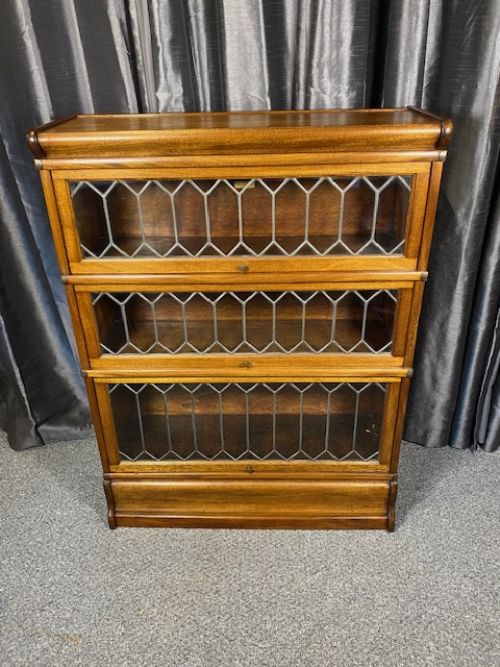


Barrister Style Bookcase
These barrister style bookcase pieces offer modular practicality and timeless office elegance, exactly what you need to house a growing library.
Barrister Style Bookcase
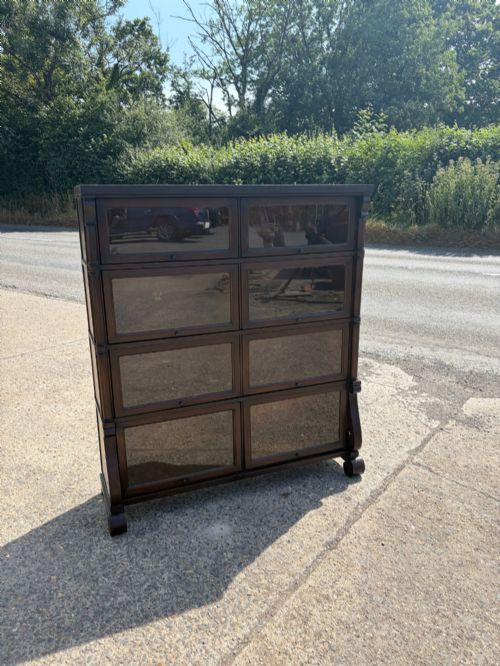
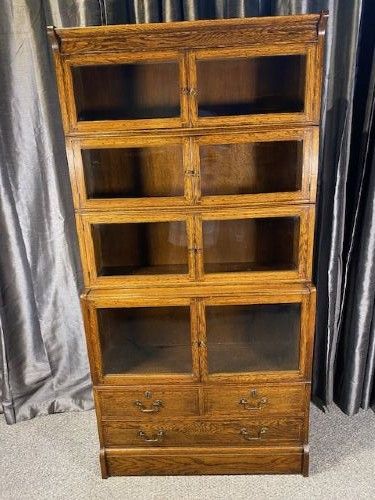
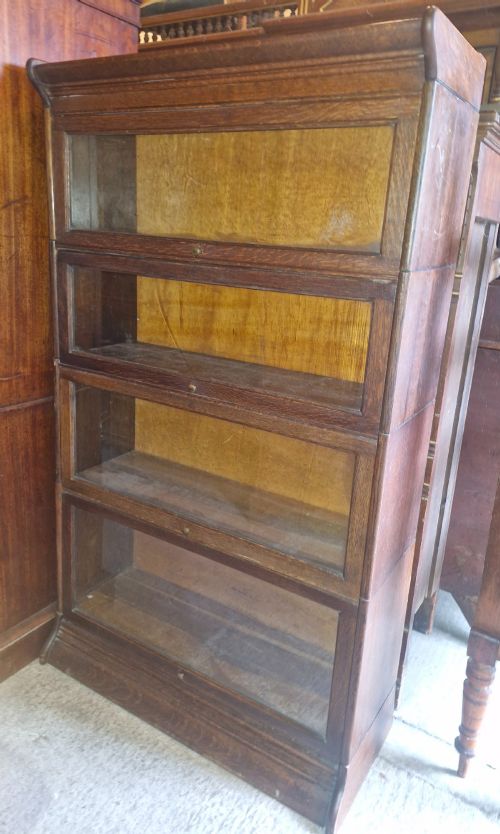
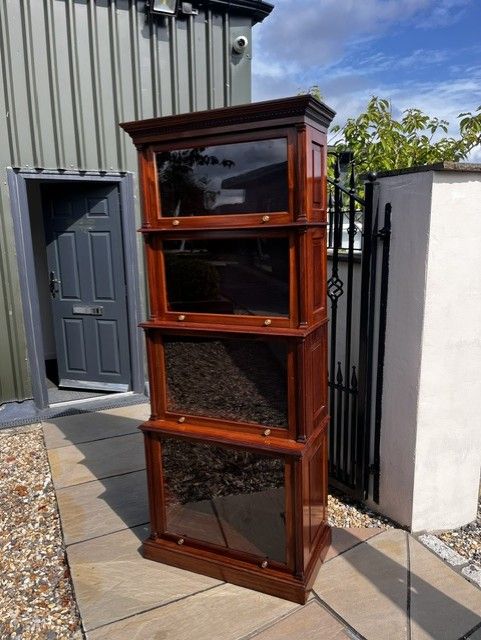
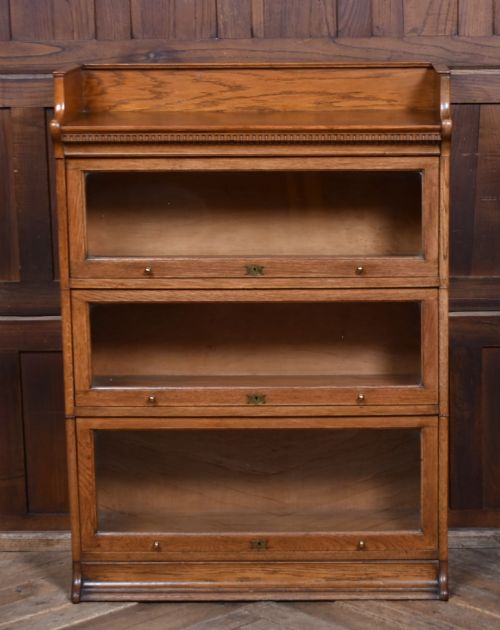
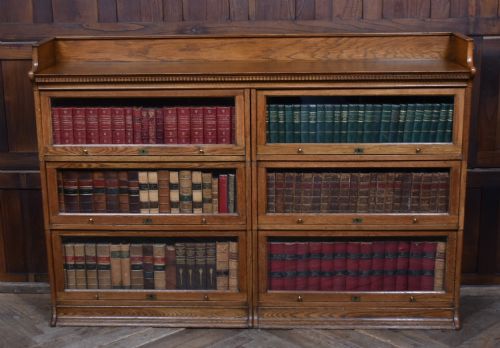
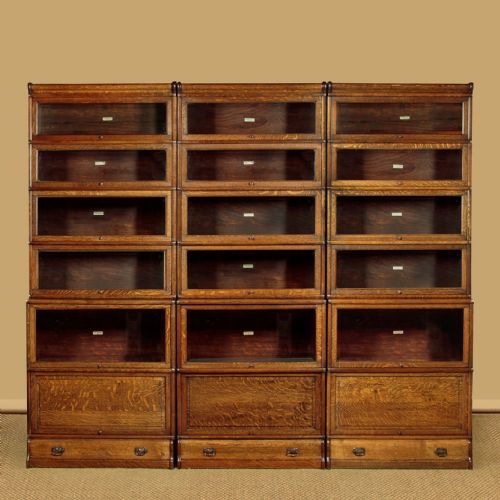
When you search for a barrister style bookcase, you are looking at sectional or stacking cabinets designed with individual glazed tiers that lift and slide inward to protect books. The versions you are most likely to meet on this page date from the Edwardian period through to the 1930s, reflecting a heavy output from firms specialising in modular office furniture.
The form relies on stacked modular tiers sitting beneath a cornice top and above a drawer or plinth base. Oak and mahogany dominate the offerings, built either as single vertical stacks or grouped as pairs and sets.
Makers such as Globe Wernicke, Lebus, Minty, Gunn, AMYL and Warwick feature prominently across the inventory. You will encounter pieces ranging from compact four-section cabinets up to tall six-section arrangements and French haberdashery variations.
How They Were Made
Cabinet makers utilised solid timber and veneers, primarily selecting oak and mahogany for the main carcass bodies. Brass hardware appears on the pulls and sectional connectors, while lead or metal frames hold the glass panes within the lifting doors.
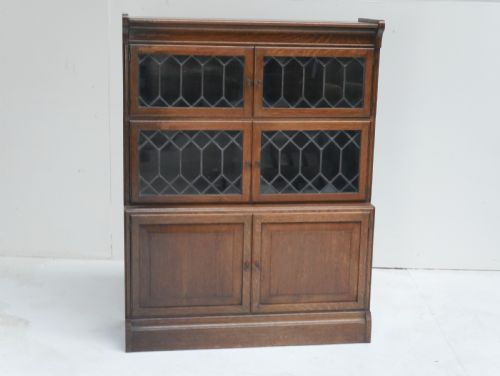
The sectional technique relies on independent tiers that lock or rest securely upon one another without permanent fixtures, allowing the cabinet to be dismantled easily. Glazing techniques incorporate standard clear glass alongside leaded glass panels to suit the specific aesthetic of the cabinet.
Oak is the dominant timber across surviving sectional cabinets, followed by mahogany.
What Varies in Quality
The distinction between standard utility office pieces and the top of the range rests in the selection of timber, such as figured solid mahogany or choice golden oak. Superior examples display refined proportions, precise joinery in the stacking mechanism, and maker signatures from renowned firms.
Hardware execution and glass quality also separate ordinary tiers from exceptional ones. Original brass fittings, smooth-operating door mechanisms, and intact leaded glass elevate the standing of a piece considerably.
Globe Wernicke·Lebus·Minty·Gunn·AMYL·Warwick
The Barrister Style Bookcase Glossary
- Sectional bookcase
- A modular cabinet built from individual stackable tiers that fit vertically together. This design allows the furniture to be transported and reassembled with ease.
- Cornice
- The moulded horizontal projection that crowns the top of the bookcase. It finishes the uppermost tier and conceals the joint.
- Glazed door
- A framed door fitted with glass panes to protect books from dust while keeping them visible. In these pieces, the glass sits within a mechanism that slides upward and inward.
- Plinth base
- The solid lower support block upon which the stacked sections rest. It raises the lowest tier off the floor.
- Haberdashery bookcase
- A variant style incorporating glazed display sections originally adapted for retail storage or organised mercantile use. These pieces often exhibit distinctive proportions compared to standard office units.
Barrister Style Bookcase: Frequently Asked Questions
Can the sections be separated?
Yes, the modular construction means each tier, the base, and the top cornice lift apart independently. This made moving heavy office libraries much simpler.
When reassembling, the tiers simply stack on top of one another using interlocking edges or pin fixings.
What wood types should I expect?
Oak is the most common timber found in these sectional cabinets, often showing a warm golden tone or traditional dark finish. Mahogany also appears regularly, including solid variants.
Brass fittings and glass are standard components across both timber types.
How do I date these bookcases?
Most surviving examples originate from the Edwardian era through the 1920s and 1930s. Maker stamps, brass patent plates, and construction hardware help narrow down the production decade.
Stylistic shifts from golden oak office pieces to later French-influenced variations also point toward specific periods.