


Barrel Garden Stool
A barrel garden stool brings sculptural form and functional seating to interiors and terraces alike, drawing on centuries of ceramic and timber traditions.
Barrel Garden Stool
The pieces available originate primarily from nineteenth-century China and nineteenth-century European factories, alongside items dating from the early twentieth century. Chinese examples frequently display classic Qing Dynasty or Republic period characteristics, while European pieces reflect Victorian and Regency interpretations of Chinoiserie aesthetics.
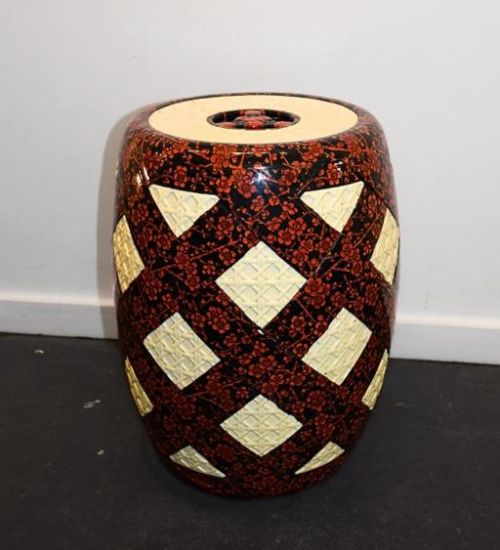
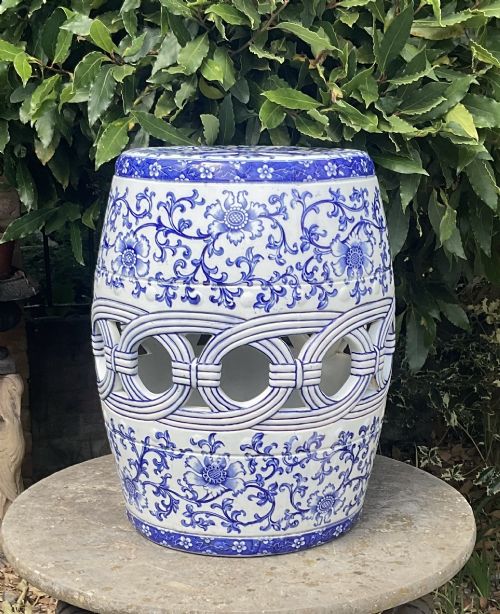
Forms span from glazed earthenware and porcelain seats decorated in blue and white, Canton famille rose, and rose medallion palettes, to carved hardwood, hongmu, burr wood, and lacquered pedestals. These objects function equally well as standalone architectural accents or as low occasional tables.
Materials and construction methods
Ceramic barrel garden stools are formed from earthenware, ironstone, creamware, or porcelain, finished with coloured glazes or painted enamel decoration. Potters shaped these heavy vessels to withstand the elements, often incorporating pierced coin motifs or decorative stud patterns reminiscent of traditional coopered wooden barrels.
Timber versions utilise dense hardwoods such as hongmu and teak, paired occasionally with burr wood veneers or mother-of-pearl inlay. Cabinetmakers constructed these drum-shaped stands using precise joinery to shape curved staves and panels into stable, load-bearing seats and tables.
Several nineteenth-century examples incorporate mother-of-pearl inlay directly into wooden drum surfaces, ensuring the furniture sparkles unexpectedly beneath a potted fern.
Assessing craftsmanship and finish
Quality in ceramic examples is determined by the precision of the glaze work, the vibrancy of the painted enamel palettes, and the crispness of moulded details. Finer pieces display evenly distributed glazes and intricate hand-painted motifs that remain sharp and clear across the curved surface.
For timber and lacquer items, excellence rests in the selection of figured woods like burr or hongmu, the tightness of the joinery, and the delicacy of any carved or inlaid ornamentation. Superior specimens maintain structural integrity while exhibiting rich natural grain patterns or smooth, durable lacquer finishes.
Minton
The Barrel Garden Stool Glossary
- Famille rose
- A major palette of Chinese ceramic enamels featuring opaque pink or rose colours, introduced during the Qing Dynasty. This colourful decorative scheme often covers porcelain garden seats with intricate floral and figural scenes.
- Hongmu
- A traditional Chinese term denoting dense, dark hardwoods often translated as red wood. Craftsmen utilised these heavy timbers for intricate carving and barrel-form furniture.
- Clobbered
- A process whereby older blue and white ceramics received secondary overglaze painting and firing in Europe to add colourful decorative enhancements. This technique appears on nineteenth-century ironstone pieces.
- Creamware
- A refined earthenware developed in England during the eighteenth century featuring a pale yellowish-white glaze. Minton utilised this smooth body for garden seats.
- Rose medallion
- A distinctive Chinese porcelain decorative style characterised by alternating panels of figures and birds set against dense backgrounds of flowers and butterflies. It is frequently found on nineteenth-century barrel seats.
Barrel Garden Stool: Frequently Asked Questions
Can barrel garden stools stay outside year round?
Ceramic and glazed earthenware versions generally resist outdoor conditions, though freezing winter temperatures can risk cracking porous bodies if left unprotected on damp ground.
Timber pieces constructed from hardwoods like teak or hongmu benefit from sheltered placement on covered terraces to prevent moisture damage and wood movement.
How are barrel garden stools used in interior design?
These versatile pieces function effectively as standalone accent stools, extra seating in compact living areas, or low side tables beside chairs and sofas.
In larger rooms, they frequently serve as sturdy pedestals for displaying large potted plants, sculptures, or decorative lamps.
What distinguishes Canton porcelain from rose medallion?
Canton porcelain decoration typically focuses on balanced scenes incorporating figures, landscapes, and birds within painted borders.
Rose medallion expands this vocabulary by dividing the surface into geometric compartments filled with dense flowers, butterflies, and repeating figural motifs.
How do you date a wooden barrel stool?
Dating relies upon timber selection, construction techniques, and stylistic markers such as nineteenth-century Qing Dynasty carving styles or early twentieth-century proportions.
The presence of dense hongmu and traditional joinery without modern metal fasteners usually indicates nineteenth-century production.