


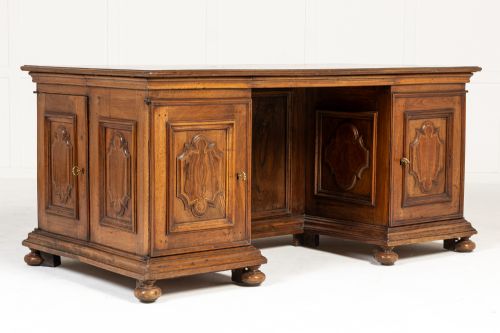

Baroque Wooden Cupboard
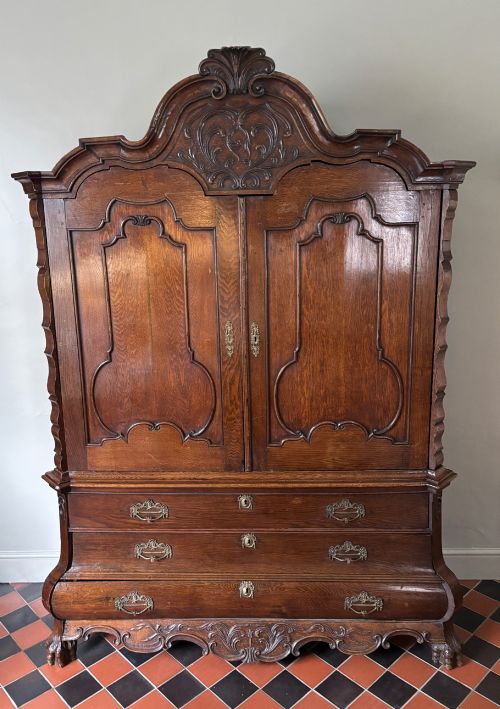
A baroque wooden cupboard brings heavy timber architecture into a room, offering deep storage through panelled doors and intricate marquetry.
Baroque Wooden Cupboard
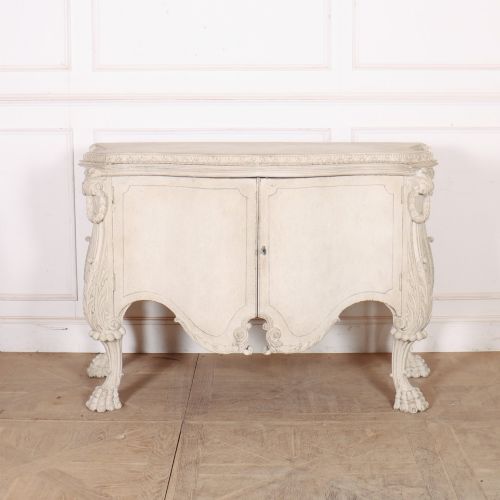
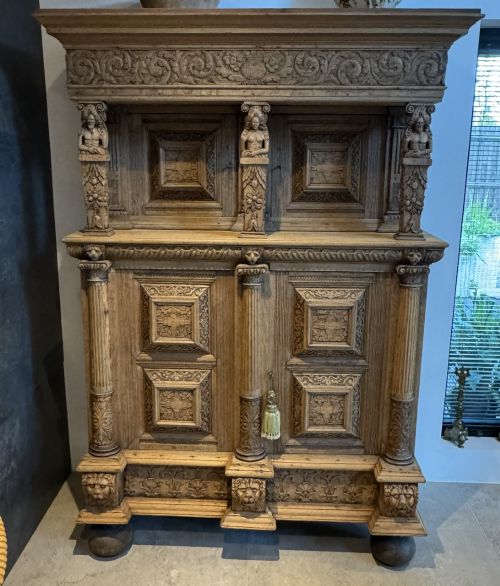
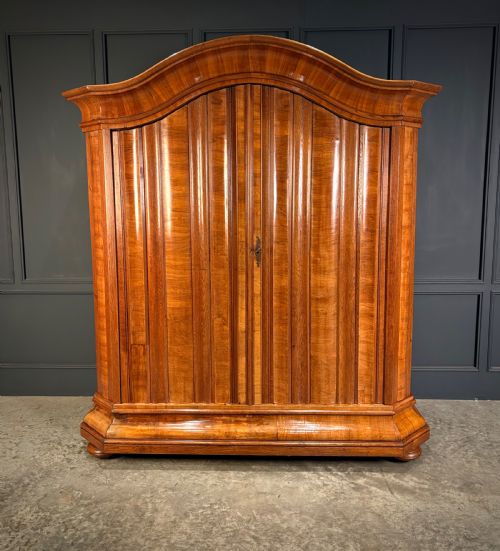
A baroque wooden cupboard covers a wide range of substantial storage forms, from monumental armoires and linen presses down to miniature apprentice pieces and side cabinets. When searching for a baroque wooden cupboard, buyers typically encounter walnut, oak, and fruitwood examples originating from Italy, the Netherlands, Spain, Germany, and France. These pieces span the seventeenth and eighteenth centuries, alongside later nineteenth and twentieth-century interpretations.
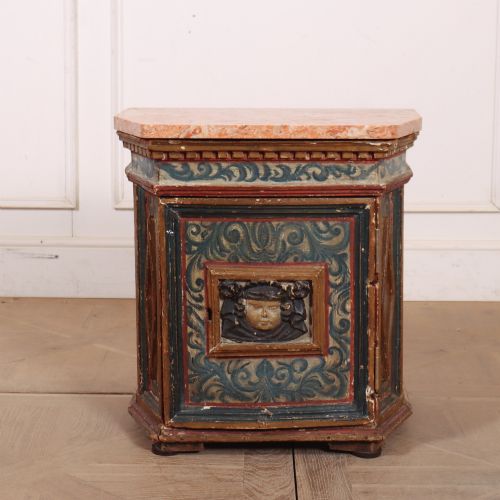
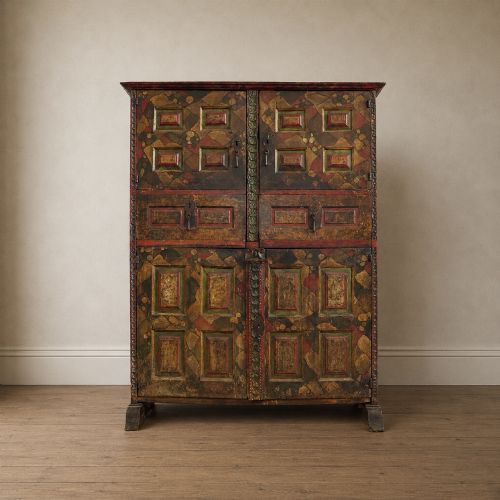
The domestic storage needs of past centuries dictated these forms, resulting in floor-standing corner cupboards, pedestal cupboards, and cabinets on stands. Italian and Dutch workshops dominate the selection, often presenting architectural facades, marquetry inlays, or painted polychrome finishes. Larger armoires and linen presses provide commanding presence, while smaller table cabinets and apothecary units offer focused display or secure storage.
How they were made
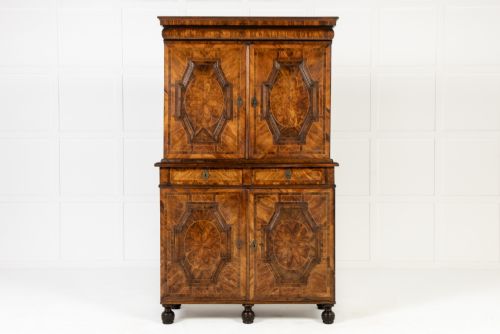
Cabinetmakers utilised solid timbers such as walnut, oak, and fruitwood, frequently pairing them with contrasting veneers like boxwood for intricate marquetry and seaweed patterns. Iron and brass hardware, including hinges, escutcheons, and drop handles, provided structural reinforcement and functional operation on heavy doors and drawers.
Joinery methods relied on sturdy panelled construction, pegged mortise and tenon frames, and specialised groundwork for veneer application. Surfaces received polish, wax, or polychrome paint finishes, while oyster veneers were cut transversely from smaller branches to create repeating circular grain patterns.
Miniature apprentice cabinets allowed young makers to demonstrate mastery of complex marquetry before tackling full-sized furniture.
What varies in quality
Quality reveals itself in the choice and matching of timber veneers, where symmetrical grain alignment across large surfaces demonstrates superior workshop skill. The precision of marquetry inlay work and the architectural depth of mouldings separate standard utilitarian pieces from high-status commissions.
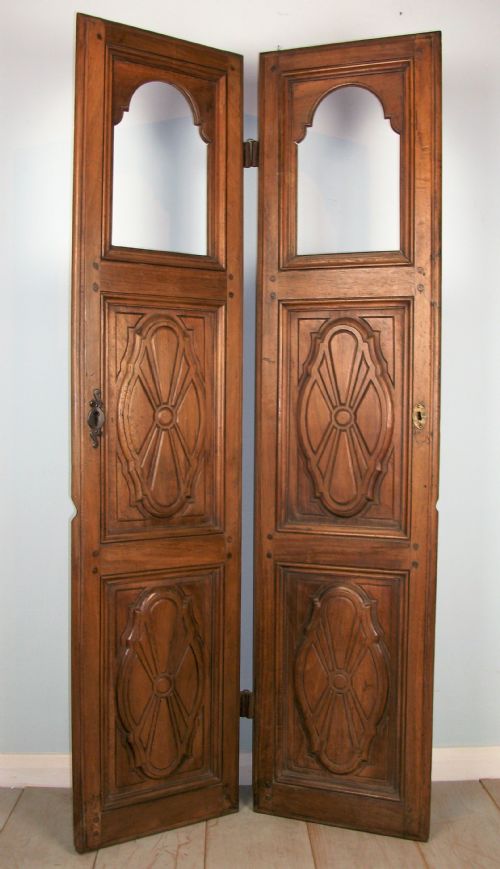
Structural integrity depends on the original pairing of bases and upper sections on cabinets on stands, alongside the retention of period brass or iron mounts. The complexity of carved door panels, such as those found on Spanish Basque and Italian architectural tabernacles, marks the upper tier of execution.
The Baroque Wooden Cupboard Glossary
- Marquetry
- Inlaid patterns of wood veneer applied to furniture surfaces to create pictorial or geometric designs. This technique often employs contrasting timbers such as boxwood and walnut.
- Oyster veneer
- Slices of wood cut transversely from small branches to produce circular or oval patterns resembling oyster shells. It gained popularity during the seventeenth century.
- Credenza
- A sideboard or cabinet originally used for displaying plate and serving food in elite households. Italian examples often display monumental proportions and rich walnut construction.
- Armoire
- A large wardrobe or cupboard used for storing clothing, typically featuring two large doors enclosing shelves or hanging space. Continental workshops produced these in substantial oak and walnut.
- Linen press
- A tall storage piece designed for flat textiles, combining upper sliding trays or shelves with lower drawers. Dutch and English makers favoured this practical domestic form.
Baroque Wooden Cupboard: Frequently Asked Questions
What is a baroque wooden cupboard?
A baroque wooden cupboard is a heavy storage furniture piece originating mainly from seventeenth and eighteenth-century continental Europe, characterised by rich timber construction and architectural detailing.
These pieces include linen presses, armoires, and cabinets on stands, built from walnut, oak, and fruitwood with decorative veneers or painted surfaces.
How were these cupboards used?
Households utilised these substantial pieces primarily for storing valuable textiles, linens, clothing, and household stores behind lockable panelled doors.
Table cabinets and apothecary units served smaller storage needs, while monumental credenzas and sideboards anchored formal dining and reception rooms.
How do I identify a seventeenth-century piece?
Seventeenth-century pieces typically exhibit deep walnut or oak construction, early joinery techniques, and foundational baroque elements such as architectural mouldings and oyster veneers.
Regional characteristics, such as Dutch marquetry or Spanish polychrome painted finishes, also point directly to the prevailing aesthetics of that era.
How do I place one in a modern home?
These commanding wooden pieces function effectively as focal storage points in living rooms, hallways, or dining spaces, contrasting well against plain walls.
Their deep timber tones and structured facades provide grounded utility while showcasing historical cabinetmaking traditions.