


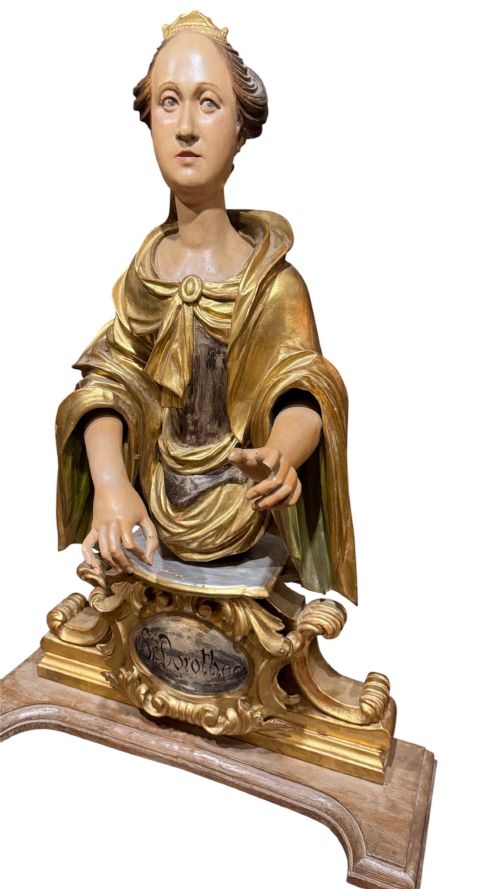
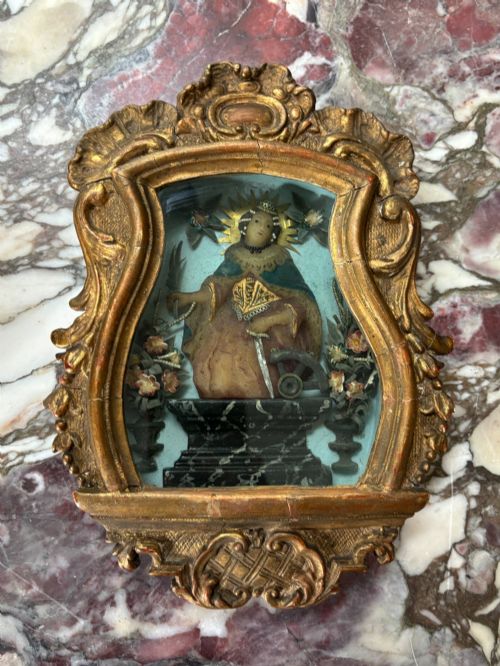
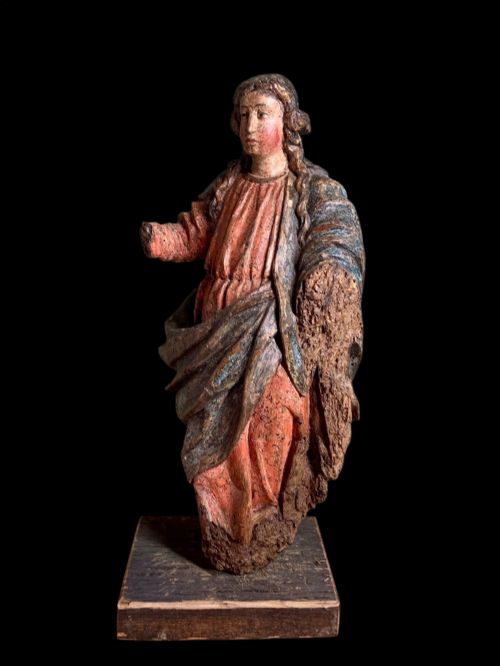
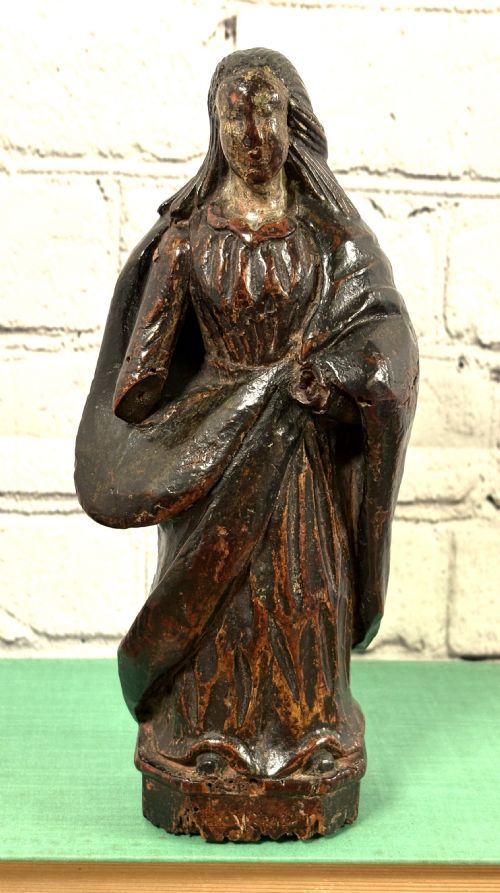


Baroque Wood Saint Figure
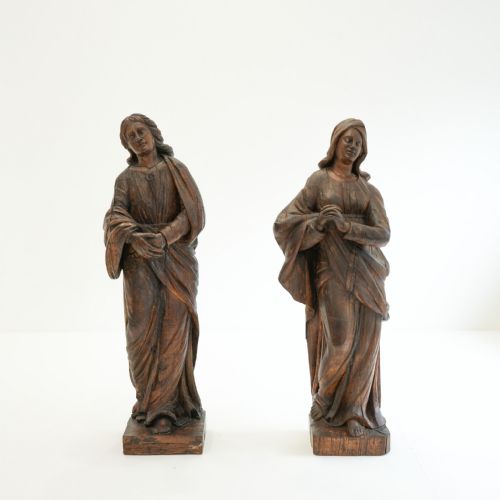
These baroque wood saint figure carvings bring seventeenth and eighteenth-century devotional art into modern interiors.
Baroque Wood Saint Figure
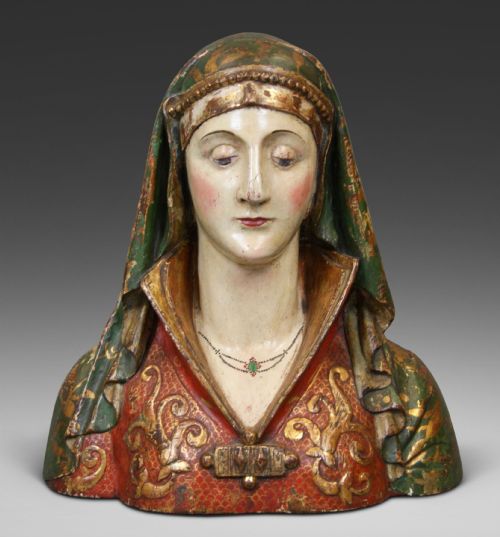
A baroque wood saint figure represents holy personages and figures from religious iconography created primarily during the seventeenth and eighteenth centuries. These sculptures take the form of full-length statues, pairs of figures, acolyte candlestick figures, character heads, and busts.
The pieces appearing on this page originate from various European traditions, including German, Italian, and Spanish workshops. Subjects span specific venerated figures such as Saint Barbara, Saint Francis, Saint John, Saint Nicholas, Saint Roche, and Saint Nepomuk, alongside general representations of holy men, women, and the Lady of Sorrow.
How they were made
Surfaces were frequently finished with gesso layers before receiving polychrome paint or gold leaf applications. This combination of carved wood, pigment, and gilding created the ornate, light-reflecting surfaces demanded by ecclesiastical aesthetics.
Baroque Wood Saint Figure Retail Price Guide 2026
Typical asking prices for baroque wood saint figure among the pieces listed under this phrase on Sellingantiques today, from the lower quarter to the upper quarter. They describe what is for sale here now, not the wider market.
The listings span the seventeenth, eighteenth, and nineteenth centuries, featuring works in oak, limewood, applewood, walnut, and general hardwoods.
What varies in quality
The preservation of original surface treatments, whether polychrome pigment or gold leaf over gesso, dictates the visual integrity of each sculpture. Pieces retain differing amounts of their original coloration and surface texture through centuries of handling and environmental exposure.
The Baroque Wood Saint Figure Glossary
- Baroque
- An artistic style originating in the seventeenth century characterised by dramatic movement, deep emotional expression, and elaborate detail. This aesthetic dominates the carving styles and theatrical postures found in these religious sculptures.
- Polychrome
- A surface decoration technique utilising multiple distinct paint colours on sculpture and woodwork. This finish brought realism and visual richness to devotional figures.
- Gesso
- A traditional primer mixture consisting of a binder mixed with chalk, gypsum, or pigment applied to wood before gilding or painting. It provided a smooth, stable ground for gold leaf and polychrome layers.
- Acolyte
- An assistant to clergy members who performs ceremonial duties during religious services. Acolyte figures in this category often support candlesticks or devotional items.
Baroque Wood Saint Figure: Frequently Asked Questions
How do I date a wooden saint figure?
Dating relies upon stylistic markers of the seventeenth and eighteenth centuries, including the treatment of drapery folds and facial carving.
Material analysis of the underlying hardwoods and examination of the gesso and polychrome layers also assist in confirming the era of creation.
Where were these statues originally displayed?
These figures originally stood within European churches, chapels, and monastic foundations as objects of veneration and focal points for prayer.
Some smaller examples served as private devotional pieces within domestic religious settings.
How should I care for antique wood carvings?
Maintain stable indoor humidity levels and protect the sculptures from direct sunlight to preserve the wood and fragile polychrome surfaces.
Dust the pieces gently with a soft, dry brush and avoid applying modern polishes or cleaning liquids to the historic finishes.
What subjects do these sculptures represent?
The subjects include named saints such as Saint Barbara, Saint Francis, Saint Nicholas, Saint Roche, and Saint Nepomuk, alongside the Lady of Sorrow.
Other listings depict general religious figures, acolytes, and character heads from ecclesiastical contexts.