

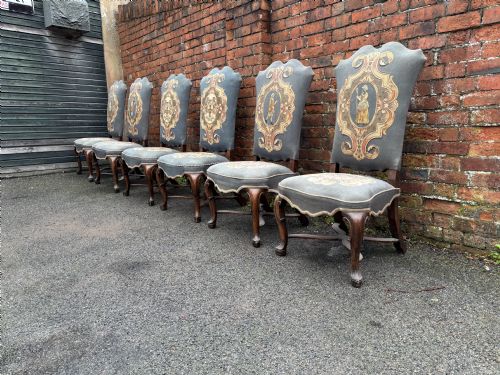


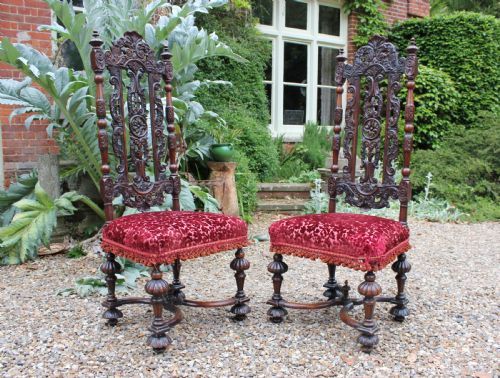
Baroque Walnut Dining Chairs
Baroque walnut dining chairs bring commanding presence and deep timber warmth to a room, offering grand historic character for daily dining.
Baroque Walnut Dining Chairs
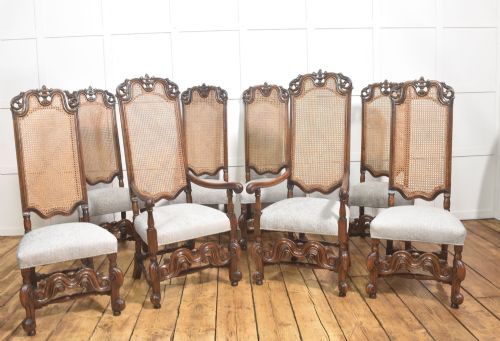
Baroque walnut dining chairs combine robust domestic seating with the dramatic carving and rich timber tones characteristic of seventeenth and eighteenth century craftsmanship. When hunting for baroque walnut dining chairs, buyers encounter diverse regional interpretations, spanning Dutch, Spanish, Italian, Portuguese, and French revivals alongside genuine period examples.
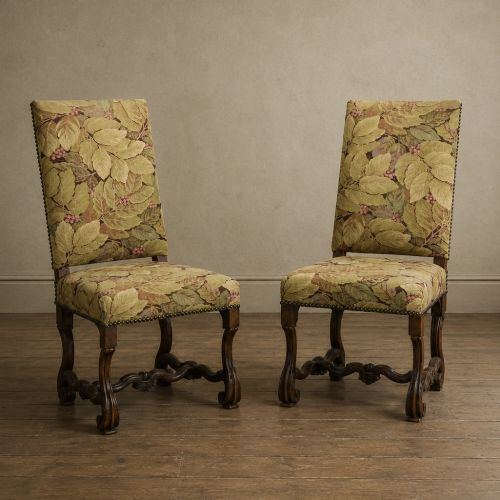
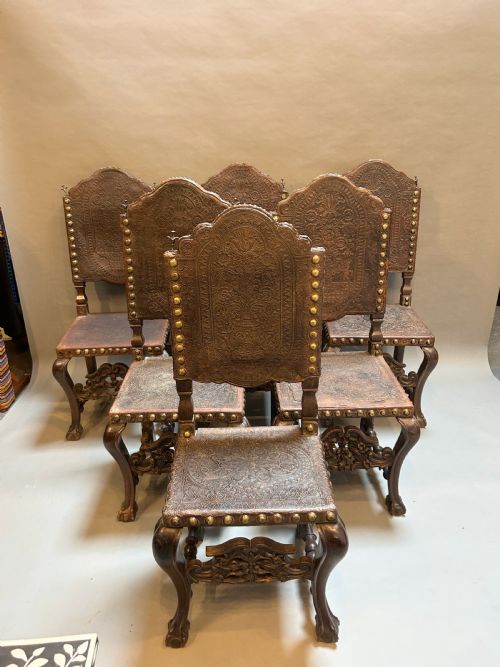
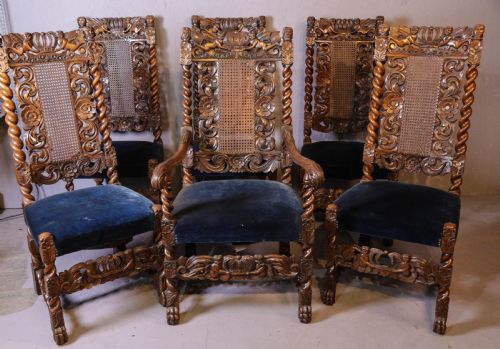
The selection ranges from tall caned high-back sets to sturdy side chairs and occasional armchairs upholstered in velvet, tapestry, leather, or simple fabric. These pieces frequently appear as matched sets, pairs, or single focal seats originating across several centuries, including Victorian revivals and Edwardian nods to earlier designs.
Materials and construction methods
Makers shaped these chairs primarily from solid walnut, valuing the timber for its rich grain, structural stability, and capacity to hold deep, crisp chisel work. Skilled artisans embellished frames with elaborate carving, piercing, and occasionally intricate bone inlay, reflecting the decorative vocabulary of the period.
Seating surfaces utilised woven cane panels or padded foundations covered in textiles such as velvet, tapestry, and leather, secured with brass tacks. Joinery relied on traditional pegged mortise and tenon construction to support the heavy frames and high backs under regular use.
Listings span seventeenth century originals through Edwardian revivals, with walnut and cane appearing alongside velvet, leather, and bone inlay.
Distinguishing quality across the range
Quality rests primarily in the crispness and depth of the timber carving, where confident, fluid chisel work separates superior seating from mechanical or flat execution. The integrity of the original walnut frame, minimal timber shrinkage, and the retention of period elements like hand-woven cane or early upholstery dictate a piece's standing.
Proportion and stance matter deeply, as finer examples maintain structural harmony despite towering backs and heavy ornamentation. The presence of authentic period surfaces, undisturbed patination, and careful historic repairs rather than clumsy modern interventions elevate certain chairs above standard revival alternatives.
The Baroque Walnut Dining Chairs Glossary
- Baroque
- A flamboyant artistic style originating in the seventeenth century, characterised by dynamic movement, grand scale, and opulent ornamentation. It heavily influenced furniture design across European courts.
- Cane
- Strips of rattan or split reed woven into an open mesh pattern, commonly used for lightweight and resilient seat or back panels in seventeenth and eighteenth century seating.
- Carolean
- Pertaining to the reign of King Charles II of England, a period noted for lavishly carved walnut furniture, high backs, and scrolling foliate motifs.
- Side chair
- A small, lightweight chair without arms, designed originally for dining tables or placement against room walls when not in use.
- Bone inlay
- A decorative technique where thin sections of animal bone are embedded flush into carved recesses within the timber surface to create contrasting geometric or floral patterns.
Baroque Walnut Dining Chairs: Frequently Asked Questions
How do I spot a true period piece from a revival?
Examine the construction marks, timber patination, and the natural wear patterns around the feet and stretchers. True seventeenth and eighteenth century examples display hand-cut joinery and aged walnut surfaces that modern reproductions struggle to replicate accurately.
Revival pieces, such as those made during the Victorian era or around nineteen-ten, often feature machine tooling, harder edges, and cleaner timber finishes that reveal a later manufacturing date upon close inspection.
Are these chairs comfortable for modern dining?
Many baroque chairs feature high backs that provide solid upper back support, though the upright posture differs significantly from modern padded lounge seating. Adding custom squab cushions can improve sitting comfort during long meals without altering the historic frame.
Caned seats offer a flexible, springy surface, while upholstered versions vary depending on the density of the internal padding used during their original or subsequent reupholstery.
How should I care for antique walnut and cane?
Keep walnut timber nourished with appropriate wax polishes and protect the wood from direct sunlight and sudden humidity changes to prevent splitting. Cane requires occasional gentle cleaning and moisture to prevent brittleness, avoiding heavy saturation during maintenance.
Check joinery periodically to ensure the heavy frames remain tight and stable, addressing loose joints promptly before structural stress damages the carved elements.
What defines regional baroque styles?
Dutch and Flemish baroque chairs typically feature restrained yet deep scrolling and heavy turned stretchers, whereas Italian and Spanish examples often incorporate more theatrical, extravagant carving. Portuguese pieces frequently showcase distinctive feet shapes and decorative bone inlay work.
French pieces lean towards Louis XIV formality, balancing symmetry with grand upholstery and structured framing rather than rustic exuberance.