



Carolean Style Cane Chairs
Carolean style cane chairs bring seventeenth-century revival grandeur to a room, offering high-backed seating crafted with woven cane panels.
Carolean Style Cane Chairs
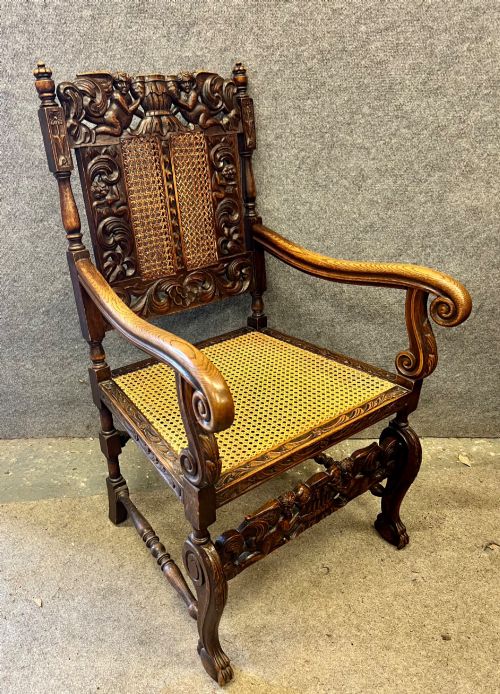
Carolean style cane chairs draw on late seventeenth-century models, featuring high carved backs and woven seating panels. When searching for carolean style cane chairs, buyers encounter pieces spanning seventeenth-century originals through nineteenth and early twentieth-century revivals.
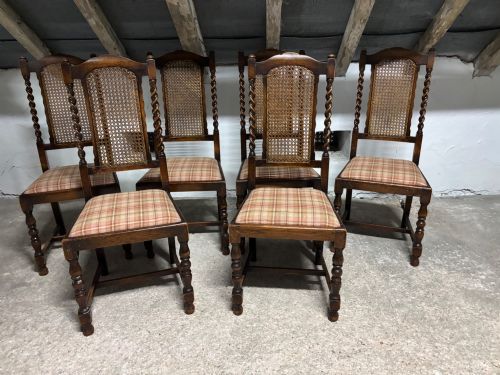
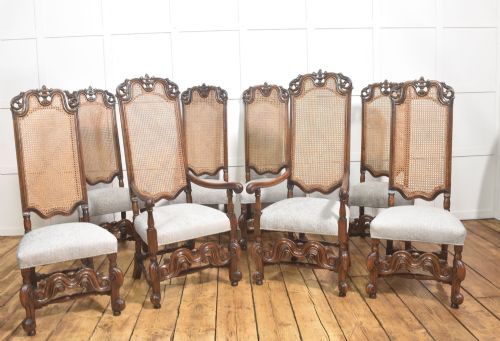
The selection ranges from single armchairs and side chairs to large dining sets and settees. Oak and walnut form the primary wooden frames, paired with woven cane, rattan, and occasional fabric upholstery.
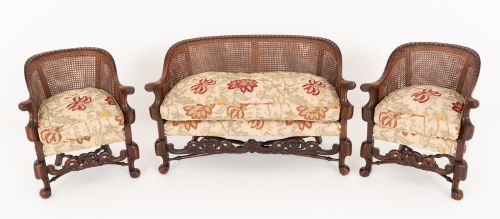
Revival pieces from the Victorian and Edwardian eras dominate alongside authentic period examples from the seventeenth century. Forms include high-back dining chairs, throne chairs, and bergere suites.
How they were made
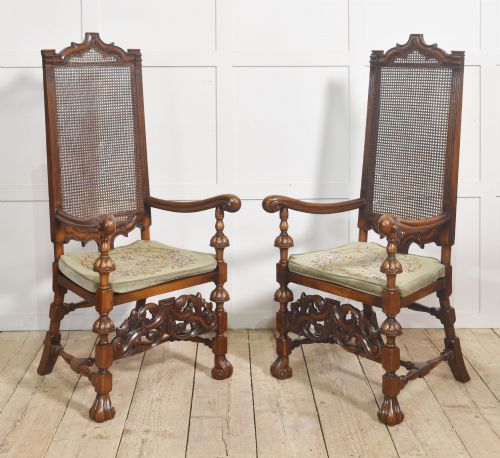
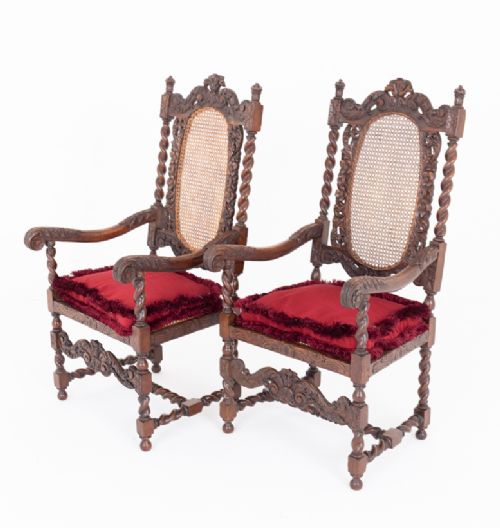
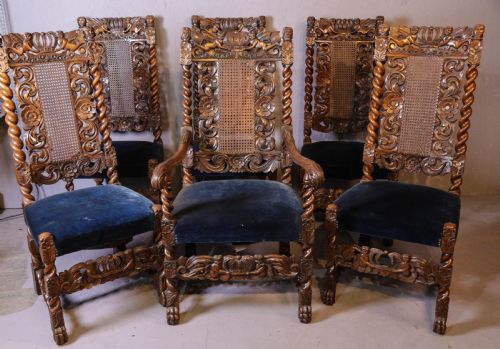
Frames are constructed from solid oak and walnut, shaped through extensive hand-carving. Artisans formed intricate scrollwork, pierced cresting rails, and barley-twist supports.
Woven cane and rattan form the backrests and seats, threaded through drilled frame margins. Upholstery fabric and velvet appear on padded elements and companion seating.
Listings feature oak and walnut frames paired with woven cane, rattan, and velvet upholstery across multiple centuries.
What varies in quality
The depth and crispness of the wood carving dictate the distinction between standard and superior pieces. Heavily carved walnut and oak frames with deep relief work demonstrate higher craftsmanship than simpler, flatter ornamentation.
The integrity of the woven cane panels and the selection of timber determine longevity. Solid walnut frames and tightly hand-woven cane represent the upper tier of production across both period and revival examples.
The Carolean Style Cane Chairs Glossary
- Cane
- Material woven from the outer skin of rattan palms to form flexible, durable panels for chair backs and seats. It provides a light, supportive surface within heavy wooden frames.
- Bergere
- An enclosed upholstered armchair with a wooden frame and cane sides or back panels. This form appears within nineteenth-century revival suites.
- High-Back
- A chair design featuring an elevated backrest that rises significantly above the seat level. These proportions characterise seventeenth-century dining chairs.
- Restoration
- The historical period following the English monarchy's return in sixteen sixty, associated with lavish carving and rich materials. Revival pieces often emulate this aesthetic.
- Barley-Twist
- A column or furniture leg carved in a spiral shape resembling twisted barley sugar. It remains a common motif on seventeenth-century and revival framework.
Carolean Style Cane Chairs: Frequently Asked Questions
Are these chairs comfortable for daily dining?
High-backed seating provides firm upright support, while the woven cane yields slightly to the body. Many people add loose cushions for extended sitting.
Dining sets from the revival periods function well around large tables, combining historic aesthetics with practical seating capacity.
How do I spot a revival piece?
Nineteenth and early twentieth-century revival pieces often display machine-tooled elements and standardisation in their timber framing. Wood patination and construction joints help separate them from seventeenth-century originals.
Examining the underside and fixing methods reveals the manufacturing era of each chair.
How should I care for the cane?
Woven cane requires moderate humidity to prevent the natural fibres from becoming brittle and snapping. Avoid placing chairs near direct heat sources or strong sunlight.
Cleaning involves gentle dusting with a soft brush and occasional damp wiping to maintain moisture in the rattan.
Did these chairs originate in England?
The style stems from seventeenth-century English court furniture under Charles the Second, influenced by continental design. Later revival movements spread production across Britain and beyond.
Intermittent examples reflect international interpretation, including walnut armchairs produced in America during the early eighteenth century.