

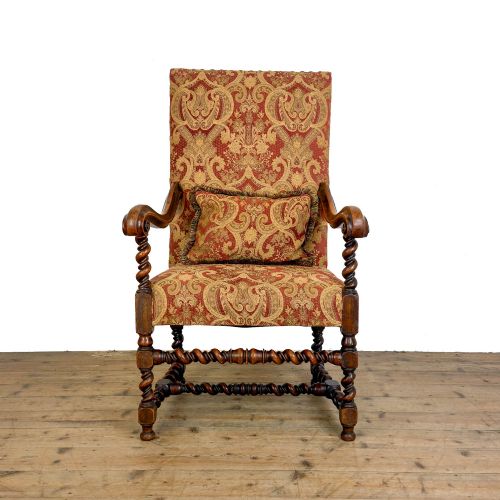
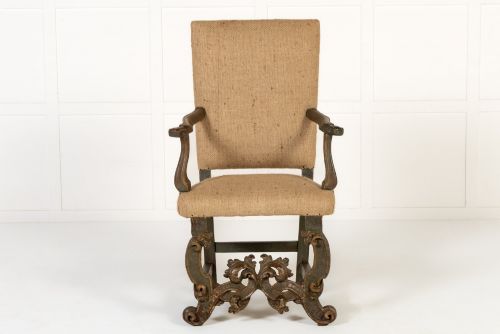

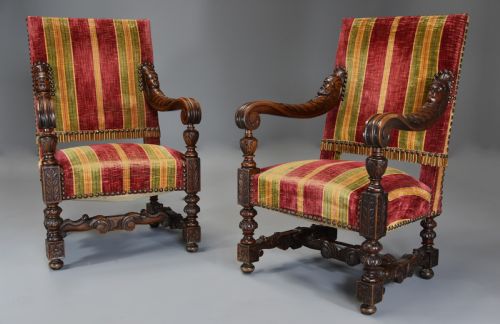


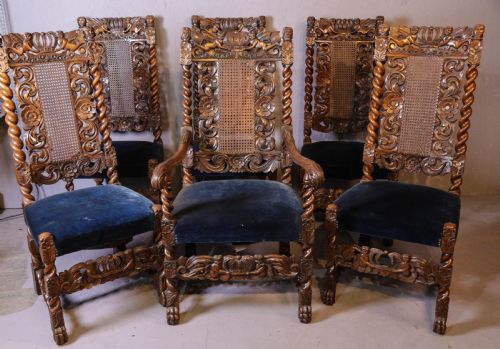

Baroque Walnut Armchair
A baroque walnut armchair brings sculptural timber and rich upholstery into a room, offering both historic presence and substantial seating.
Baroque Walnut Armchair
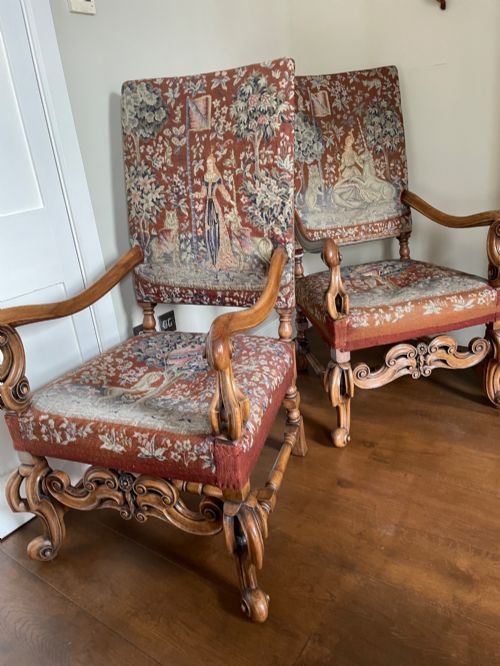
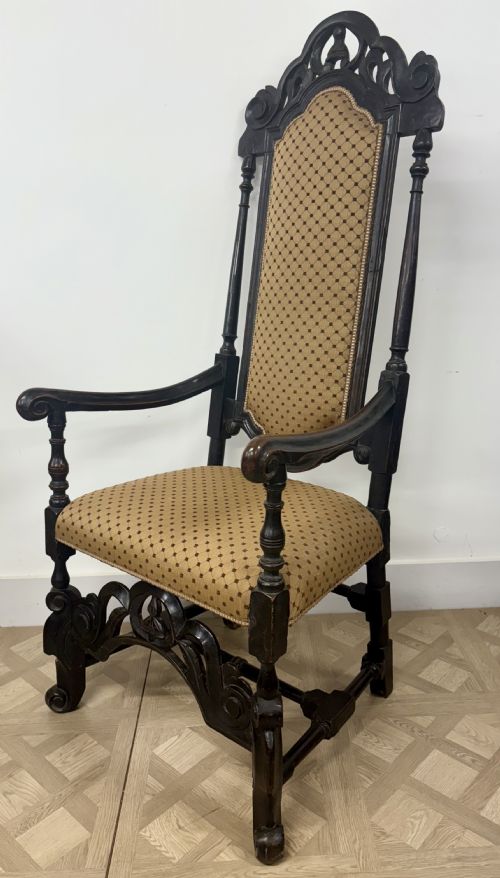
A baroque walnut armchair draws on seventeenth and eighteenth century traditions, though many examples date from later revival periods in the nineteenth and early twentieth centuries. These seats appear in various regional guises, including English, French, Dutch, and Italian interpretations, alongside Carolean and William and Mary revival forms.
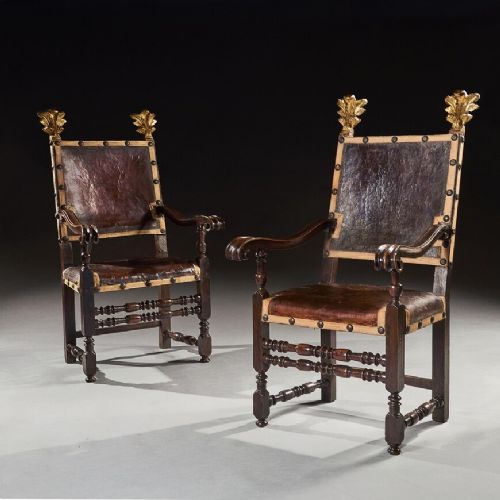
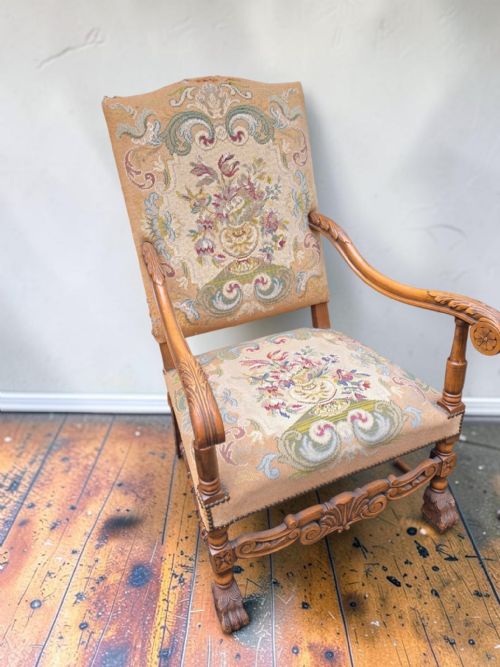
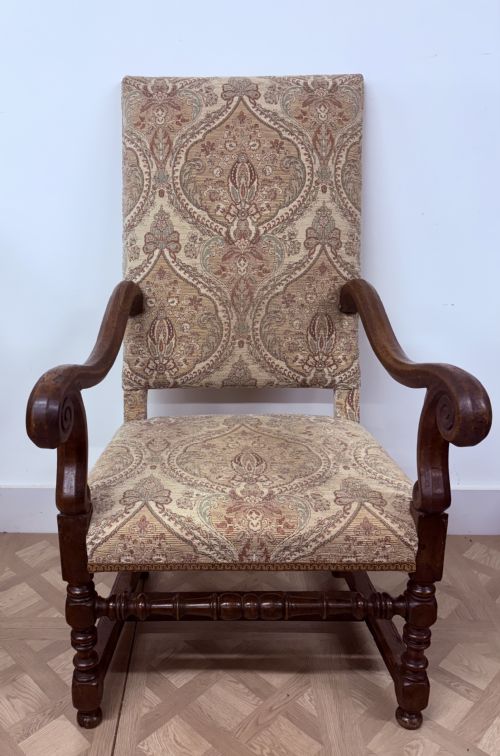
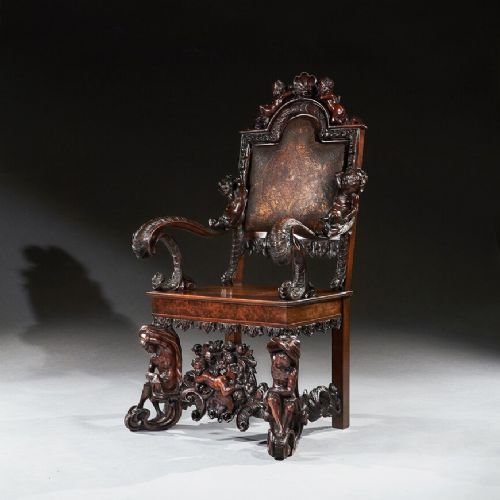
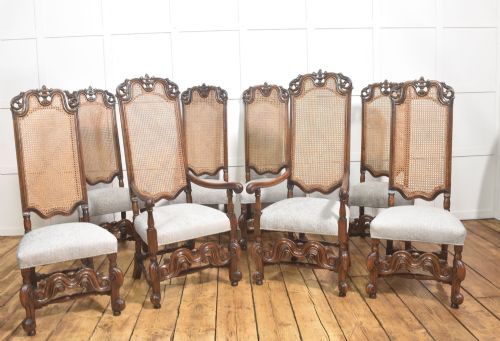
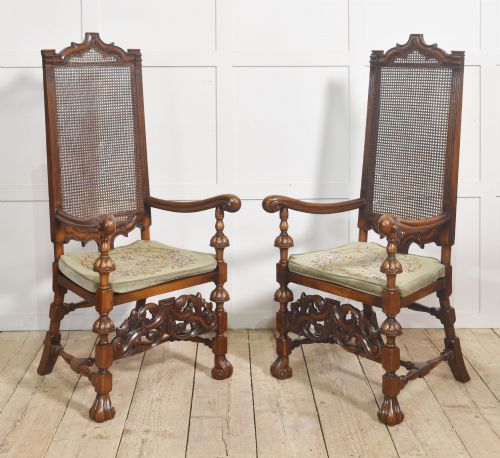
The selections span grand open armchairs with high cane backs to heavily carved elbow chairs and low seaters covered in tapestry or needlework. Most pieces on offer date from the seventeenth and nineteenth centuries, utilising solid walnut frames often complemented by parcel-gilt details.
Buyers encounter both individual library chairs and matched pairs, with forms ranging from sturdy dining chairs to imposing throne armchairs. The presence of carved scrollwork, turned supports, and original or later textile upholstery defines the group.
Materials and construction methods
Makers shaped these frames from solid walnut, a timber chosen for its rich grain and suitability for deep, intricate carving. Artisans utilised traditional joinery techniques to secure the arms, legs, and high backs.
Surface ornamentation involved elaborate hand-carving, bobbin turning, and occasional parcel-gilt highlights applied to the timber. Upholstered variants relied on textile coverings such as velvet, fabric, needlepoint, and tapestry, sometimes backed by cane panels.
Baroque Walnut Armchair Retail Price Guide 2026
Typical asking prices for baroque walnut armchair among the pieces listed under this phrase on Sellingantiques today, from the lower quarter to the upper quarter. They describe what is for sale here now, not the wider market.
Listings feature walnut frames combined with cane, velvet, tapestry, and gold leaf across seventeenth, eighteenth, and nineteenth century periods.
Assessing quality and craftsmanship
The depth and crispness of the timber carving separate standard production from exhibition pieces attributed to specific master carvers. Relief work on the crest rails and arms reveals the hand of a skilled artisan rather than routine workshop output.
The integrity of the walnut frame and the quality of the upholstery materials, whether period needlework or fine leather, dictate the overall standing of the chair. Original surface patination and substantial timber scantlings contribute further to a piece's distinction.
The Baroque Walnut Armchair Glossary
- Carolean
- Pertaining to the reign of Charles II, characterised by exuberant walnut carving, scrolling motifs, and tall cane backs. This style forms a core visual reference for many revival armchairs.
- Parcel-gilt
- Partially gilded woodwork where gold leaf highlights specific carved details against the dark walnut ground. This technique adds visual contrast to baroque frames.
- Fauteuil
- An open-armed upholstered chair originating in France, featuring exposed wooden framing around the back and seat. These pieces often display refined carving along the arms and rails.
- Needlepoint
- Stitched textile work using wool or silk yarn over a canvas mesh, frequently employed to cover seventeenth and eighteenth century seat backs. Such covers provide texture and pattern.
- Marquetry
- The art of applying decorative veneer pieces to a structure to form intricate designs. Dutch examples frequently employ this technique on chair backs and rails.
Baroque Walnut Armchair: Frequently Asked Questions
How do I identify a seventeenth century original?
Examine the construction joints, timber oxidation, and hand tool marks on the walnut frame to determine age. Period pieces exhibit wear consistent with centuries of use and traditional joinery methods.
Compare the carving style and proportions against known examples from English, French, or Italian workshops of the era. Revival pieces from the nineteenth century often display heavier proportions and machine assistance.
Are these chairs comfortable for daily use?
Many baroque walnut armchairs offer firm support through their upright backs and padded or cane seats. High-backed variants provide substantial lumbar and head support.
Upholstered versions vary depending on the density of the internal stuffing and webbing. Owners often place these chairs in studies or reception rooms where posture takes precedence over lounging.
How should I care for walnut and upholstery?
Maintain the walnut frame by applying appropriate furniture wax sparingly to preserve the timber's natural lustre. Keep the wood away from direct heat sources and strong sunlight to prevent drying.
Vacuum fabric or tapestry upholstery gently with a soft brush attachment. Professional cleaning is recommended for delicate needlework and antique textiles.
What is the difference between baroque and rococo chairs?
Baroque designs emphasise symmetry, grand scale, heavy scrolling, and architectural dignity. The carving is bold and linear, often featuring straight high backs and structural turned supports.
Rococo armchairs introduce asymmetric curves, C-scrolls, and more organic, flowing motifs with lower, more relaxed profiles. The ornamentation becomes lighter and more playful compared to the earlier style.