

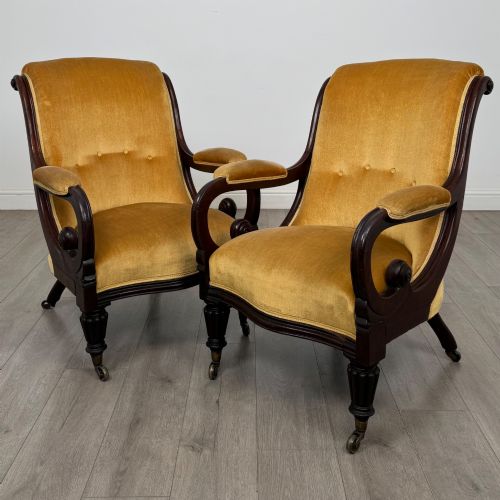
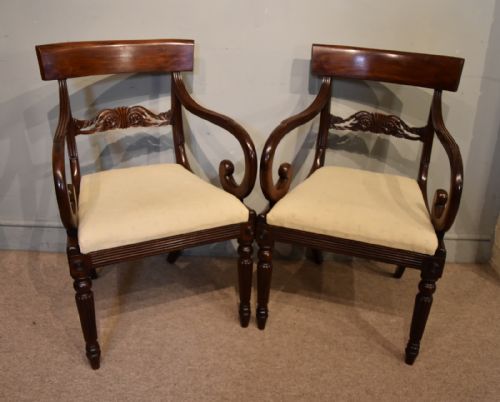


Carved Scroll Leg Chair
A carved scroll leg chair brings solid nineteenth-century timber and fluid joinery into a room, offering both reliable seating and strong period character.
Carved Scroll Leg Chair
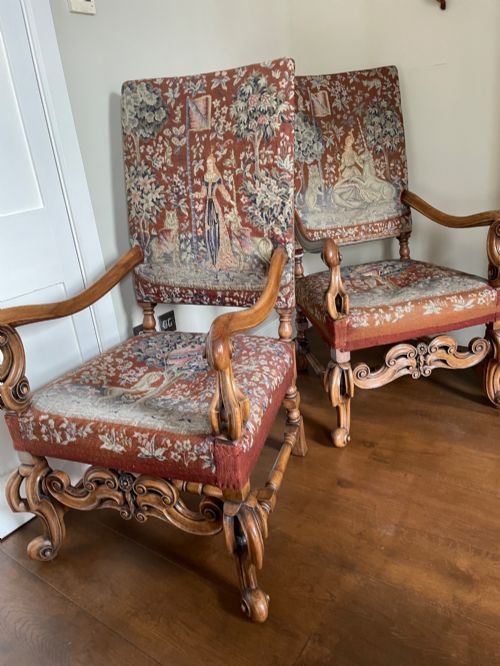
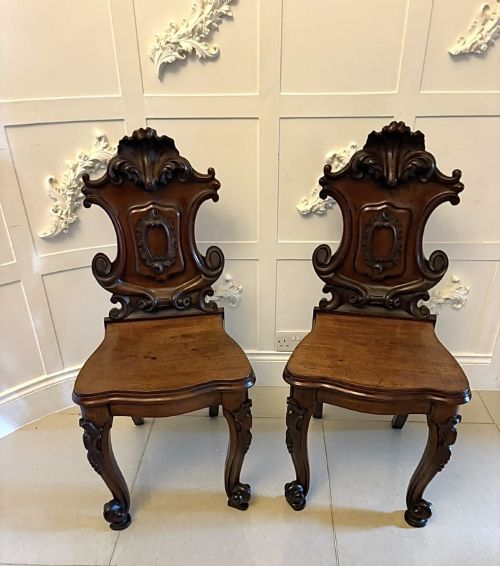
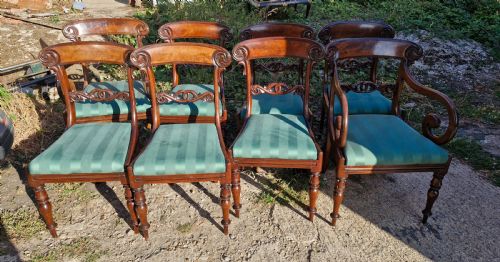
When you search for a carved scroll leg chair, you enter a field dominated by Victorian and Regency examples shaped from dense hardwoods. These pieces span formal dining sets, heavy hall chairs, and low occasional seats intended for parlour use.
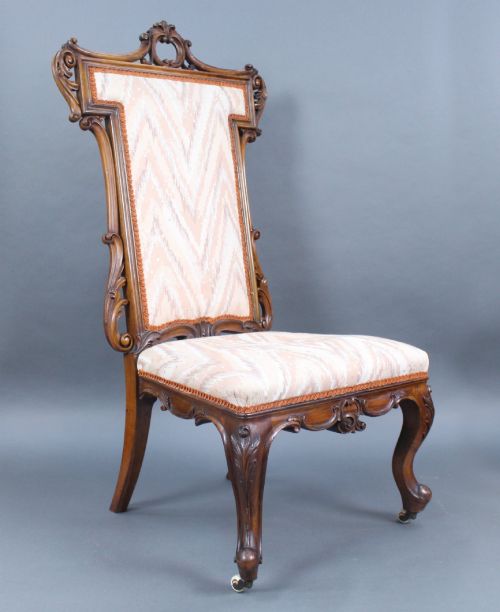
The most common forms on this page include mahogany dining chairs and walnut occasional seating, often featuring distinct scrollwork carved directly into the wooden frame or arms. Makers from the nineteenth century favoured these fluid lines to soften upright proportions.
Origins range from English workshops to Irish sets and French revival pieces, showing how widely the scroll motif travelled across nineteenth-century furniture design. Buyers encounter everything from single reception seats to large dining sets.
How they were made
Carpenters relied on solid mahogany, walnut, and oak to build the structural frames, carving scrolls into arms, backs, and legs with hand chisels. Rosewood also appears in finer nineteenth-century frames, offering a rich grain that takes a high polish.
Upholstery techniques combined traditional stuffing with fabrics like velvet, tapestry, and contemporary textiles secured by brass tacks. Removable backs and drop-in seats allowed workshops to update coverings without altering the wooden skeleton.
Carved Scroll Leg Chair Retail Price Guide 2026
Typical asking prices for carved scroll leg chair among the pieces listed under this phrase on Sellingantiques today, from the lower quarter to the upper quarter. They describe what is for sale here now, not the wider market.
Some nineteenth-century hall chairs recorded here served in law chambers, quietly witnessing centuries of stern legal deliberation.
What varies in quality
The crispness of the hand carving dictates the visual standard, separating sharp, deeply undercut scrolls from soft, mechanically rounded edges. Timber selection also defines the tier, with figured mahogany and dense walnut commanding greater presence than standard oak.
Structural integrity relies on the original joinery remaining tight within the frame, ensuring that legs and scroll arms withstand daily use. Matching sets demonstrate higher initial investment than single hall or occasional chairs.
The Carved Scroll Leg Chair Glossary
- Scroll leg
- A furniture support carved into a spiral or curved scroll shape at the foot or knee. This detail adds ornamental movement to heavy nineteenth-century timber frames.
- Hall chair
- An upright wooden seat designed for an entrance hall, typically lacking upholstered arms and featuring a carved or painted back. These pieces prioritise sturdy timber construction over comfort.
- Occasional chair
- A light, movable seat used for supplementary seating in parlours or drawing rooms. They often display decorative woodwork and upholstered scroll arms.
- Regency
- A style period spanning the early nineteenth century defined by classical restraint, Grecian influences, and dark hardwoods like mahogany. Pieces from this era lean towards clean architectural lines.
- Tapestry
- A heavy woven fabric often utilised for period upholstery on Victorian and revival frames. It provides durable texture alongside traditional patterns.
Carved Scroll Leg Chair: Frequently Asked Questions
How do I clean a velvet upholstered scroll chair?
Brush the velvet gently with a soft bristle brush following the grain to lift dust and surface particles. Avoid heavy moisture or harsh cleaning agents that might damage the delicate pile.
Test any specialist fabric cleaner on a hidden underside patch first. Professional conservation cleaning remains safest for fragile nineteenth-century textiles.
Can I use these chairs for daily dining?
Mahogany and oak dining chairs from the nineteenth century were built for regular use and remain structurally robust. Ensure the joints and glue blocks are secure before placing them around a modern table.
Occasional or nursing chairs, however, feature lighter frames and lower seats unsuited for heavy dining tasks. Reserve those for lighter parlour seating.
How do I tell a Victorian chair from a Regency one?
Regency chairs generally display leaner classical proportions, often drawing inspiration from Greek and Roman forms in solid mahogany. Their carving is typically restrained and architectural.
Victorian pieces tend to be heavier, employing walnut, rosewood, or oak with more exuberant floral and scroll carvings. They frequently feature button upholstery or elaborate tapestry covers.
What is a nursing chair?
A nursing chair is a low-seated Victorian armchair designed for comfort during childcare or general relaxation. The reduced height made it easier to tend to infants or sit near low coal fires.
These pieces often include sprung seats, high scroll backs, and upholstered frames on castors or short cabriole legs. They work well today as bedroom or reading chairs.