


Baroque Style Side Table
A baroque style side table brings dramatic scrollwork and rich carving into a room, offering both surface space and striking historical presence.
Baroque Style Side Table
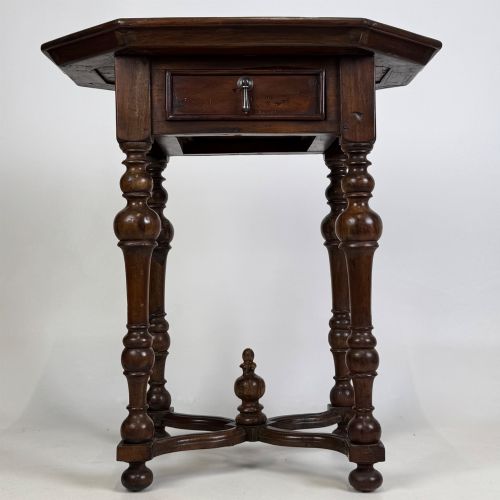
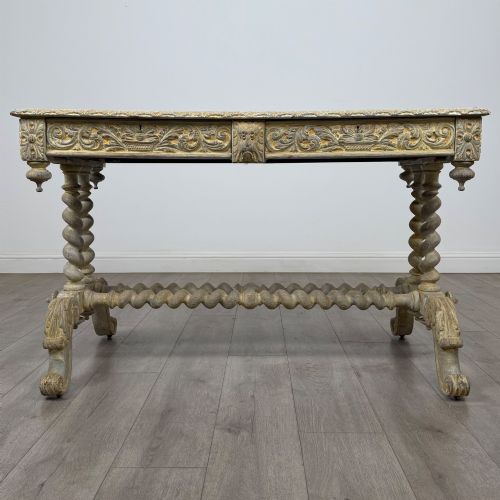
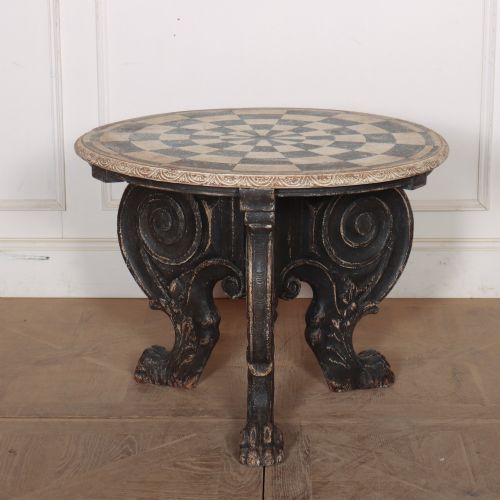
A baroque style side table encompasses heavy timber forms, console tables, and centre tables created across the eighteenth and nineteenth centuries, alongside revival pieces from the early twentieth century. These furnishings draw on Italian, Spanish, French, and Dutch idioms, often featuring elaborate figurative carving, marble tops, and gilded finishes.
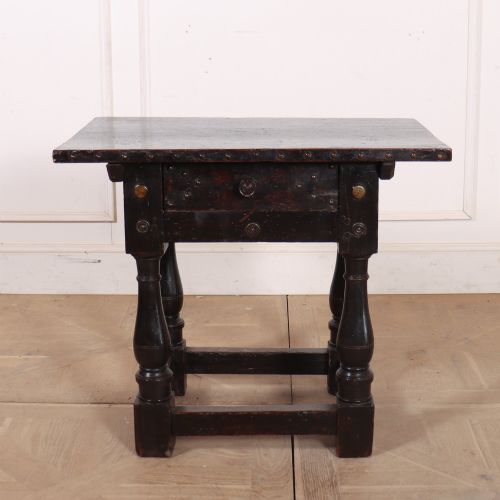
The selection on this page relies heavily on nineteenth-century interpretations and revivals, sitting alongside genuine eighteenth-century examples in oak, walnut, and yew tree. Console tables designed to stand against a wall appear frequently, alongside smaller side tables and writing desks.
Buyers seeking this aesthetic will find pieces ranging from restrained oak writing tables to monumental console tables supported by carved eagles, putto figures, and rams' heads. The forms bridge functional surface use and sculptural display, reflecting the grand domestic interiors of their origin.
What varies in quality
The depth and crispness of the hand-carving define the upper tiers of quality, separating vigorous figurative work from softer, more mechanical moulding. Superior examples display undercut foliage, expressive faces, and balanced proportions that command visual attention without appearing crowded.
Material selection dictates longevity and visual resonance, with dense old-growth walnut and finely grained oak holding sharper detail than secondary woods. Original mercury gilding or well-applied gold leaf on gesso outlasts hasty modern restorations, ageing with a warm, mellow tone rather than flat brightness.
Several tables rely on carved eagles, putto figures, and rams' heads to hold up the tea.
The Baroque Style Side Table Glossary
- Console table
- A table designed to be fixed against a wall, frequently supported by ornamental brackets or front legs rather than standing independently.
- Giltwood
- Timber coated with gold leaf or gold dust laid over a prepared gesso ground, creating a bright metallic surface finish.
- Gesso
- A plaster-like mixture applied to wood surfaces as a smooth base for subsequent gilding and fine decorative painting.
- Marble top
- A polished stone slab inset into the upper frame of a table, offering a cool, durable surface for display.
- William and Mary style
- An architectural furniture aesthetic marked by geometric turning, upright proportions, and rich veneer work popular around the turn of the eighteenth century.
Baroque Style Side Table: Frequently Asked Questions
Where should I place a baroque style side table?
These tables suit hallways, living rooms, and dining spaces where their carved wooden frames and decorative tops can function as focal points. Console versions look best against a flat wall, often anchored beneath a mirror or painting.
Freestanding centre tables require adequate floor space to be appreciated from all sides, serving as display surfaces for lamps, books, or decorative objects.
How do I clean a gilded console table?
Giltwood surfaces require gentle dusting with a soft, dry brush to prevent damage to the delicate gold leaf layer. Avoid chemical cleaners, moisture, and rough cloths that can strip the gesso and expose the underlying wood.
Marble inserts tolerate slightly more robust care but should still be wiped with a damp microfibre cloth and mild soap, avoiding acidic substances like lemon or vinegar.
Are these tables sturdy enough for daily use?
Most solid oak and walnut tables provide robust surfaces for everyday tasks like writing or holding table lamps. Console tables fixed to walls or supported by heavy carved pedestals offer stable platforms when placed correctly.
Tables featuring delicate gesso ornament or slender figural legs demand careful placement away from heavy foot traffic to prevent accidental knocks.
How can I tell an 18th-century table from a 19th-century revival?
Eighteenth-century pieces typically exhibit hand-cut joinery, timber shrinkage consistent with age, and tool marks left by traditional edge tools. The patina on the wood develops a deep, organic warmth through decades of handling.
Nineteenth-century revival items often display heavier, denser carving styles and machine-sawn timber components hidden beneath the decorative surfaces.