





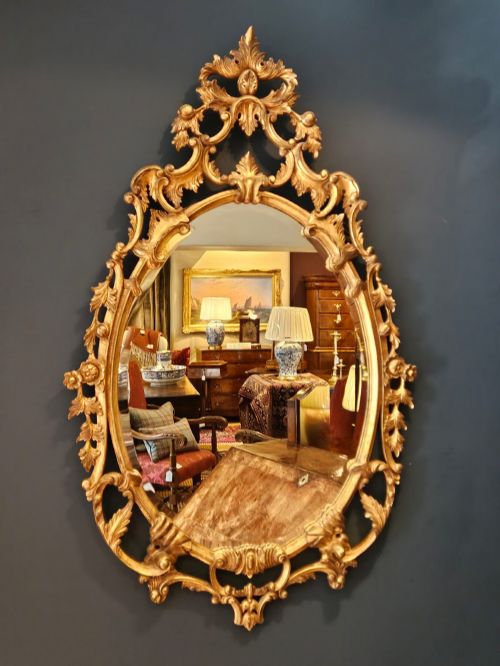


Baroque Style Gilded Frame
A baroque style gilded frame brings opulent theatre and monumental presence to a wall, carrying centuries of Italian, French and Dutch artistic ambition.
Baroque Style Gilded Frame
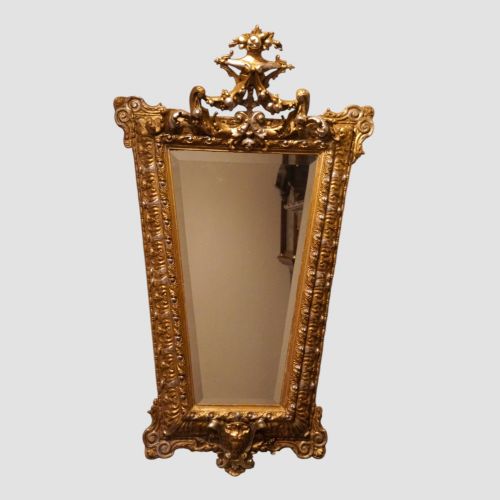
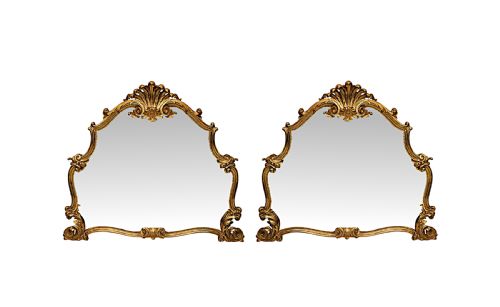
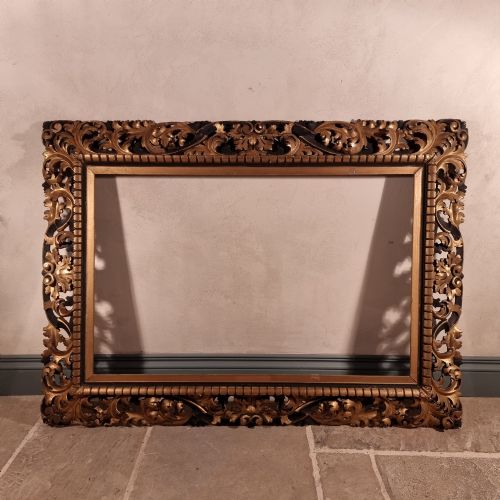
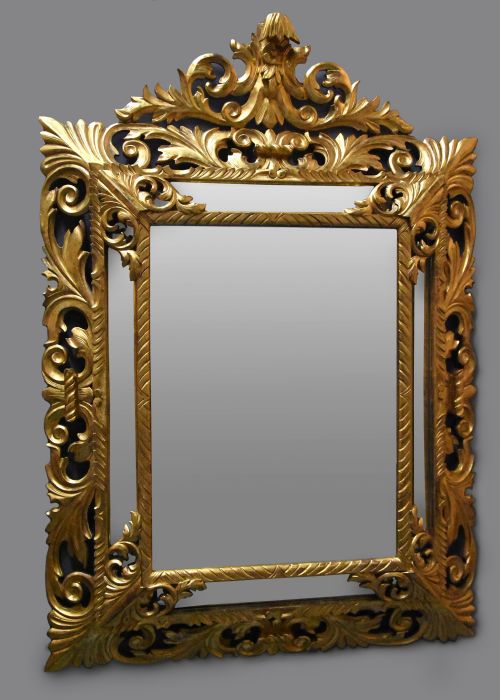
A baroque style gilded frame encompasses heavily carved wooden surrounds and mirror plates designed to command attention in a grand interior. The items found here span grand overmantel mirrors, cushion mirrors, Florentine picture frames and Italian wall mirrors.
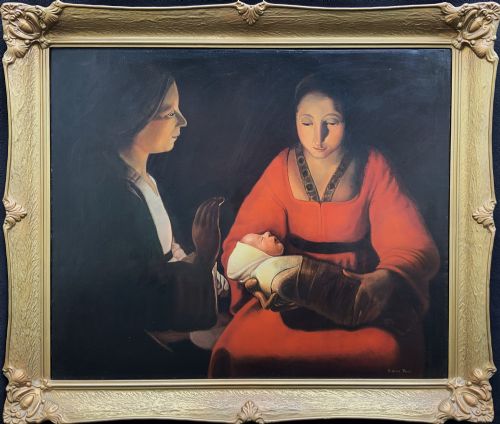
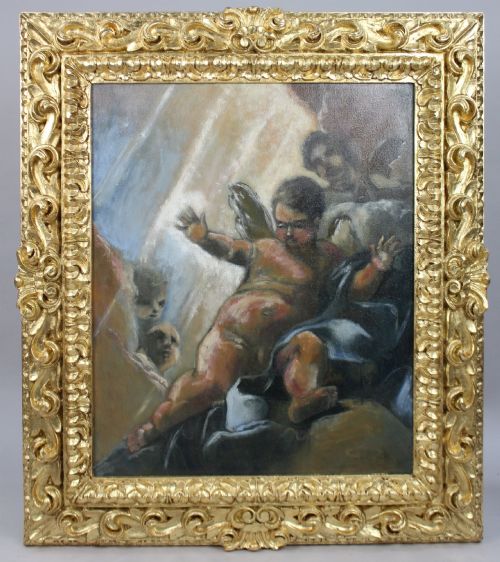
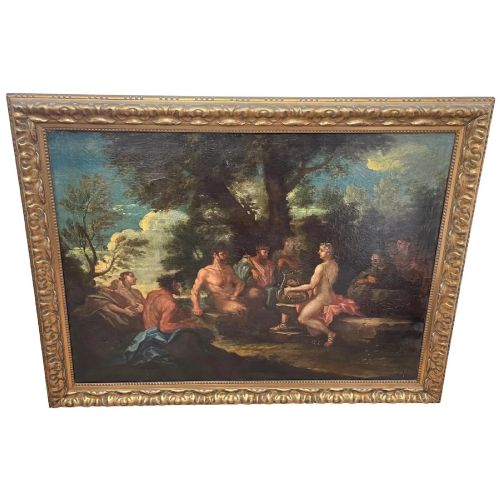
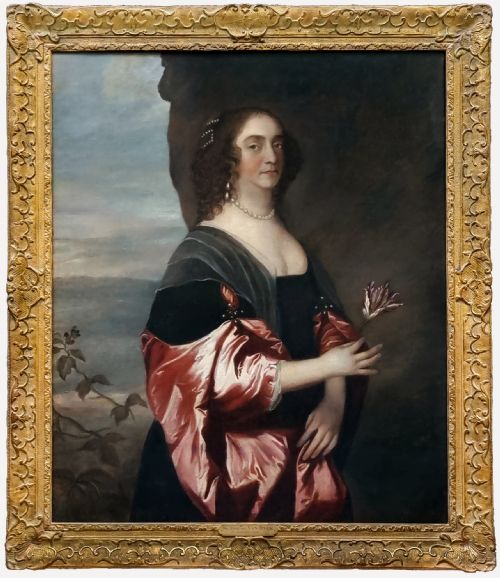
Most pieces encountered on this page date from the nineteenth century, channelling earlier seventeenth and eighteenth-century aesthetics through revivals. These objects frequently frame oil paintings or enclose deep glass panels designed to reflect light across a room.
Origins heavily lean towards Italian craftsmanship, particularly Florentine workshops producing elaborate carved giltwood forms. Alongside these, French baroque pier glasses and Dutch golden age aesthetic influences appear in the selection.
What varies in quality
Depth and crispness of the wood carving separate ambitious workshop pieces from simpler decorative items. Master carvers achieved deep undercut relief where acanthus leaves and scrolls detach visually from the backing board.
The application of gold leaf and the preservation of the original bole layer determine the visual richness of the surface. Finer examples display meticulous burnishing and harmonious ageing where the red or yellow underlayer subtly telegraphs through the gold.
Sir Peter Lely·Nicolaes Maes·Francesco Zuccarelli·Hyacinthe Rigaud·Claude Lorrain·Rembrandt van Rijn
The Baroque Style Gilded Frame Glossary
- Giltwood
- Wood that has been coated with gold leaf over a prepared gesso ground. This material forms the primary structure of high-status baroque mirrors and picture frames.
- Gesso
- A mixture of gypsum or chalk and animal glue used to coat wooden frames. It provides a smooth, absorbent surface capable of holding sharp carved details before gilding.
- Cushion mirror
- A mirror frame featuring a broad, convex profile that slopes outward or inward towards the glass plate. This form maximises reflective surface area and catches light from multiple angles.
- Bole
- A fine prepared clay layer applied to gesso before laying gold leaf. The colour of the bole influences the tone of the final gilding.
- Pier glass
- A tall mirror specifically designed to hang on the wall space between windows. These pieces often feature elaborate baroque crestings and giltwood surrounds.
Baroque Style Gilded Frame: Frequently Asked Questions
What is a baroque style gilded frame?
A baroque style gilded frame is an ornate wooden surround covered in gold leaf, defined by dramatic scrollwork, deep carving and theatrical proportions. These pieces were originally built to house master paintings or large wall mirrors in stately European interiors.
Today, they function as independent decorative statements or period housings for historic canvases. Their sculptural presence transforms an ordinary wall into a focal point.
How can I tell a revival piece from an original?
Distinguishing a seventeenth-century original from a nineteenth-century revival involves examining the tool marks, wood shrinkage and construction methods. Nineteenth-century makers frequently adopted earlier baroque motifs with great skill while utilising machine-sawn timber or different gesso formulations.
Analysing the wear patterns on the gold leaf and the backing boards helps clarify the manufacturing era. Many fine decorative items on the market date from these later revival periods.
How do I clean a gilded frame safely?
Cleaning a gilded surface requires gentle dusting with a very soft, dry brush to remove particles without disturbing fragile leaf. Moisture and chemical cleaners must be avoided entirely, as they dissolve historical gesso and lift gold leaf.
Professional conservation advice should be sought if deeper cleaning is required. Preserving the integrity of the original surface maintains both character and historical value.