
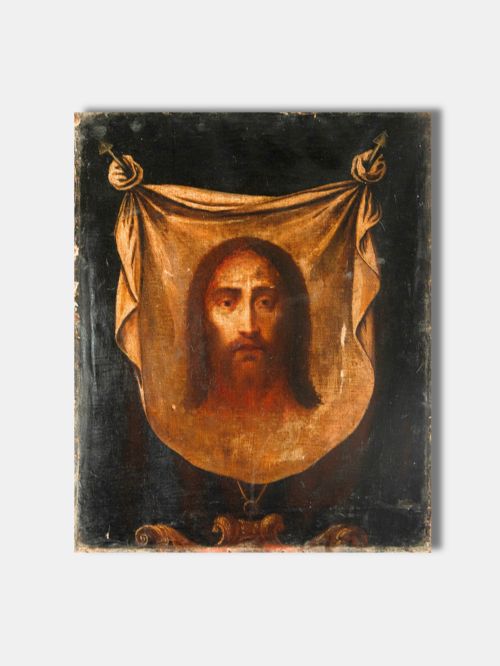
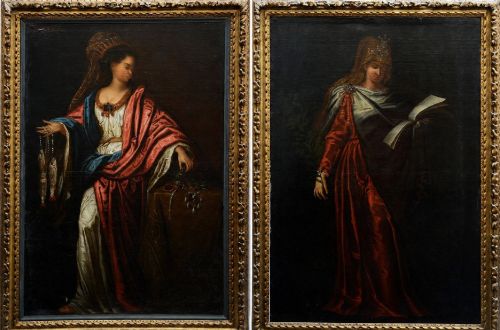
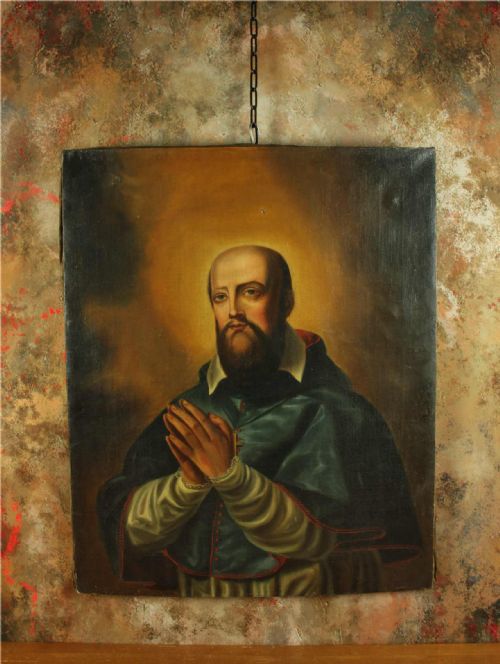


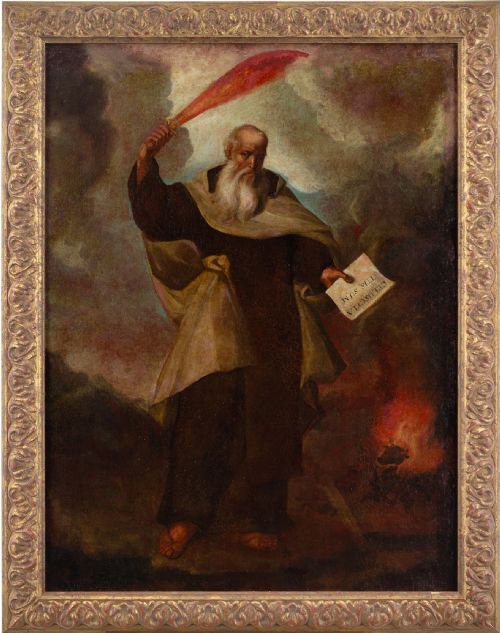


Baroque Religious Portrait Canvas
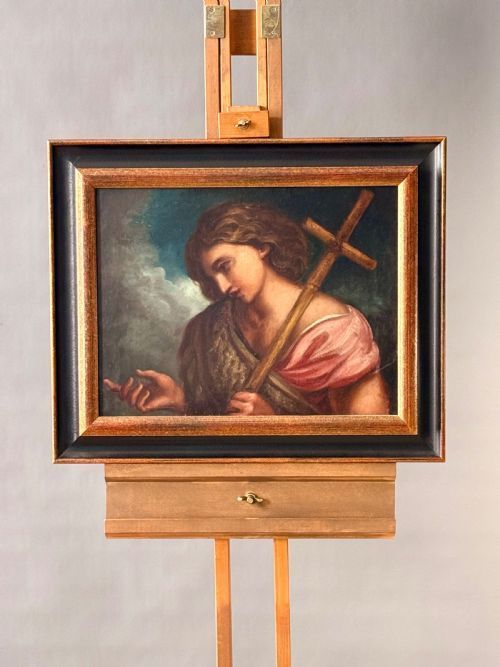
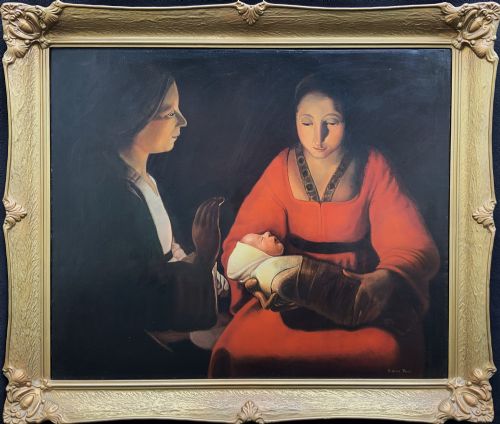
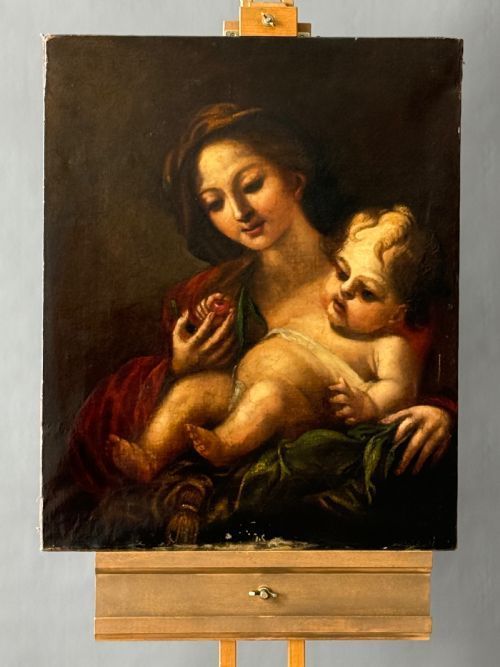
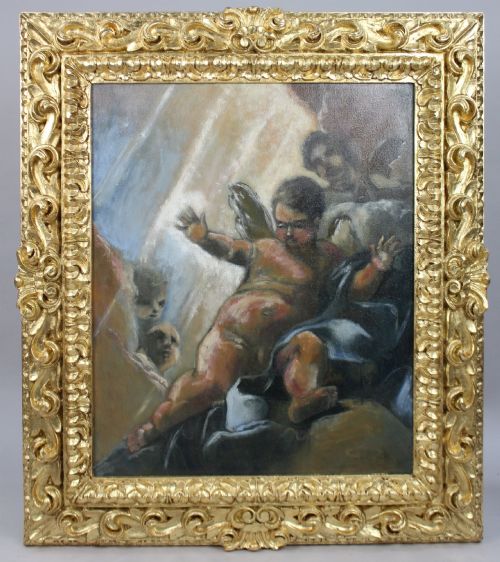
A baroque religious portrait canvas brings devotional subjects into the room with dramatic contrast, deep shadow and centuries of presence.
How they were made
These works utilise oil paint applied to woven canvas supports, allowing artists to build rich layers of pigment and glaze. The technique relies on chiaroscuro, creating deep contrasts between light and dark to direct attention toward the facial expressions and gestures of the subjects.
Frames are constructed from wood, frequently finished with carved giltwood or gilding to enhance the visual weight of the composition. Workshop production methods involved master painters collaborating with assistants to prepare grounds, mix pigments and complete secondary elements.
What varies in quality
The preservation of the original paint surface and the condition of the canvas support influence the integrity of the piece. Frames that match the period and style of the painting also contribute to the completeness of the object.
Listings feature canvases spanning the seventeenth, eighteenth, nineteenth and twentieth centuries, executed in oil paint upon wood and giltwood frames.
Francesco Solimena·Juan Ruiz Soriano·Gaspar de Figueroa·Gian Lorenzo Bertolotto·Guido Reni·Pompeo Batoni·Bartolomé Murillo·Georges de La Tour
The Baroque Religious Portrait Canvas Glossary
- Chiaroscuro
- An artistic technique employing strong contrasts between light and dark to give subjects a three-dimensional form. This method defines much of the dramatic tension seen in seventeenth-century painting.
- Giltwood
- Wood that has been coated with a thin layer of gold leaf or powder. It provides reflective framing for dark oil compositions.
- Old Master
- A term for a European artist of skill who worked before about eighteen hundred. These painters produced the foundational religious and portrait works of their respective schools.
- Ex-Voto
- A votive offering presented to a saint or divinity, often in fulfilment of a vow. These paintings record acts of devotion or gratitude.
- Emilian School
- A regional group of painters originating from the Emilia-Romagna region of Italy. They contributed significantly to the development of baroque art.
Baroque Religious Portrait Canvas: Frequently Asked Questions
What is a baroque religious portrait canvas?
It is an oil painting on canvas depicting a saint, biblical figure or religious leader in the dramatic baroque style. These works date primarily from the seventeenth and eighteenth centuries.
Subjects range from intimate depictions of the Virgin Mary to large-scale portraits of popes and scholars. They emphasise emotional intensity and deep shadow work.
How do I identify seventeenth-century canvases?
Seventeenth-century pieces typically display characteristic handling of oil paint, dramatic chiaroscuro lighting and specific regional school conventions. Canvas preparation and pigment analysis further assist in dating.
Works from this era often connect to Italian, Spanish or French workshops active during the height of the baroque movement. Secondary documentation or attribution helps confirm origin.
Where should I hang these paintings?
These works suit spaces with controlled lighting that can accommodate traditional giltwood frames and dark oil palettes. They function effectively as focal points in studies, living areas or hallways.
Placing canvases away from direct sunlight and moisture protects the oil paint and canvas support over time. Proper wall anchoring is necessary for heavier framed pieces.
What does after an artist mean?
The term indicates that the painting is a later copy or study based on a known work by a master. These pieces were often created by students or followers as part of their training.
Such paintings still reflect period techniques and devotional practices while offering an alternative to primary master works. They provide insight into the dissemination of popular religious imagery.