



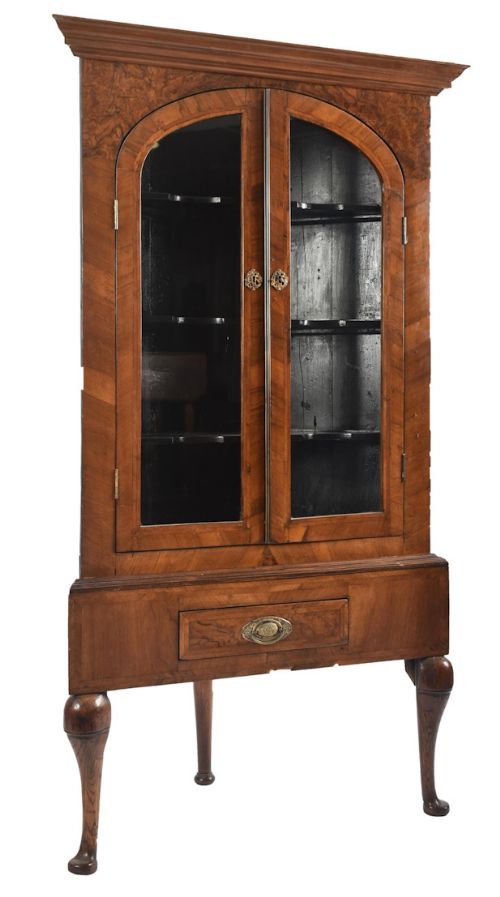

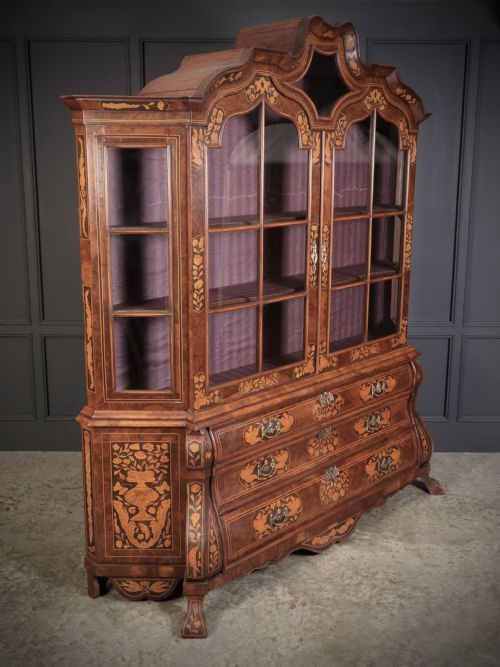
Baroque Glazed Cabinet
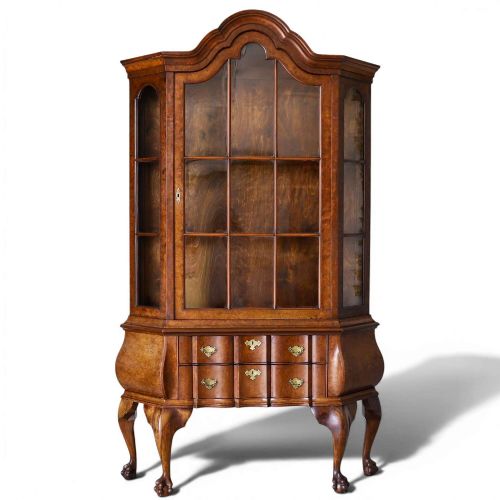
A baroque glazed cabinet brings depth and historic presence to a room, offering a display space framed in rich walnut and intricate marquetry.
Baroque Glazed Cabinet
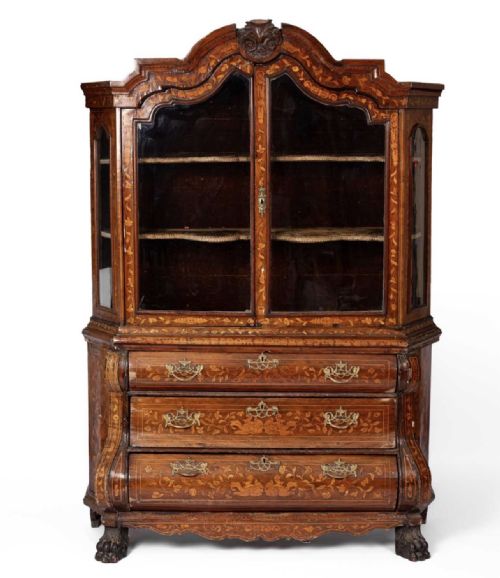
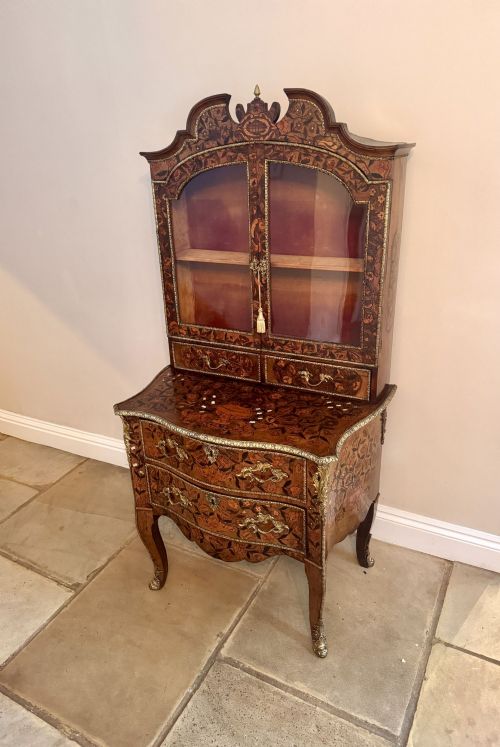
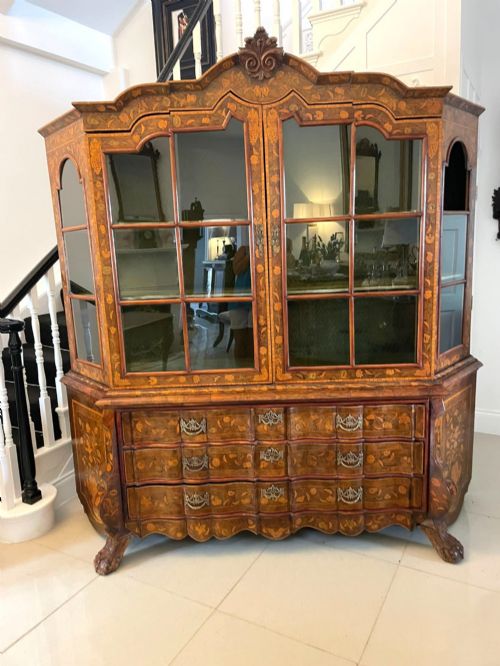
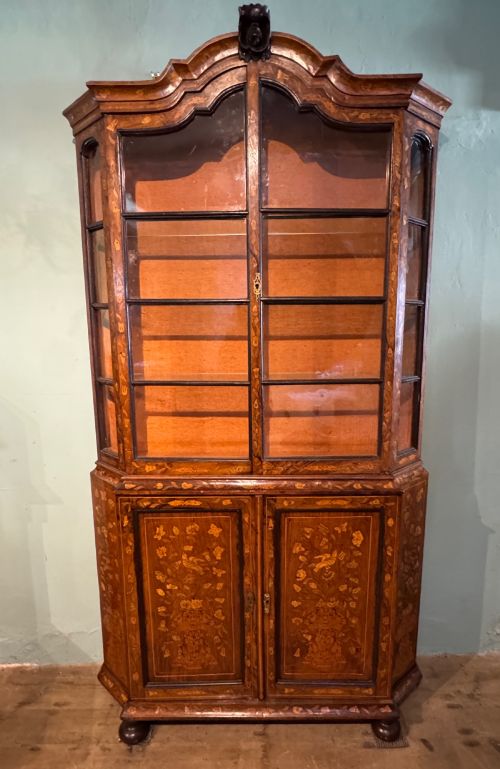
A baroque glazed cabinet combines display glass with deep wooden carcasses, frequently taking the form of a cabinet on chest, a vitrine, or a corner cupboard. These pieces emerge primarily from 18th century and 19th century workshops, alongside later revival pieces from the early decades of the 20th century.
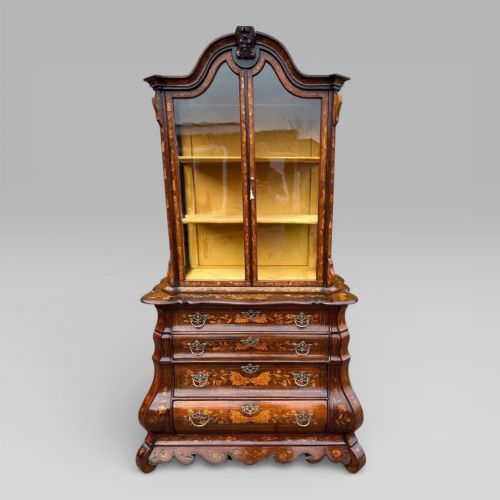
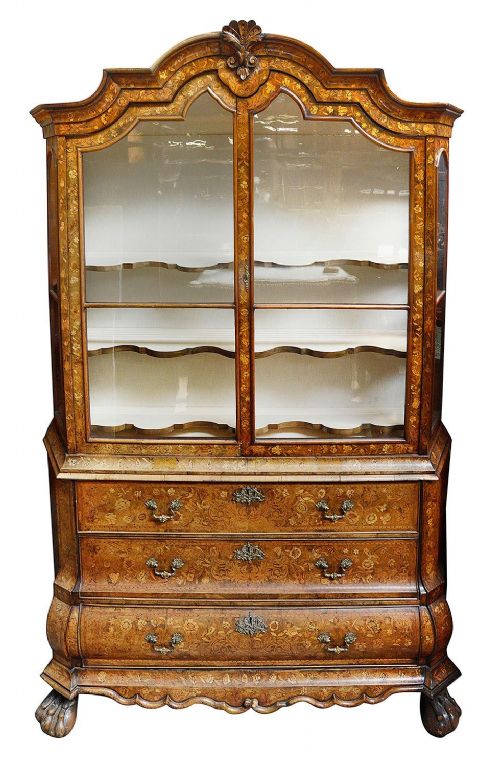
The versions met most frequently on this page originate from Dutch makers, showcasing distinct floral marquetry and bombe silhouettes. Walnut and fruitwood form the structural foundation, while glass upper doors allow for the exhibition of treasured collections.
How they were made
Cabinetmakers utilised dense timbers such as walnut and oak as the structural base, applying fine veneers and elaborate fruitwood marquetry in floral patterns across the surfaces. Glass panels were secured within wooden framing to protect the interior while maintaining visibility.
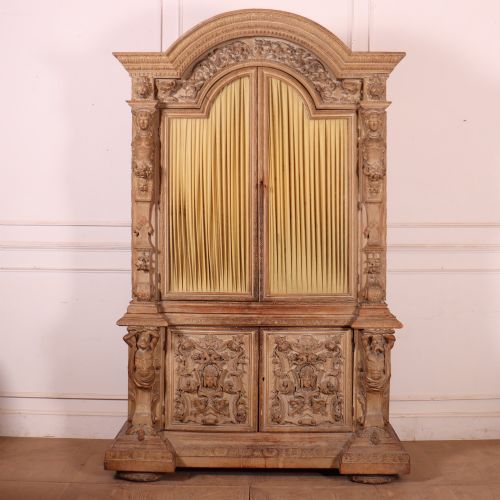
Brass hardware and mounts were cast and fitted to drawers and doors, complementing the dark tones of the wood. Carved details and shaped bombe profiles required advanced joinery and precision woodwork by skilled hands.
Baroque Glazed Cabinet Retail Price Guide 2026
Typical asking prices for baroque glazed cabinet among the pieces listed under this phrase on Sellingantiques today, from the lower quarter to the upper quarter. They describe what is for sale here now, not the wider market.
The listings on this page span the 18th century through to the 1930s, featuring walnut, fruitwood, and oak alongside glass and brass elements.
What varies in quality
The intricacy and preservation of the floral marquetry inlay dictate much of the visual distinction between examples. Richness in the grain of the walnut veneer and the depth of the fruitwood contrast set finer pieces apart.
Proportion and execution of the bombe curve show the maker's skill in handling difficult timber forms. Original glass and well-preserved brass hardware contribute further to the integrity of the piece.
Edwards & Roberts
The Baroque Glazed Cabinet Glossary
- Marquetry
- Decorative veneer work forming pictures or patterns by using small pieces of wood and other materials. This technique defines the floral designs seen across many Dutch cabinets.
- Bombe
- A swelling or convex outward curve on the lower part of a cabinet or chest. This distinctive shape requires expert carpentry to execute in solid wood and veneer.
- Vitrine
- A glass-fronted cabinet designed specifically for displaying fine objects or curiosities. The glazed doors and sides allow light to enter from multiple angles.
- Cabinet on chest
- A two-part furniture form featuring a display cabinet sitting atop a chest of drawers or a lower cupboard base. This tall configuration maximises storage and display capacity.
Baroque Glazed Cabinet: Frequently Asked Questions
What is a baroque glazed cabinet?
A baroque glazed cabinet is a display piece featuring glass doors and elaborate woodwork, designed to showcase precious items while adding architectural presence to an interior.
Originating largely from Dutch and continental traditions, these cabinets combine functional storage with decorative marquetry and shaped wooden profiles.
How were these cabinets used?
Historically, these cabinets served to store and display valuable porcelain, glassware, and small curiosities belonging to affluent households.
Today, they perform a similar function in domestic spaces, protecting collections behind glass while acting as a focal point in a dining room or study.
How do I live with a baroque cabinet?
Living with one of these cabinets involves balancing its strong visual weight with the surrounding room, often placing it against a plain wall to highlight the marquetry.
Care should be taken to keep the wood away from direct heat sources and strong sunlight to preserve the walnut veneers and fruitwood inlays.
How do I tell periods apart?
Earlier 18th century pieces typically display hand-cut veneers, dense walnut construction, and more restrained proportions compared to later revival items.
19th century and early 20th century examples often lean into heavier revival styles, featuring bolder floral marquetry and varied interior fittings.