

Baroque Cherub Carving
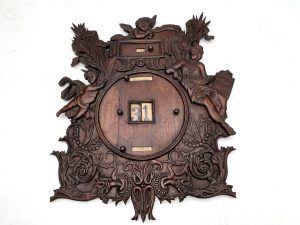
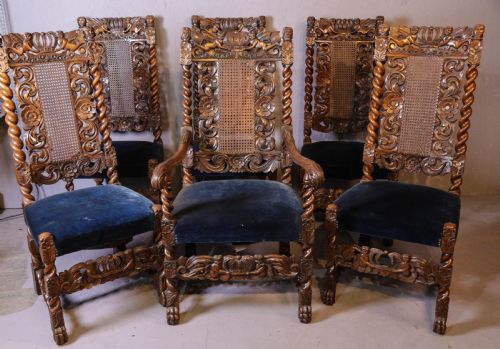
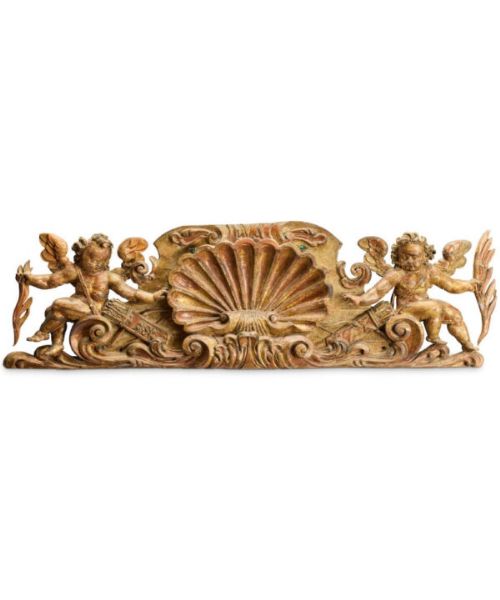
A baroque cherub carving brings expressive carved timber figures into a room, capturing dramatic seventeenth and eighteenth century continental style.
Baroque Cherub Carving
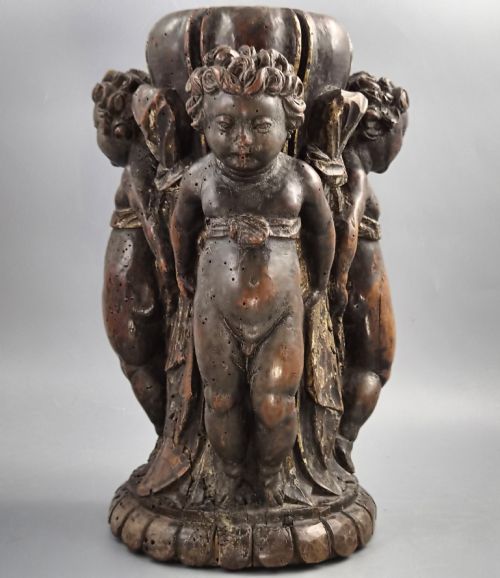
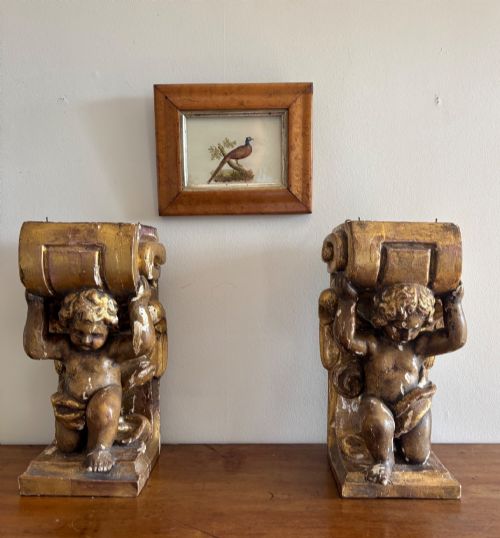
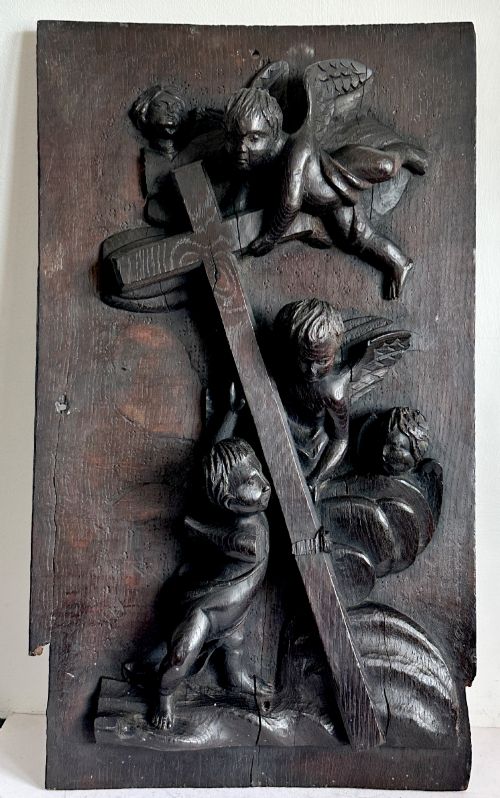
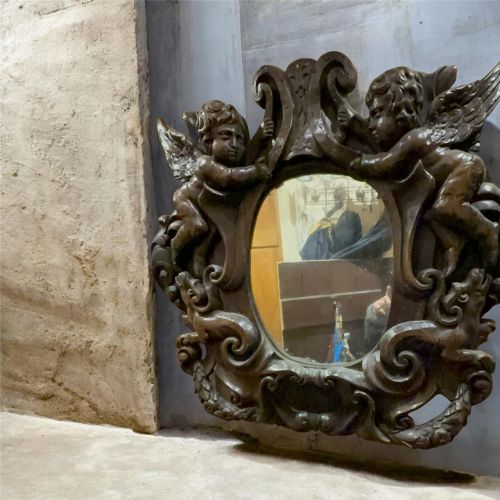
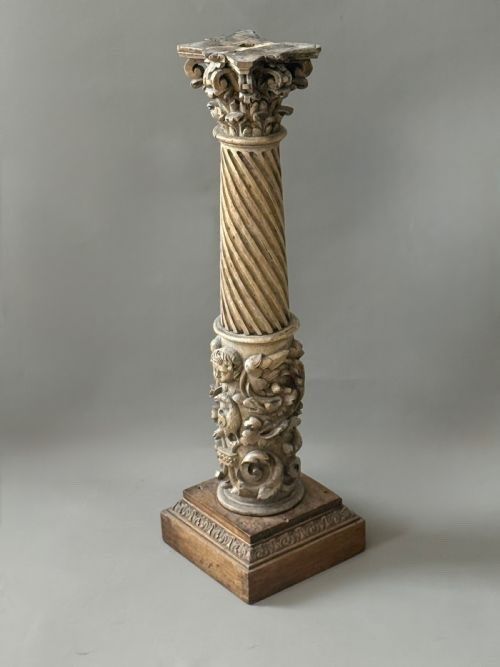
A baroque cherub carving is an ornamental wooden sculpture or architectural element depicting winged putti, typically rooted in seventeenth and eighteenth century European traditions. Buyers encounter these figures integrated into wall brackets, mirrors, console tables, and architectural panels across Italian, French, and English origins.
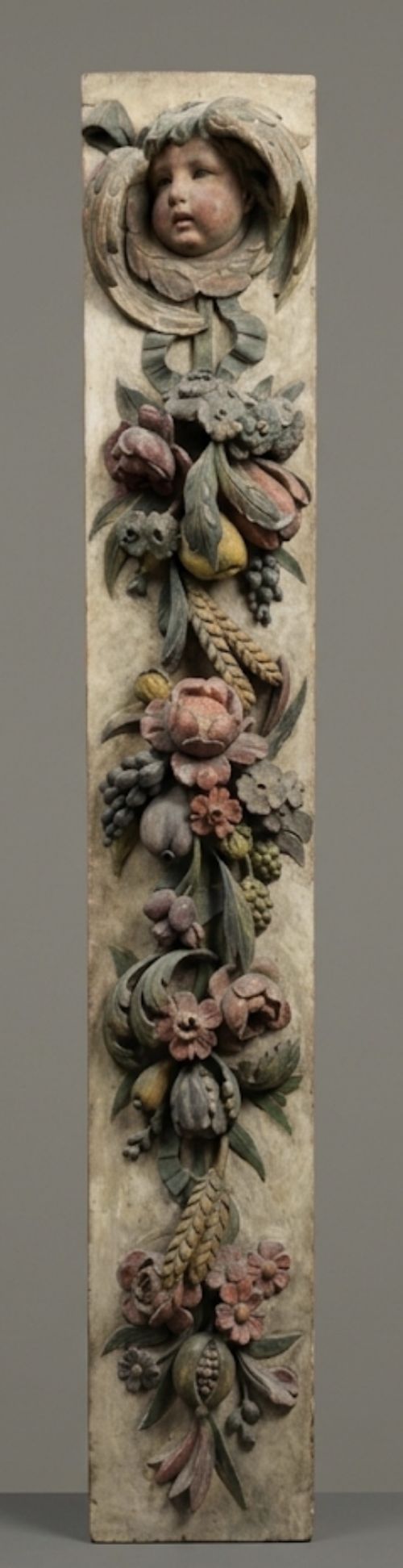
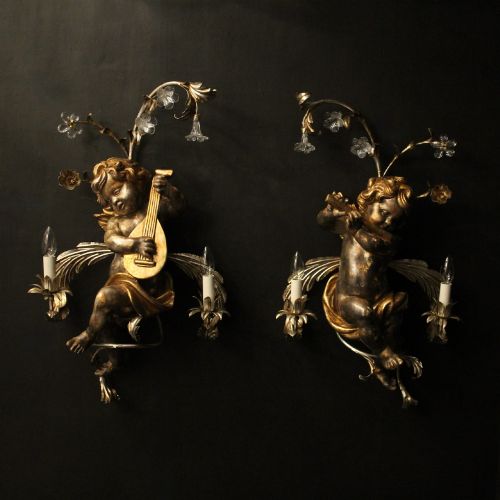
The versions most common on this page range from walnut and oak panels to giltwood wall lights and freestanding statues. They appear both as original period artefacts and through later revival styles produced during the nineteenth and twentieth centuries.
How they were made
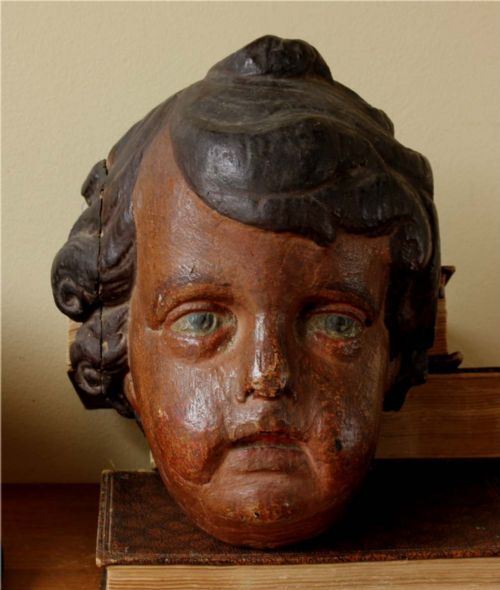
Carvers shaped these figures primarily from timbers such as oak, walnut, lime wood, and pine, employing deep relief and pierced carving techniques to achieve dramatic three-dimensional depth. Master craftsmen utilised chisels and gouges to render dynamic movement in the drapery and wings of each putto.
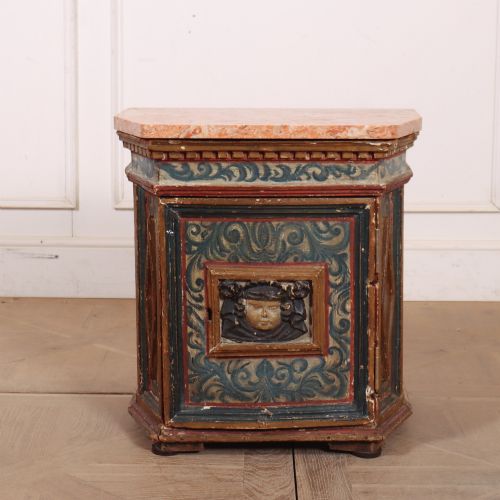
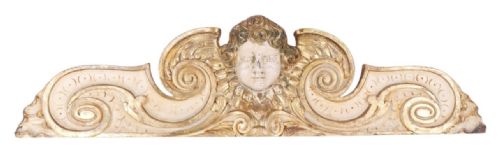
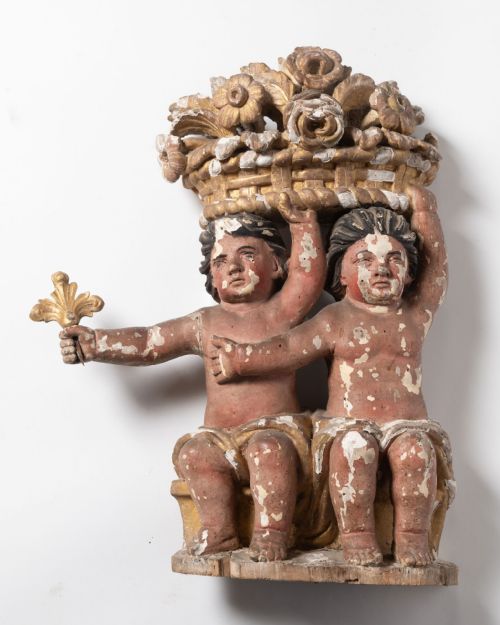
Surfaces were frequently finished with gesso and gold leaf to create opulent giltwood effects, or treated with polychrome paint and silvering. Architectural elements often combined carved wooden frames with hand-painted details or mirrored glass.
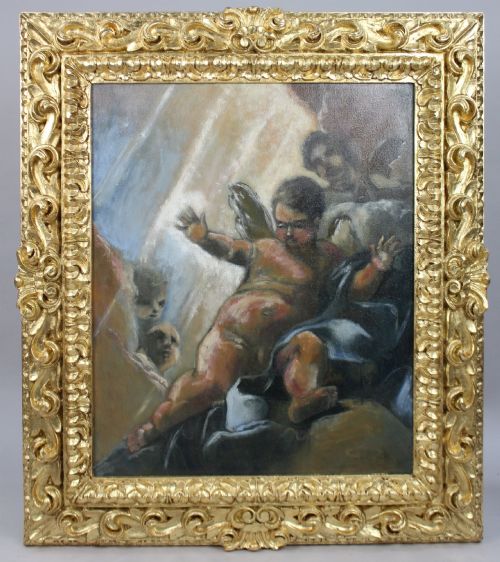
Object types span architectural salvage, wall brackets, console tables, oil paintings, and freestanding statues from multiple centuries.
What varies in quality
The distinction between ordinary and exceptional examples lies in the vitality of the carving and the depth of the relief work. Superior pieces display anatomical nuance in the cherub's limbs and face, whereas lesser items rely on mechanical repetition and shallow detailing.
Original surface treatments also dictate distinction, with intact period gilding or authentic polychrome pigment holding greater artistic integrity than later overpainting or stripped timber.
Edward Pearce·Grinling Gibbons
The Baroque Cherub Carving Glossary
- Putto
- A figure of a small chubby male child, often winged, common in baroque art. These representations form the central motif of a baroque cherub carving.
- Giltwood
- Timber that has been coated with a thin layer of gold leaf over a prepared gesso ground. This finish was widely utilised on grand mirrors and wall lights.
- Polychrome
- Decorated in several colours. This surface treatment appears on older wooden figures and panels to give lifelike hues to flesh and garments.
- Gesso
- A plaster-like mixture applied to wood as a smooth base for gilding or painting. It allows intricate relief details to be sharpened before the application of gold leaf.
- Cartouche
- An ornamental tablet or panel frame, often with scrolled edges, frequently surrounding or supporting figurative carvings in baroque architecture.
Baroque Cherub Carving: Frequently Asked Questions
How were these carvings originally used?
These sculptures and reliefs functioned largely as integral components of grand domestic interiors, adorning overdoor panels, staircase mounts, and church alters. They served to project status and religious devotion through dramatic architectural ornamentation.
Over time, many elements were detached from their original settings to become standalone wall brackets, mirrors, or decorative wall sculptures for domestic display.
How do I distinguish seventeenth century work from later revivals?
Authentic period pieces display the tool marks, timber shrinkage, and wear patterns characteristic of early hand-working methods. Revival pieces often show more uniform wood density and machine-finished backing structures.
Examining the underlying gesso layers and the natural oxidation of the timber helps determine whether a carving dates to the baroque era or the nineteenth century.
How should I mount a heavy wooden carving?
Due to the substantial weight of dense timbers like oak and walnut, wall-mounted pieces require professional anchoring into masonry or timber studs. Using appropriate structural brackets ensures the security of monumental panels and wall lights.
Positioning should avoid direct heat sources and strong sunlight to protect delicate gesso and gold leaf finishes from drying and cracking.
What is the difference between Italian and French baroque styles?
Italian baroque carving typically emphasises theatrical drama, intense movement, and deep sculptural relief, often rendered in walnut or heavy giltwood. French interpretations frequently introduce greater refinement and delicate symmetry, particularly in mirror frames and console tables.
Both traditions rely on exuberant cherubic figures, though regional preferences dictate the surrounding acanthus leaves and scrollwork.