




Banded Tribal Rug
When you handle a banded tribal rug, you hold a piece of nomadic weaving history defined by striking horizontal rows and rich village craftsmanship.
Banded Tribal Rug
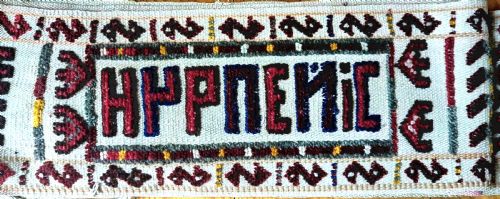
A banded tribal rug brings together flatweaves, kilims, and storage bag faces created by nomadic and village makers across Central Asia, the Caucasus, and the Balkans. These textiles span periods from the late nineteenth century into the 1920s and include specialised forms like tent bands, mafrashes, and torbas.
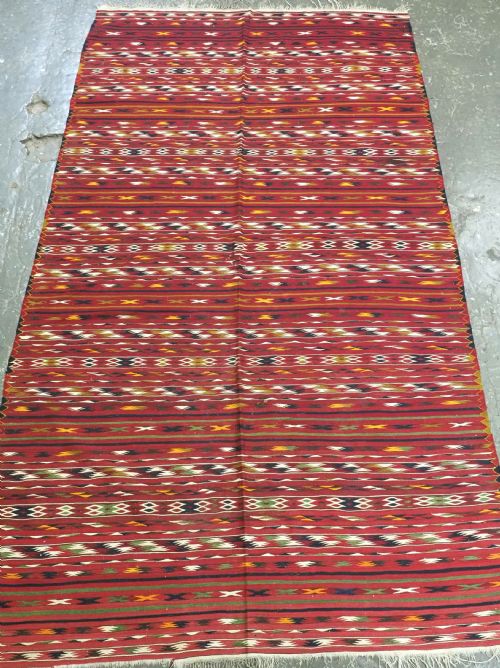
The defining characteristic across these examples is the organisation of pattern into horizontal bands, ranging from simple weft-work lines to complex chevrons and geometric motifs. Buyers encounter pieces originating from Yomut Turkmen, Uzbek, Baluch, Pirot, and Caucasian weaving traditions.
How they were made
Weavers constructed these textiles predominantly using wool and hand-spun wool, often supported by cotton foundations in specific regional types. The application of natural dyes yielded the soft colours and warm palettes visible across the surviving pieces.
Techniques relied heavily on flatweave and weft-work construction, creating durable surfaces designed for practical utility inside tents and dwellings. Fine weaving methods allowed makers to pack the rows tightly, producing rigid structures capable of withstanding heavy daily use.
Materials recorded across the inventory consist of wool, cotton, natural dyes, and hand-spun wool.
What varies in quality
Quality rests heavily on the tightness of the weave and the precision of the horizontal bands. Pieces executed with exceptionally fine weft-work and hand-spun wool demonstrate a superior standard of execution by the maker.
The integrity of the original structure also dictates the tier of the piece, particularly where original backs, complete storage bag faces, or long tent bands survive intact.
The Banded Tribal Rug Glossary
- Kilim
- A flatwoven carpet or rug produced without a pile. These textiles are made by tightly interweaving warp and weft strands to form flat geometric patterns.
- Tent band
- A long, narrow strip of woven textile used to secure the lattice framework of a nomad's yurt. These bands often feature dense geometric striping.
- Mafrash
- A large rectangular storage bag used by nomads for bedding and household goods during migration. The faces are frequently preserved as individual decorative panels.
- Torba
- A small storage bag hung inside a tent for personal items. They share the intricate banded iconography of larger rugs and animal trappings.
- Weft-work
- A supplementary technique where decorative patterns are formed by wrapping or inlaying coloured threads through the foundation warp. This method creates the raised horizontal bands typical of these textiles.
Banded Tribal Rug: Frequently Asked Questions
What is a banded tribal rug?
A banded tribal rug is a flatwoven textile featuring horizontal rows of geometric patterns, created by nomadic groups in regions such as Central Asia and the Caucasus.
These pieces include utilitarian items like storage bags, kilims, and tent bands produced during the late nineteenth and early twentieth centuries.
How were these rugs used?
Nomadic communities utilised these textiles as floor coverings, blankets, and structural ties inside portable tents and dwellings.
Smaller items functioned as functional storage bags for transporting household goods during seasonal migrations across harsh landscapes.
How do I care for a tribal flatweave?
Protect the wool and natural dyes by keeping the textile away from direct, harsh sunlight to prevent gradual fading over time.
Vacuum the flat surface gently using low suction without a rotating brush roll to remove trapped dust safely.
How do I identify regional origins?
Regional identity appears through specific colour combinations, wool preparations, and structural motifs unique to weaver groups like the Yomut Turkmen or Baluch.
Closer inspection of the weft-work technique and fringe finishing often reveals whether a piece originates from Caucasian, Balkan, or Central Asian workshops.