






Bamboo Carved Rosewood Tables
Bamboo carved rosewood tables are dense, deeply figured hardwood furniture pieces shaped to resemble natural bamboo stems, bringing traditional Chinese craftsmanship into the home.
Bamboo Carved Rosewood Tables
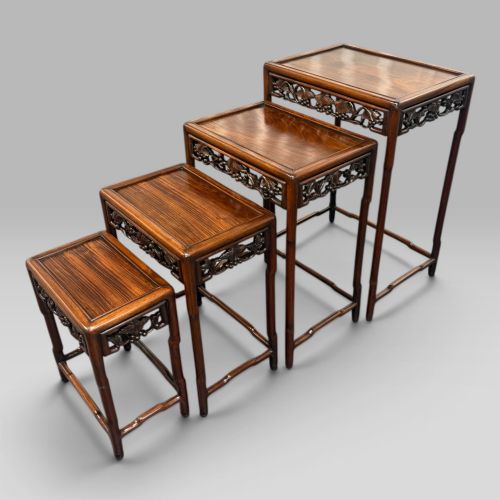
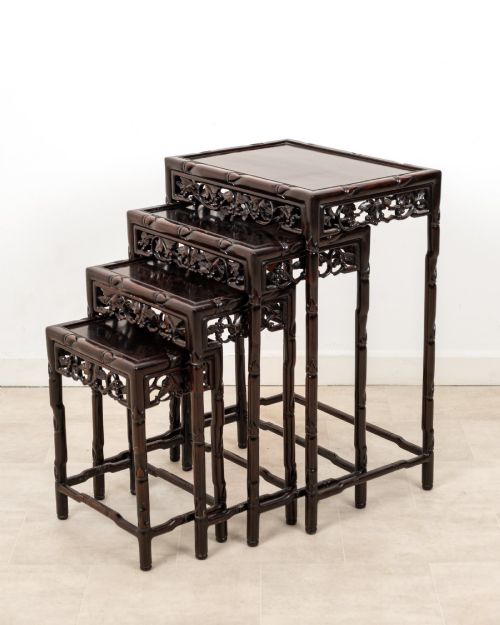
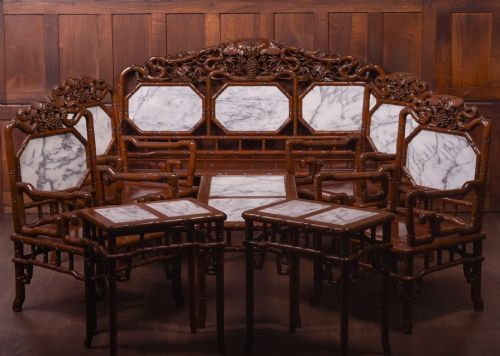
Bamboo carved rosewood tables encompass nested sets, occasional stands, and low tables produced across the nineteenth and early twentieth centuries. These pieces reflect traditional Chinese aesthetics, appearing in forms such as nests of four, plant stands, and parlour suites.
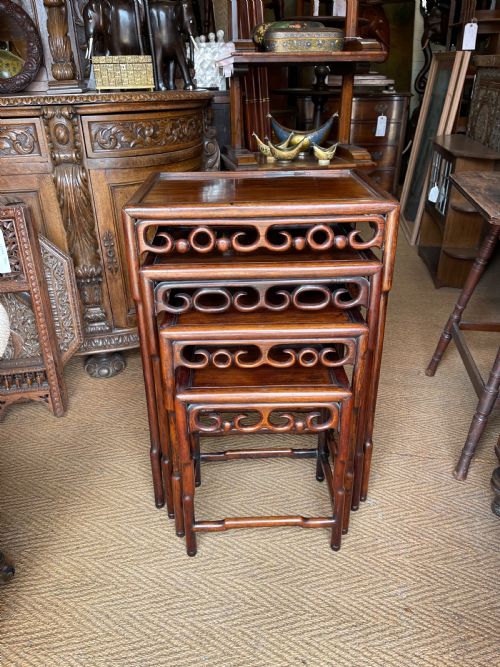
The version most commonly encountered on this page is the nest of four tables, designed to graduate in size so they fit neatly beneath one another. Alongside these nesting sets, individual stands and low tables with intricate floral or geometric carving appear frequently.
Originating largely from the Qing Dynasty and export workshops, these items utilise dark hardwoods and dense rosewood to create robust furniture. Buyers find them functioning as versatile side tables, coffee tables, or display stands within domestic interiors.
How they were made
Craftsmen built these tables using dense tropical hardwoods, specifically rosewood and hongmu, selected for their weight and deep natural grain. Timber sections were shaped meticulously by hand to replicate the segmented nodes and tubular profile of real bamboo.
Joinery methods relied on traditional interlocking joints that accommodated the natural movement of dense timber without metal fasteners. Surfaces often incorporated carved floral motifs, while select stands integrated inset marble panels into the top surface.
Bamboo Carved Rosewood Tables Retail Price Guide 2026
Typical asking prices for bamboo carved rosewood tables among the pieces listed under this phrase on Sellingantiques today, from the lower quarter to the upper quarter. They describe what is for sale here now, not the wider market.
Some nineteenth-century makers carved wooden bamboo nodes so convincingly that visitors reportedly try to peel back the husk.
What varies in quality
The standard of carving defines the distinction between simpler production pieces and finer workshops, with sharper undercutting and crisper bamboo node detailing marking superior execution. The choice of timber also dictates quality, as heavier, more uniformly figured hongmu and rosewood command greater respect than standard mixed hardwoods.
Structural integrity depends on the precision of the original joinery, particularly in nests where tables must slide smoothly without binding or excessive looseness. The preservation of the original polished dark finish without heavy modern intervention further elevates the standing of an individual piece.
The Bamboo Carved Rosewood Tables Glossary
- Hongmu
- A dense, heavy Chinese hardwood prized for its deep colour and durability in traditional furniture making. It frequently forms the primary structure of nineteenth-century tables and stands.
- Nesting tables
- A set of graduated tables designed to fit one beneath another to save floor space when not in use. They appear often as sets of four in Chinese export work.
- Qing Dynasty
- The final imperial dynasty of China, spanning from sixteen forty-four to nineteen twelve. Pieces from this era often feature traditional motifs and exceptional hardwood carving.
- Plant stand
- A tall, narrow occasional table designed specifically to elevate heavy ceramic planters or decorative objects. These often incorporate inset marble tops to protect the wood from moisture.
Bamboo Carved Rosewood Tables: Frequently Asked Questions
How do I care for rosewood tables?
Maintain these hardwood surfaces by dusting regularly with a soft, dry cloth and avoiding placement near direct heat sources or strong sunlight.
Apply occasional natural wax feeds sparingly to nourish the timber grain without building up a sticky surface residue.
Were nesting tables used traditionally?
Nesting sets served flexible roles in traditional Chinese interiors, allowing extra surface area to be deployed quickly for tea or scholar's objects.
When not needed, the smaller tables slipped compactly beneath the largest top to preserve floor space in the room.
How are nineteenth-century tables dated?
Dating relies on assessing the density of the rosewood or hongmu timber, the hand-carved detailing of the bamboo nodes, and the construction methods used in the joinery.
Comparison with documented export pieces from the late Qing period provides further chronological context.
Why do some stands have marble tops?
Marble inserts provided a cool, durable, and water-resistant surface capable of supporting heavy bronze vessels or damp plant pots without marking the surrounding timber.
This combination of carved hardwood and stone was particularly favoured in plant stands and ceremonial low tables.