

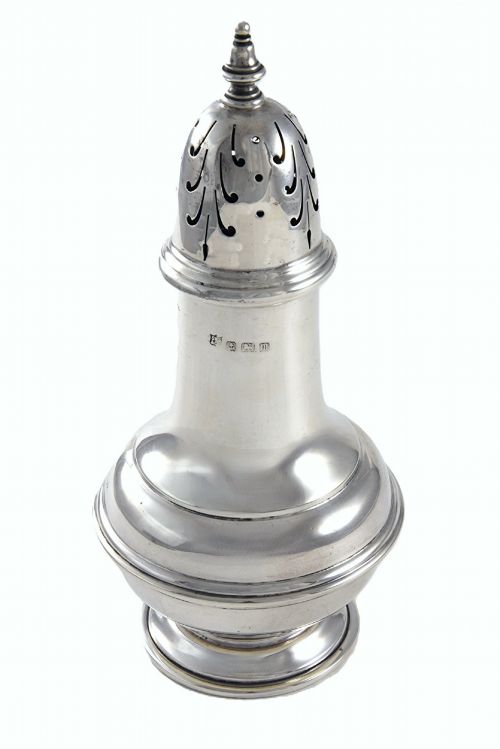
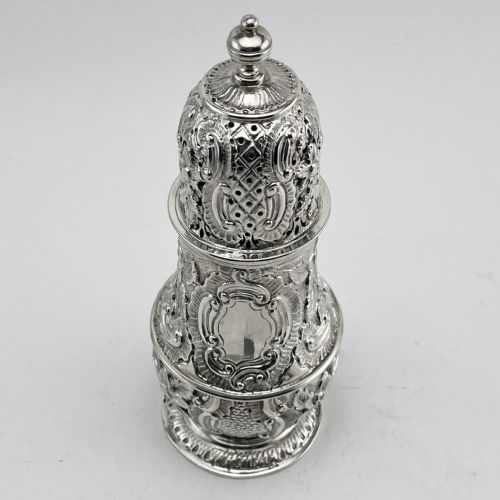


Baluster Silver Sugar Caster
A baluster silver sugar caster brings elegance to the dining table, offering a refined vessel for dusting sugar over desserts.
Baluster Silver Sugar Caster
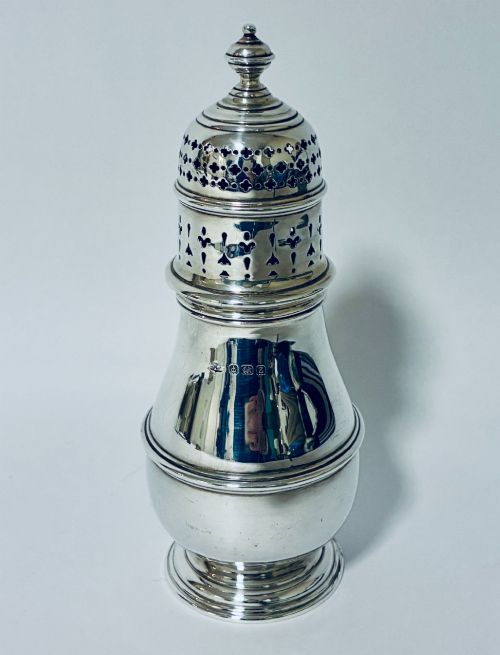
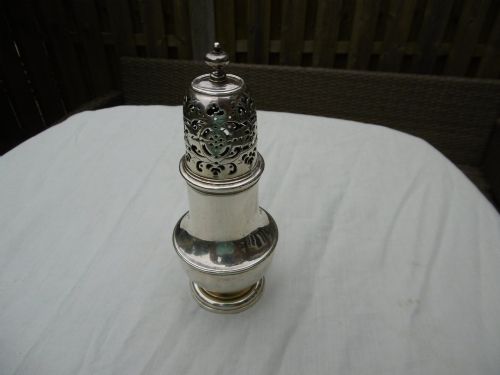
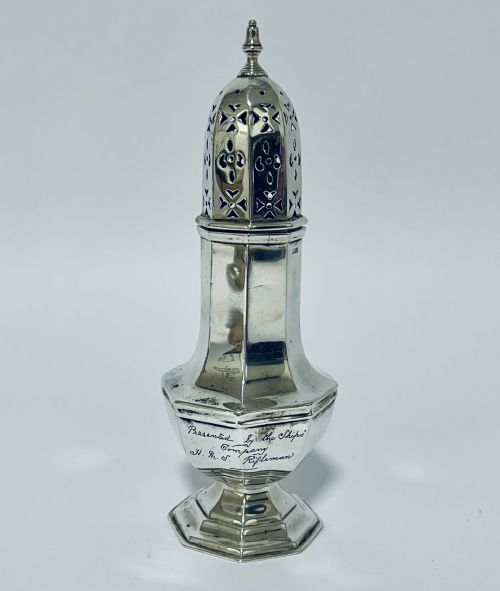
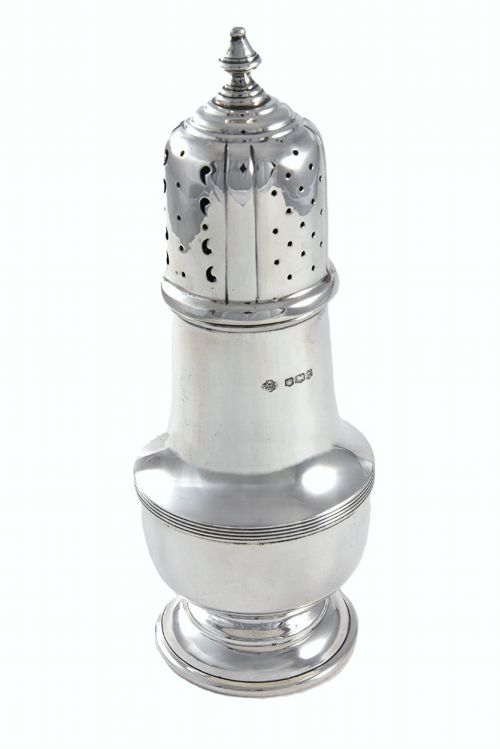
A baluster silver sugar caster is a bulbous, pedestal-based table vessel designed for dispensing fine sugar, taking its distinctive profile from architectural columns. The pieces seen here span from the early 18th century through the Victorian, Edwardian, and Art Deco eras up to the mid-20th century, all fashioned from sterling silver. Collectors frequently encounter forms ranging from George I and George II examples to later 20th-century shakers.
Makers and workshops across different centuries adopted the classic baluster silhouette, applying pierced covers secured by slip-lock or bayonet mechanisms. Alongside sugar casters and shakers, the inventory includes related forms such as muffineers and pepper casters sharing the same overarching style. These items served a practical function in wealthier households before granulated sugar became ubiquitous.
The materials and periods are clearly defined by the hallmarks stamped onto the sterling silver bodies and pierced lids. Dating ranges from specific years in the 1700s through to the 1940s, capturing shifts in design from plain early Georgian surfaces to ornate Victorian decoration and streamlined later styles. Each piece reflects the dining customs of its respective era.
Assessing Quality and Craftsmanship
Quality in a baluster silver sugar caster rests on the crispness of the piercing on the cover and the proportional harmony of the baluster body. Early 18th-century pieces by notable makers exhibit precise hand-cut apertures and substantial gauge silver, whereas mass-produced 20th-century examples display more uniform, mechanically punched patterns.
The clarity and legibility of the silver hallmarks stamped into the metal also influence distinction, as fully marked pieces with legible maker's marks and date letters provide secure provenance. Furthermore, the survival of original matching slip-on or screw-fit lids distinguishes pieces that retain their complete historical integrity.
Baluster Silver Sugar Caster Retail Price Guide 2026
Typical asking prices for baluster silver sugar caster among the pieces listed under this phrase on Sellingantiques today, from the lower quarter to the upper quarter. They describe what is for sale here now, not the wider market.
The selection spans multiple centuries, incorporating Georgian, Victorian, Edwardian, and Art Deco design vocabularies executed entirely in sterling silver.
Thomas Bamford·Simon Pantin·Stephen Adams·James Dixon And Sons Ltd·Charles Alchorne
The Baluster Silver Sugar Caster Glossary
- Baluster
- A architectural form featuring a rounded, bulging lower portion tapering upwards, which defines the primary shape of these silver vessels.
- Muffineer
- An alternative term for a small caster used historically for sprinkling sugar or salt over breakfast muffins or hot bread.
- Hallmark
- A set of official marks stamped onto sterling silver articles indicating the maker, assay office, purity standard, and date of manufacture.
- Piercing
- The decorative technique of cutting intricate patterns into the silver lid of a caster to allow the passage of sugar grains.
Baluster Silver Sugar Caster: Frequently Asked Questions
What is a baluster silver sugar caster?
A baluster silver sugar caster is a tabletop container with a perforated lid used for sprinkling sugar onto food. Its silhouette resembles a traditional architectural baluster, featuring a curved body that swells near the base.
These pieces were essential dining table accessories in wealthy households before modern sugar processing changed how sugar was served. Today, they are collected both as functional tableware and as examples of historic silversmithing.
How were sugar casters used historically?
These vessels were filled with refined castor sugar to be sprinkled over desserts, pastries, and fruit at the conclusion of a meal. Servants or diners operated them at the table to season food individually.
Because sugar was an expensive commodity in earlier centuries, keeping it in a locked or ornate silver caster demonstrated the host's wealth and status. The pierced lid ensured a controlled, even distribution of the fine grains.
How do I date a silver sugar caster?
Dating relies primarily on the hallmarks stamped into the sterling silver body and often repeated on the interior of the lid. These assay office marks include date letters that correspond to specific years of manufacture.
Stylistic cues also help narrow down the period, such as the plain, robust surfaces typical of early 18th-century George I pieces compared to the more ornate floral chasing found on Victorian examples.