
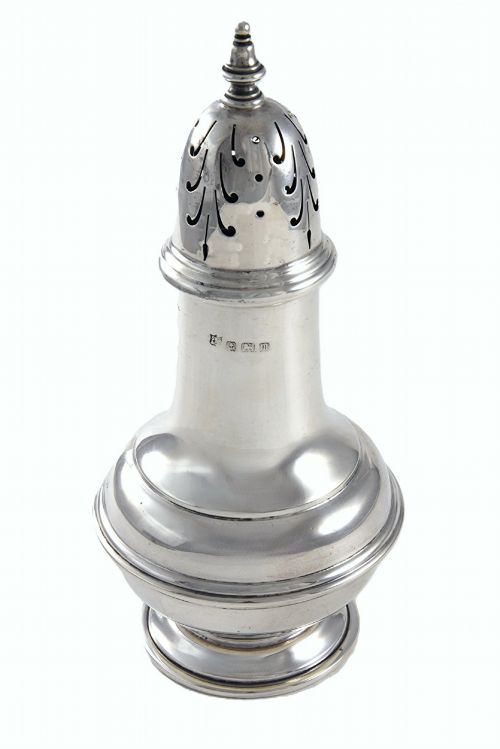


Edwardian Silver Sugar Caster
An Edwardian silver sugar caster brings table service from the early twentieth century into a modern dining room with genuine presence.
Edwardian Silver Sugar Caster
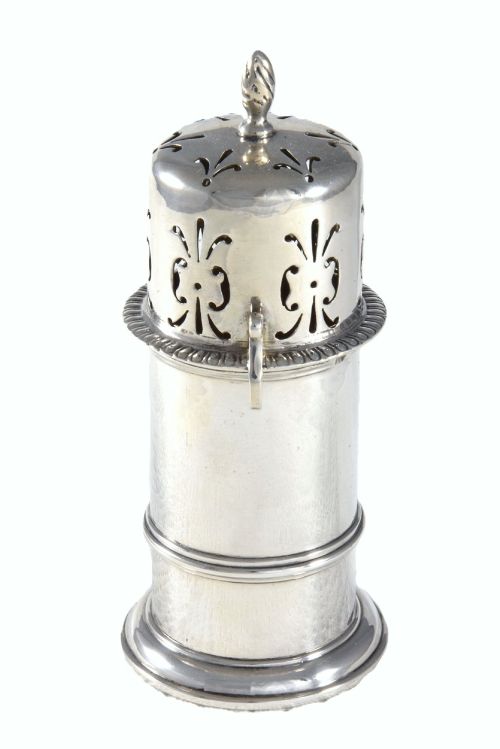
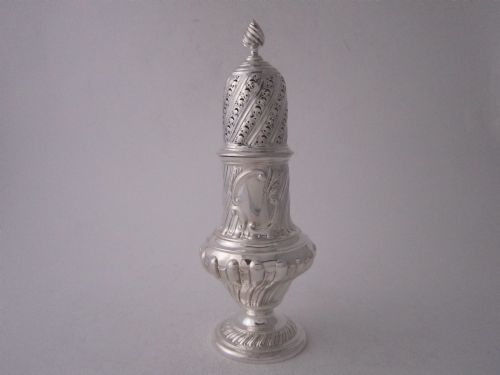
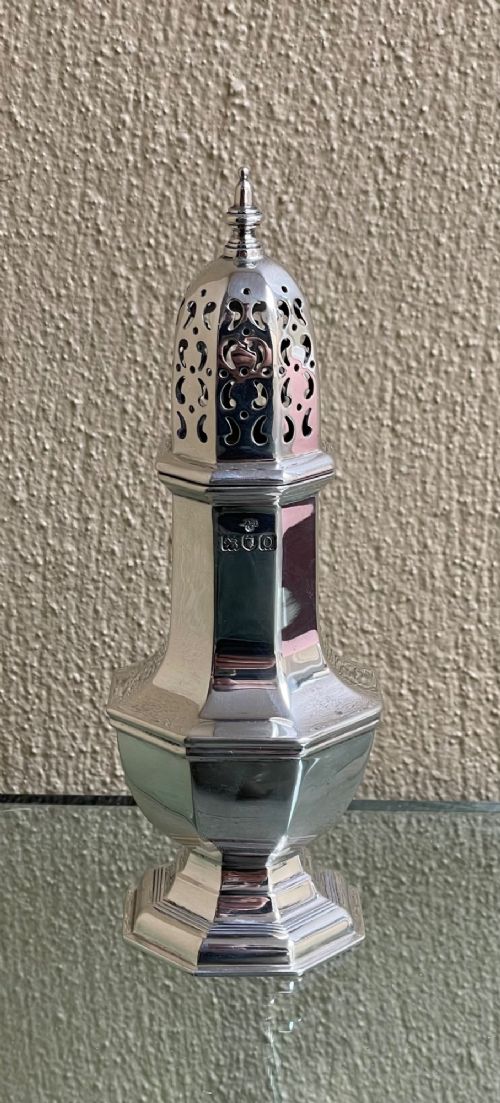
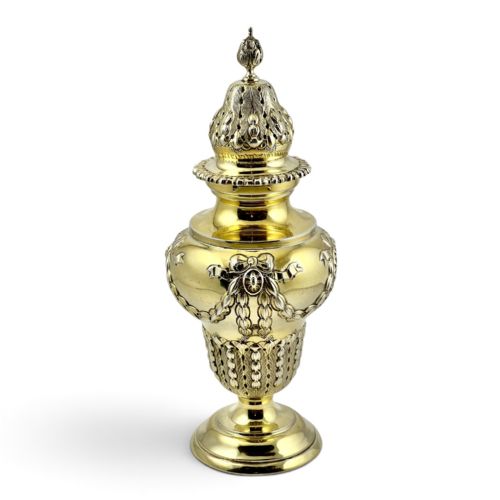
When you examine an edwardian silver sugar caster, you are looking at tableware designed to dust caster sugar over desserts and pastries during formal meals. The examples on this page span the Edwardian period itself alongside related Victorian, George V and Art Deco iterations.
The version you are most likely to meet on this page is a solid sterling silver baluster or lighthouse form bearing hallmarks from London, Birmingham, Chester or Sheffield. Pierced lids designed for sifting sugar are standard, often accompanied by versions featuring cut glass or coloured glass bodies.
Beyond standard shakers, the selection includes related forms such as sugar boxes, pepper casters, pounce pots and cruet items. These pieces reflect the dining customs of the early twentieth century, where individual items of tableware were fashioned with distinct decorative detail.
Materials and construction
Makers utilised sterling silver, silver-gilt and glass, pairing metal bodies with cut or coloured glass inserts where appropriate. Wirework techniques also appear, creating open frameworks that hold glass liners securely within the piece.
Silversmiths formed the bodies through spinning or hammering sheet silver, while lids were pierced by hand or machine to create intricate patterns for dispensing sugar. Hallmarks were then stamped directly into the metal to denote the assay office, standard and date of manufacture.
Distinctions in quality
The heaviest examples display thick gauge sterling silver that resists denting and gives a satisfying weight in the hand. Thinner metal lacks the structural solidity found in higher grade pieces from established workshops.
Crispness in the piercing of the lid separates standard work from superior manufacturing. Clean, sharp apertures allow sugar to flow evenly, whereas softer, rounded piercing points indicate less meticulous finishing.
Barker Brothers·Roberts And Belk·Martin Hall And Co·Nathan And Hayes
The Edwardian Silver Sugar Caster Glossary
- Hallmark
- An official mark stamped onto precious metals to guarantee the purity of the silver. It typically includes maker marks, date letters and assay office symbols.
- Silver-gilt
- Silver that has been coated with a thin layer of gold on its surface. This technique provides a warm golden interior or finish.
- Pounce pot
- A small container with a perforated lid used for dusting gum sandarac powder onto paper. This prepared the surface for writing with ink.
- Piercing
- A decorative technique where metal is cut away to form openwork patterns. In sugar casters, this creates the functional sifting holes on the lid.
Edwardian Silver Sugar Caster: Frequently Asked Questions
How do I clean a silver sugar caster?
Wash the silver gently in warm soapy water using a soft cloth to remove everyday dust and residue. Avoid harsh abrasive dips that can strip away the original finish and soften engraved details.
Dry the metal thoroughly with a soft lint-free towel immediately after washing. Store the piece in a dry environment to prevent tarnishing from returning too quickly.
What is the difference between a caster and a shaker?
In modern terminology the words are often used interchangeably to describe table vessels with perforated tops. Historically, casters tended to be taller footed vessels whilst shakers appeared in various cylindrical or polygonal shapes.
Both types served the same dining purpose of distributing fine sugar over food. The cataloguing terms simply reflect the descriptive preferences of different makers and eras.
Can I still use these for dining?
These pieces function adequately for serving dry caster sugar at the dining table provided the interior is washed beforehand. Modern refined sugar flows easily through the original pierced lid perforations.
Care should be taken when handling older silver to avoid dropping or denting the thin walls. Hand washing is essential since modern dishwashers will damage antique silver surfaces.
How do I identify an Edwardian piece?
Look for British hallmarks stamped on the body or lid that correspond to the reign of King Edward VII between 1901 and 1910. Date letters and sovereign marks provide the exact year of assay.
Stylistic cues such as neoclassical revival motifs and delicate wirework also point towards this specific era. Comparing the piece against documented maker marks confirms the period of production.