


Baluster Pepper Caster
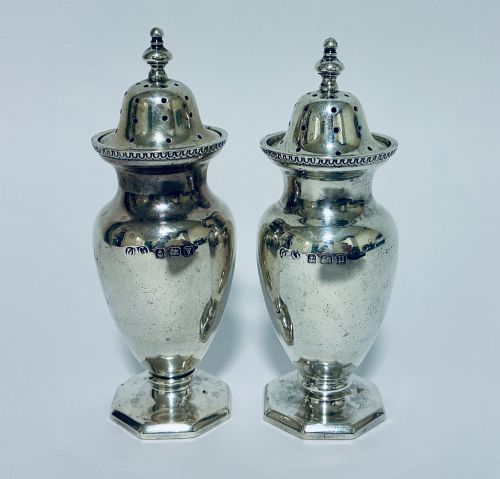
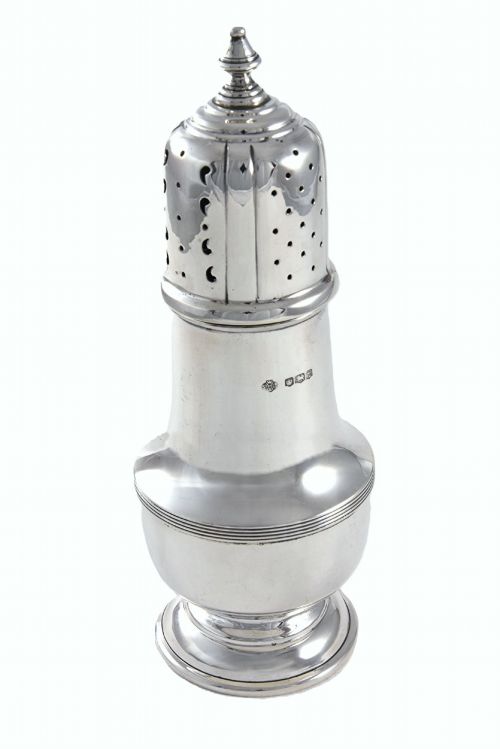
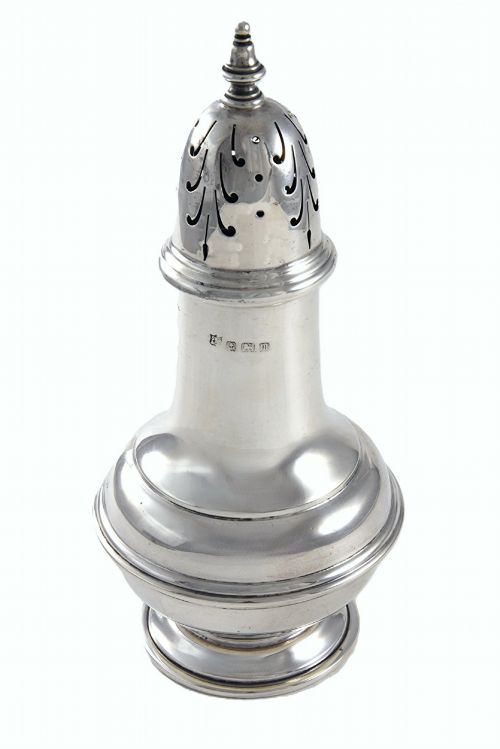
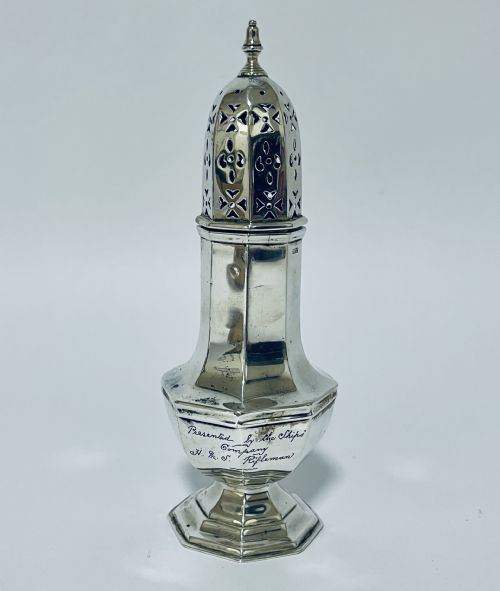
A baluster pepper caster brings the weight of sterling silver and the elegance of traditional form to the table.
Baluster Pepper Caster
When you search for a baluster pepper caster, you are looking at small sterling silver tableware designed to dispense dry seasonings. These pieces typically feature a swelling lower body tapering towards a pierced top, reflecting classic silhouettes.
The versions you are most likely to meet on this page range from early Georgian examples to later 20th-century revivals. They appear alongside related forms like sugar shakers, muffineers, and pounce pots in sterling silver.
Origins stretch from the 18th century through the Victorian and Edwardian eras into the mid-20th century. Makers across these periods utilised traditional sterling silver construction to produce robust domestic tableware.
Materials and construction
The primary material recorded across these items is sterling silver, worked into distinctive swelling shapes. Silversmiths formed the bodies by raising or spinning the metal before applying detailed finishing.
Pierced tops were hand-cut or drilled with geometric and floral patterns to allow seasoning to shake through evenly. Hallmarks stamped into the silver record the assay office, year, and maker.
Listings span from the 18th century through the Georgian, Victorian, Edwardian, and mid-20th-century eras, all executed in sterling silver.
Assessing quality and craftsmanship
Quality in a baluster pepper caster rests on the crispness of the piercing on the cap and the balance of the body. Thicker gauge sterling silver provides a reassuring weight in the hand.
Early Georgian examples often display superior hand-finished details compared to later mass-produced items. Surviving original caps that screw or push securely onto matching hallmarked bodies indicate careful preservation.
Stephen Adams·James Goodwin·Simon Pantin·James Dixon & Sons Ltd·Charles Alchorne
The Baluster Pepper Caster Glossary
- Baluster
- A vertical architectural form resembling a small column, swelling outwards towards the base. This shape defines the traditional profile of these silver casters.
- Muffineer
- A small container with a pierced lid used for sprinkling sugar or salt. These pieces share similar forms and mechanisms with pepper casters.
- Pounce pot
- A small shaker used to sprinkle resin powder over parchment to blot ink. They appear in similar sterling silver baluster shapes.
- Sterling silver
- An alloy containing 92.5 percent silver and 7.5 percent other metals, usually copper. This standard metal underpins the construction of all items listed here.
Baluster Pepper Caster: Frequently Asked Questions
What is a baluster pepper caster?
A baluster pepper caster is a small sterling silver vessel shaped with a swelling lower body and a pierced lid. It was traditionally used at the dining table for dispensing ground pepper.
These pieces reflect the design styles of their respective periods, ranging from plain George I forms to ornate Victorian designs.
How do I date a silver caster?
Dating relies primarily on the hallmarks stamped into the sterling silver body. These marks indicate the assay office, the maker's mark, and a date letter corresponding to a specific year.
Stylistic cues such as the profile of the baluster and the pattern of the piercings also help place the piece in its correct period.
Can I still use these for dining?
Sterling silver casters function as effectively today as they did centuries ago. The pierced lids allow for practical dispensing of dry seasonings at the table.
Careful hand washing preserves the finish and protects the structural integrity of the antique silver.
How should I clean silver casters?
Cleaning requires warm water, mild soap, and a soft cloth to remove tarnishing without scratching the metal. Proprietary silver polishes should be used sparingly and rinsed thoroughly.
Avoid abrasive materials that can wear away the hallmarks or soften the crisp details of the baluster shape.