
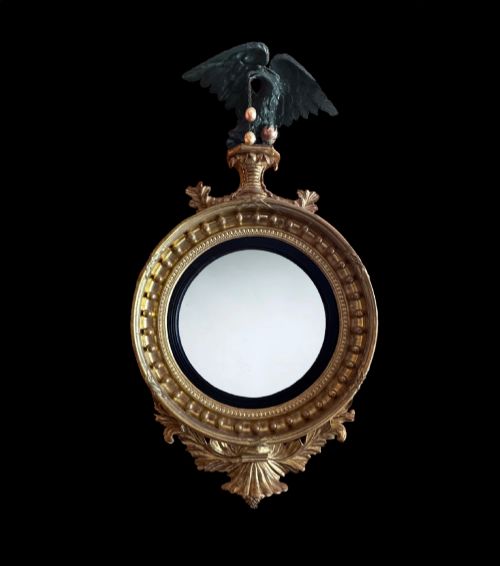

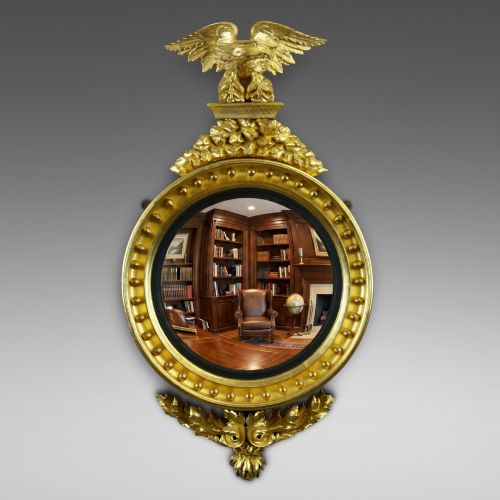
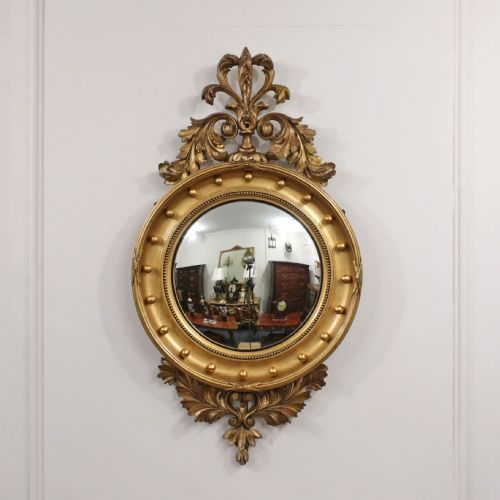
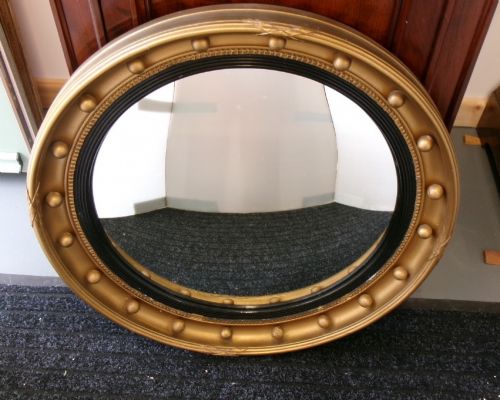





Ball Framed Wall Mirror
A ball framed wall mirror brings brilliant light and distortion into a room, capturing the entire interior in a single curved glass plate.
Ball Framed Wall Mirror
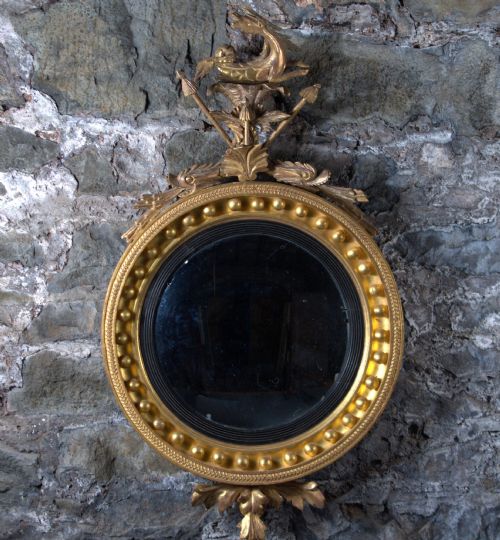
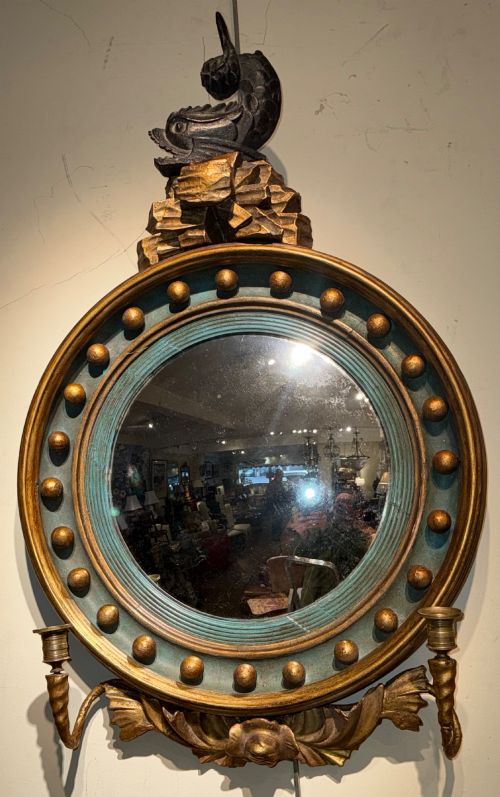
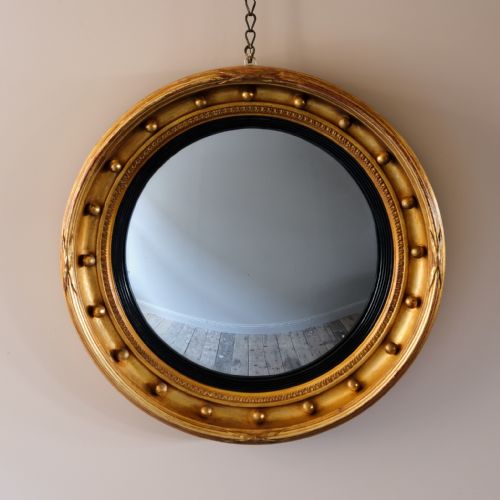
When you search for a ball framed wall mirror, you encounter circular convex glasses set within frames distinguished by spheres or balls, most frequently seen originating from the Regency and nineteenth-century periods.
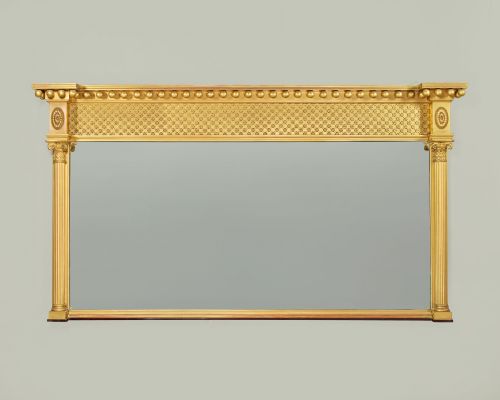
The pieces on this page span from Regency originals to later Victorian, Edwardian, and revival interpretations, taking the form of wall mirrors, overmantels, and circular porthole designs.
You will most commonly meet giltwood and gesso examples that feature a deep circular moulding studded with wooden or composition balls around the perimeter.
How they were made
Carved wood, composition, and gesso form the structural base of the frames, providing the foundation for intricate surface gilding.
Makers applied thin layers of gold leaf over bole onto gesso grounds, whilst individual balls were turned from wood or moulded in composition before being fixed symmetrically into the frame channels.
Convex mirror glass was blown or cast to create the characteristic curved plate that projects a wide-angle reflection of the space.
Convex mirrors were once dubbed "banker's mirrors" because their wide field of vision allowed shopkeepers to watch customers from behind the counter.
What varies in quality
The crispness of the carved or moulded detail on the frame and the individual spheres separates finer examples from heavier, less defined later versions.
The depth and brilliance of the original gilding, along with the clarity and age of the curved mirror plate, dictate the visual impact of the piece.
Proportion matters immensely in these circular glasses, where the balance between the width of the ball-studded frame and the diameter of the convex glass determines the overall elegance.
The Ball Framed Wall Mirror Glossary
- Convex mirror
- A curved glass plate that reflects a wide, distortion-rich view of the room. These are often called bullseye mirrors.
- Giltwood
- Timber coated with gold leaf. This material provides the bright reflective surface seen on traditional frames.
- Gesso
- A plaster mixture applied to wood frames to create a smooth surface for gilding. It holds crisp decorative detail.
- Composition
- A mouldable mixture of whiting, resin, and oil pressed into ornaments. It is frequently used for the balls on these frames.
- Verre eglomise
- A cold decoration technique of gilding and painting on glass. It appears on select mirror plates.
Ball Framed Wall Mirror: Frequently Asked Questions
What is a convex mirror?
A convex mirror is a circular glass plate curved outward to capture a panoramic reflection of the interior space. It concentrates light and creates a distinct wide-angle view.
These pieces were historically placed in principal reception rooms to monitor activity across the entire space from a single vantage point.
How do I date a mirror?
Dating relies on examining the construction of the wooden frame, the composition of the gesso, and the characteristics of the mirror plate. Regency examples often feature hand-turned wooden balls and distinct joinery.
Later Victorian and revival pieces typically utilise heavier composition moulding and standardised backboards that differ from earlier manufacturing methods.
Where should I hang it?
These mirrors suit focal points such as above a fireplace mantel, in a hallway, or centred on a principal living room wall. Their reflective quality bounces natural light deep into the room.
Consider hanging the piece at eye level to make full use of the wide-angle reflection and the decorative impact of the frame.
Are all the frames gilded?
The majority of frames on this page feature gold leaf or gilt finishes over gesso and wood. You also encounter ebonised wood finishes among nineteenth-century examples.
Gilding methods vary from bright gold leaf to toned surfaces that show subtle signs of age beneath the metallic sheen.