


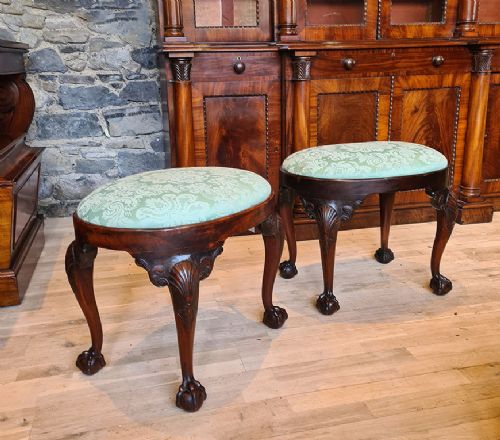


Ball and Claw Bench
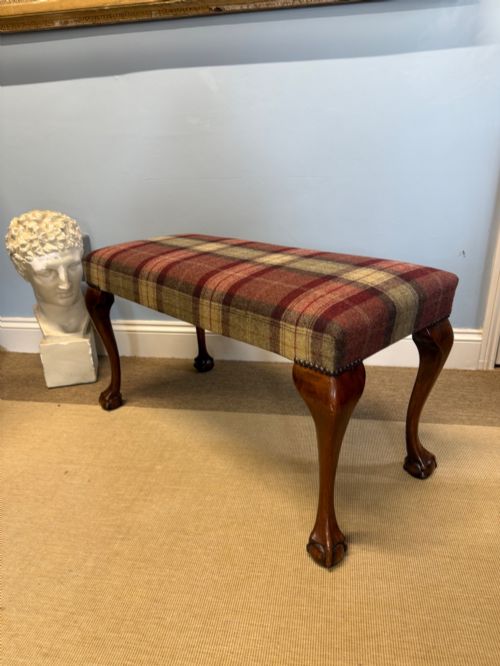
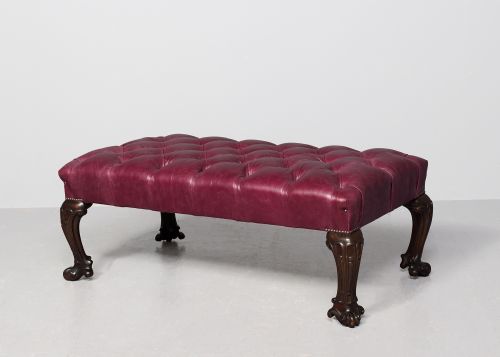
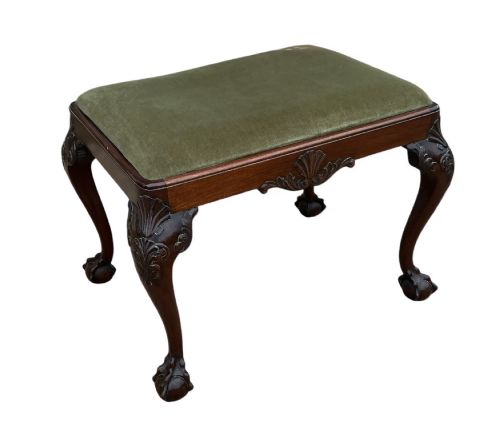
A ball and claw bench brings solid mahogany and tactile upholstery together, offering substantial seating with carved foot detail.

Ball and Claw Bench
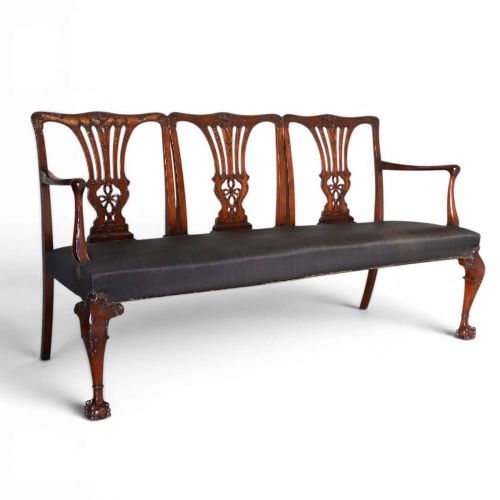
A ball and claw bench combines sturdy wooden frames with cushioned seating, spanning periods from the eighteenth century through to the early twentieth century. These pieces range from compact footstools and window seats to larger settees and multi-seat sofas.
Most examples found here draw heavily on Chippendale and George II revival styles, reflecting enduring traditional tastes in British and Irish furniture design. Mahogany and walnut dominate the structural woodwork, providing robust support for various upholstered tops.
Buyers encounter diverse formats, including long dressing stools, two-seater sofas, and piano stools. The defining feature across these variations remains the characteristic carved foot, anchoring the heavy timber frame.
Materials and construction methods
Makers utilised dense hardwoods like mahogany and walnut for frames, allowing deep carving on legs and rails. These timbers were selected for their strength and ability to hold crisp detail in revival designs.
Upholstery methods varied from traditional buttoned hide and fabric to wool and velvet finishes. Skilled craftsmen secured textiles over padded internal structures to ensure durability and comfort on benches and settees.
Listings span from the eighteenth century to the early twentieth century, featuring mahogany and walnut framed benches.
Judging the quality of a bench
Quality rests primarily on the depth and precision of the wood carving, particularly around the legs and feet. Crisp execution in revival pieces distinguishes finer craftsmanship from simpler production.
The choice of primary timber and the integrity of the upholstered surface determine the overall standard. Robust joinery in the frame ensures the piece withstands regular daily use over generations.
Morris and Co.·Butlers of Dublin
The Ball and Claw Bench Glossary
- Chippendale Style
- A design aesthetic inspired by eighteenth-century cabinet maker Thomas Chippendale, known for intricate carved woodwork and cabriole legs.
- George II Style
- A heavy, ornate furniture style popular in revival periods, often incorporating dark woods and prominent ornamental carving.
- Window Seat
- A long, narrow bench designed specifically to fit beneath a window, typically featuring upholstered seating and supportive wooden framing.
- Settee
- A medium-sized upholstered seat with a back and arms, built to accommodate two or more people comfortably.
Ball and Claw Bench: Frequently Asked Questions
Where should I place a bench?
These benches suit hallways, bedrooms, or living spaces where substantial seating or a decorative accent is required. Their varied proportions allow them to sit effectively beneath windows or at the foot of a bed.
Larger settee versions provide functional seating for communal rooms, while smaller stools serve well as flexible footrests or occasional seats.
How do I maintain the upholstery?
Regular gentle brushing or vacuuming with a soft attachment keeps fabric and velvet surfaces free from dust. Leather and hide require periodic conditioning to prevent drying out and cracking.
Avoid placing wooden frames and textiles in direct sunlight or near heat sources to preserve the original materials over time.
Are these pieces suitable for daily use?
Solid mahogany and walnut construction ensures these benches offer robust support for regular seating. Traditional joinery and sturdy frames handle everyday domestic demands effectively.
Care should be taken with antique fabrics and delicate trims, which may benefit from lighter use or professional cleaning when needed.
How do I identify revival pieces?
Revival items from the nineteenth and twentieth centuries often emulate eighteenth-century Chippendale and George II aesthetics. Examination of tool marks, timber ageing, and construction techniques helps distinguish original periods from later interpretations.
Stylistic cues like carved ball and claw feet appear consistently across both authentic older pieces and faithful revival reproductions.