


Austrian Bronze Bird Statue
These pieces of austrian bronze bird statue bring the fierce vitality of the natural world indoors, captured through meticulous metalwork.
Austrian Bronze Bird Statue
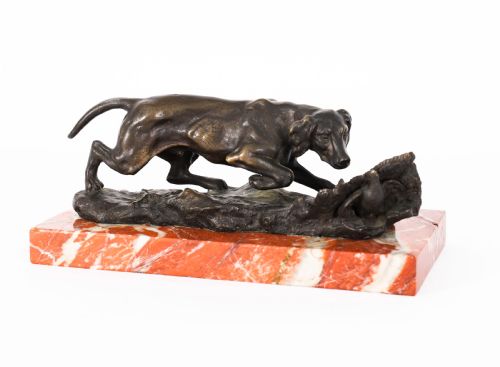
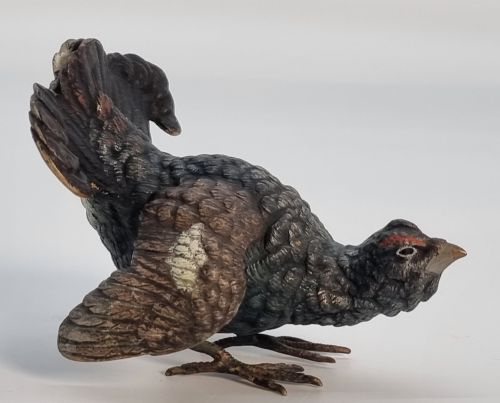
An austrian bronze bird statue represents birds in various lifelike poses, ranging from solitary standing grouse and magpies to hunting dogs and hawks resting on quartz rock bases. The forms span the late nineteenth century and the early twentieth century, showing a strong naturalist focus.
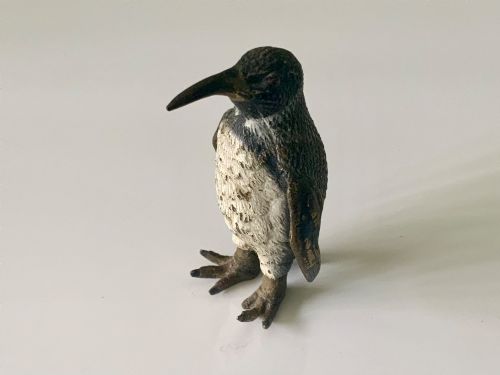
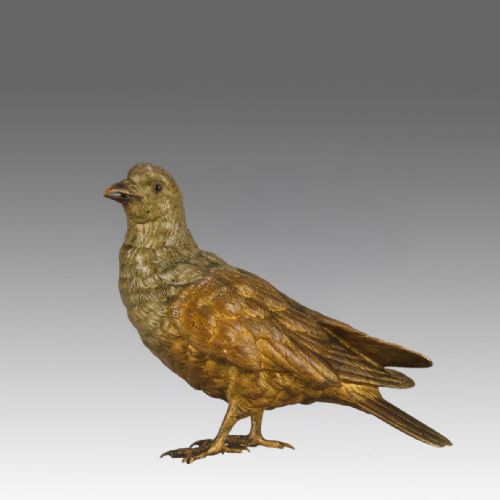
The versions most commonly met on this page belong to the Viennese animalier tradition, frequently featuring cold-painted surfaces upon cast bronze. These sculptures capture specific avian subjects such as woodcocks, golden pheasants, kingfishers, and penguins with remarkable fidelity to nature.
Originating predominantly from Austrian workshops, these bronzes combine sculptural modelling with detailed surface finishes. They serve as desktop ornaments, cabinet pieces, and sculptural studies that reflect the period interest in ornithological accuracy.
How they were made
The manufacturing process begins with the casting of bronze into detailed sculptural forms, often utilising lost-wax methods to capture fine feather textures and anatomical proportions. Sculptors model the birds from life or close observation, translating avian anatomy into metal.
Following the bronze casting, artisans apply cold-paint or enamel paint directly to the metal surface without high-temperature firing. This cold-painted technique allows for layered, polychrome hues that render the subtle plumage variations of species like the woodcock, magpie, and kingfisher.
Mounting forms frequently incorporate carved marble or quartz rock bases to anchor the heavier bronze sculptures. These stone additions provide a contrasting natural texture that complements the metallic and painted components of the piece.
A heavy hawk grips a raw quartz rock, proving that even metal birds appreciate a solid piece of geology.
What varies in quality
Quality in these pieces depends heavily on the precision of the initial bronze casting and the nuance of the hand-applied cold paint. Finer examples display crisp feather detailing and convincing anatomical postures that remain faithful to the living bird.
The preservation and subtlety of the polychrome or enamel paint surfaces distinguish superior works from simpler productions. Skilled painters capture the iridescent sheen and complex markings of avian plumage with careful brushwork.
The incorporation of complementary natural bases, such as carved quartz rock or shaped marble, elevates the presentation of the bronze figure. The integration between the bird sculpture and its stone support demonstrates the overall ambition of the maker.
Carl Kauba·Franz Bergman·Franz Xaver Bergmann
The Austrian Bronze Bird Statue Glossary
- Cold-painted bronze
- A bronze sculpture decorated with unfired paint applied directly to the metal surface. This technique permits a wide spectrum of naturalistic colours.
- Animalier
- A nineteenth-century artistic movement dedicated to the realistic portrayal of animals. Practitioners focused on capturing the accurate movement and physical structure of beasts and birds.
- Vienna bronze
- Small-scale bronze figures produced in Austrian workshops, particularly noted for their humorous or highly realistic animal subjects. They are strongly associated with late nineteenth and early twentieth-century production.
- Polychrome paint
- The application of multiple colours to a single surface. In these sculptures, it renders the varied and complex tones of bird feathers.
- Capercaillie
- A large ground-dwelling bird native to European forests. It appears as a subject in Austrian bronze sculpture.
Austrian Bronze Bird Statue: Frequently Asked Questions
What is an austrian bronze bird statue?
These sculptures are small cast metal figures depicting various bird species, produced predominantly in Austria during the late nineteenth and early twentieth centuries.
They capture subjects like grouse, woodcocks, and kingfishers in realistic poses for display as decorative art.
How should I clean my bronze bird?
Dust the surface gently with a soft, dry brush to prevent accumulation without disturbing the delicate cold-painted finish.
Avoid using water, chemical solvents, or metal polishes, as these substances will strip the original painted decoration from the bronze.
Are these birds signed by artists?
Some pieces bear maker marks, workshop stamps, or signatures from prominent founders and sculptors active in Vienna.
Markings may appear hidden beneath the bronze body or along the edge of the base, though many fine examples remain unsigned.
Why is the paint called cold-painted?
The term describes a method where paint is applied to the cold metal rather than fused to the surface through kiln-firing.
This technique allows for delicate shading and intricate polychrome details that imitate natural plumage.