



Austrian Art Nouveau Pottery
These austrian art nouveau pottery pieces combine fluid forms and organic motifs, bringing exceptional sculptural presence and decorative charm to any interior.
Austrian Art Nouveau Pottery
When you search for austrian art nouveau pottery, you encounter works produced primarily around the turn of the twentieth century, spanning periods from the late nineteenth century into the early decades of the twentieth. These objects embody the characteristic flowing lines and naturalistic subjects of the movement.
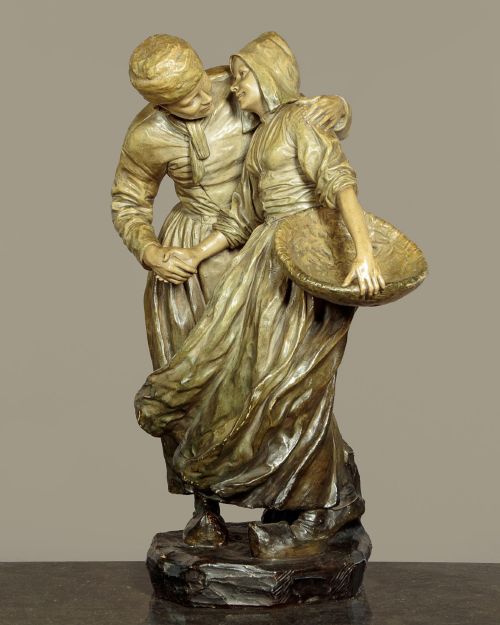
The selections on this page most frequently take the form of vases, monumental vessels, ewers, and spill vases. Alongside functional vessels, figurative sculptures and terracotta figure groups frequently appear.
Makers and designers from Vienna and surrounding regions produced these ceramics using earthenware, terracotta, and porcelain. Pieces range from majolica jardinieres to glazed centrepieces and detailed sculptural works.
Materials and construction methods
Potters utilised earthenware, terracotta, and porcelain as the primary foundations for these decorative objects, shaping them through moulding and hand-modelling. Terracotta allowed for intricate sculptural detail in figure groups and large-scale sculptures.
Glazes and surface treatments define the finished appearance, incorporating majolica techniques alongside lustrous glazes and occasional gold leaf accents. These surface applications emphasise the organic contours and floral themes typical of the style.
Austrian Art Nouveau Pottery Retail Price Guide 2026
Typical asking prices for austrian art nouveau pottery among the pieces listed under this phrase on Sellingantiques today, from the lower quarter to the upper quarter. They describe what is for sale here now, not the wider market.
Birds, sunflowers, and mythological maidens populate these glazed surfaces, proving that turn-of-the-century potters took inspiration from both the garden and the imagination.
Distinguishing quality and execution
The refinement of the modelling and the complexity of the glaze determine the standing of an individual piece. Artisanal precision in sculptural figures and the depth of the glaze application separate standard production items from masterworks.
Scale and ambition also differentiate the range, as monumental vases and multi-figure terracotta groups require advanced technical skill in firing and construction compared to smaller spill vases or standard vessels.
Goldscheider·Amphora·Julius Dressler·Ernst Wahliss·Eichwald
The Austrian Art Nouveau Pottery Glossary
- Majolica
- A type of earthenware decorated with opaque coloured glazes over a tin-white ground. It produces vibrant, glossy surfaces suited to botanical and animal motifs.
- Jardiniere
- An ornamental ceramic pot or stand designed to hold large plants or floral arrangements. These planters often feature elaborate relief decoration.
- Ewers
- Large jugs with wide spouts and looped handles, historically used for pouring water but valued here for their sculptural silhouette. They frequently form matched pairs.
- Spill vase
- A small upright vessel designed to hold thin wooden spills used for lighting fires or lamps. They often take whimsical or floral forms.
- Terracotta
- Fired unglazed clay possessing a reddish-brown earth tone. It permits highly detailed sculptural rendering before the application of surface colour.
Austrian Art Nouveau Pottery: Frequently Asked Questions
What defines austrian art nouveau pottery?
These ceramics are characterised by organic forms, flowing vegetal lines, and sculptural figures produced around the turn of the twentieth century. They reflect the wider European aesthetic movement prioritising craftsmanship and natural themes.
Items range from large decorative vases and ewers to intricate terracotta sculptures and majolica jardinieres, often bearing the marks of prominent Viennese factories and studios.
How were these ceramics used?
Many pieces served as ornamental centrepieces, mantel decorations, or vessels for floral displays within affluent homes. Monumental vases and sculptural groups functioned primarily as artistic focal points for a room.
Smaller items like spill vases had practical household utility, while jardinieres accommodated indoor plants, combining decorative ambition with domestic purpose.
How do I date these pieces?
Dating relies on stylistic markers, historical periods such as the Edwardian era or the years around nineteen hundred, and factory marks stamped into the clay or porcelain base. The transition from late nineteenth-century historicism to full art nouveau curves provides a reliable chronological framework.
Examining the specific glaze types and recorded model numbers further helps place a piece within a maker's active production years.
How should I care for them?
Display these fragile ceramics away from direct sunlight and areas subject to sudden temperature fluctuations to protect the glazes and terracotta bodies. Dust them gently with a soft, dry cloth without applying water or cleaning solutions.
Because many pieces feature delicate handles, intricate relief work, or gold leaf, handling them requires supporting the base rather than lifting by projecting decorative elements.