


Asian Wood Coffee Table
An asian wood coffee table brings solid timber grain and low proportions into a sitting room, drawing on centuries of regional joinery.
Asian Wood Coffee Table
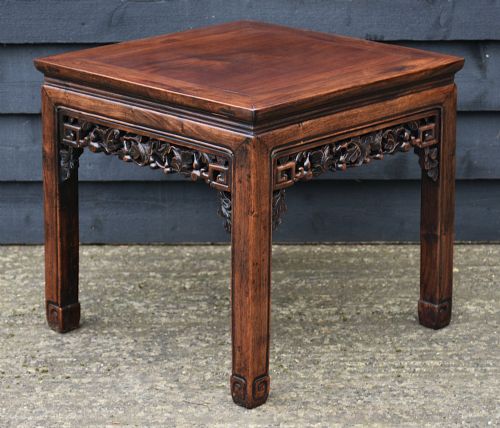
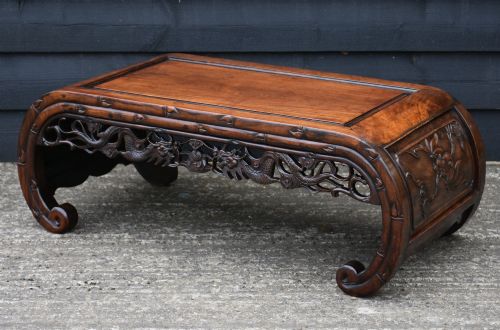
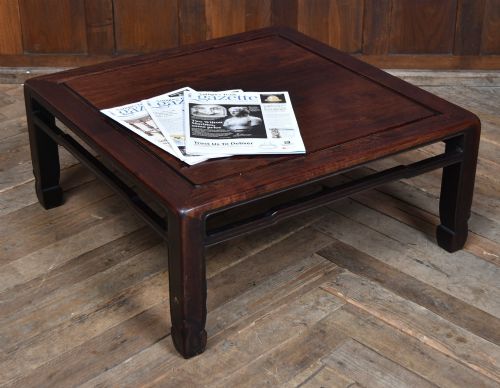
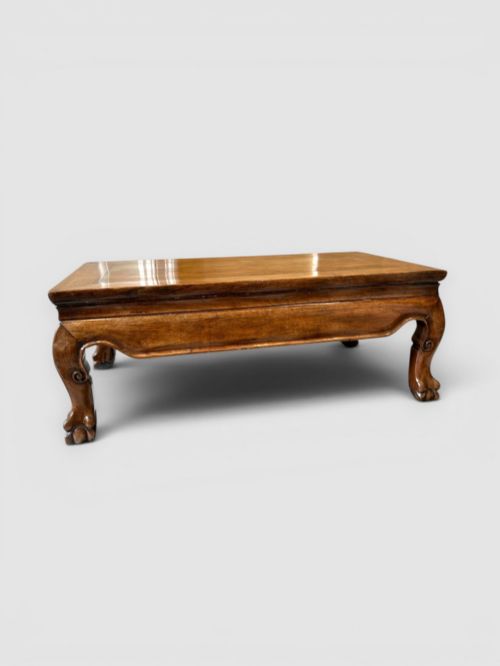
An asian wood coffee table is a low surface designed for domestic use, drawing heavily on historical forms from China and Japan. Buyers searching this phrase most frequently encounter nineteenth century low tables, opium tables, and kang tables built for sitting or kneeling near the floor.
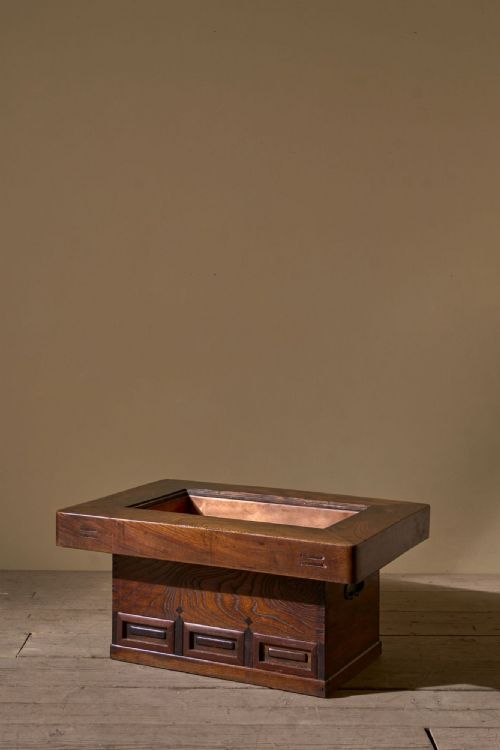
The selection ranges from simple rustic elm boards to heavily carved rosewood and padouk frames. Alongside standard low coffee tables, the inventory includes nesting tables, side tables, and occasional stands finished with lacquer, glass tops, or dragon details.
How they were made
Joinery relies on dense hardwoods such as rosewood, padouk, teak, and hongmu, often paired with softer domestic timbers like elm for regional items. Woodworkers utilised traditional interlocking joints and fretwork panels rather than relying on modern metal fasteners.
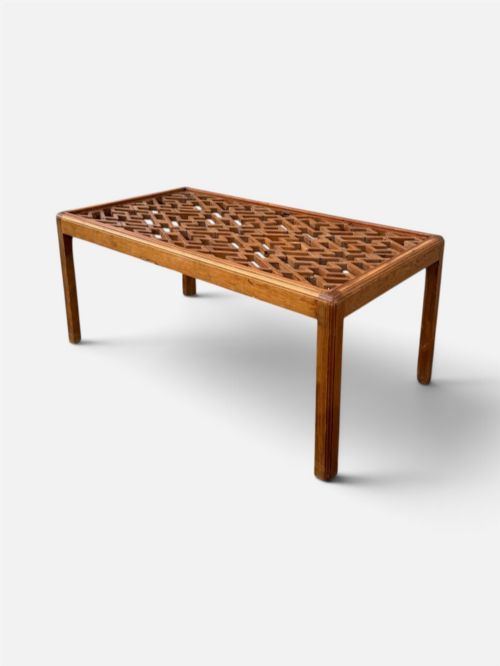
Surfaces receive varying finishes, from clear wax that highlights the natural grain to deep red lacquer and polished glass table inserts. Carved decoration appears on aprons and legs, incorporating scrolling ends, dragon motifs, and geometric patterns.
Temple drums double as lacquered tables, proving that historical storage solutions make surprisingly sturdy coffee stands.
What varies in quality
Quality rests in the density of the timber and the crispness of the hand carving on the aprons and legs. Dense rosewood and padouk examples with deep patination demonstrate superior material selection compared to simpler commercial variants.
The integrity of the structural joinery dictates durability, separating robust daily-use furniture from decorative display pieces. Subtle touches like integrated scroll-ends and well-balanced proportions distinguish finer workshop output.
The Asian Wood Coffee Table Glossary
- Kang table
- A low platform table traditionally placed on a heated brick sleeping platform in northern China for dining and writing. These sturdy low boards form the direct template for many modern low coffee tables.
- Opium table
- A compact low table traditionally used for resting items while reclining, characterised by short legs and often ornate aprons. They are now widely repurposed as coffee tables.
- Elm
- A resilient regional timber with a pronounced grain pattern, frequently utilised for rustic country furniture. It provides a lighter tone and tactile surface texture.
- Padouk
- A heavy, durable tropical hardwood prized for its rich reddish-brown colour and stable grain structure. Cabinet makers select it for formal carved pieces.
- Nest of tables
- A set of graduated tables designed to stack neatly beneath one another when not in use. This space-saving format appears frequently in nineteenth and early twentieth century Oriental furniture.
Asian Wood Coffee Table: Frequently Asked Questions
What is an opium table used for today?
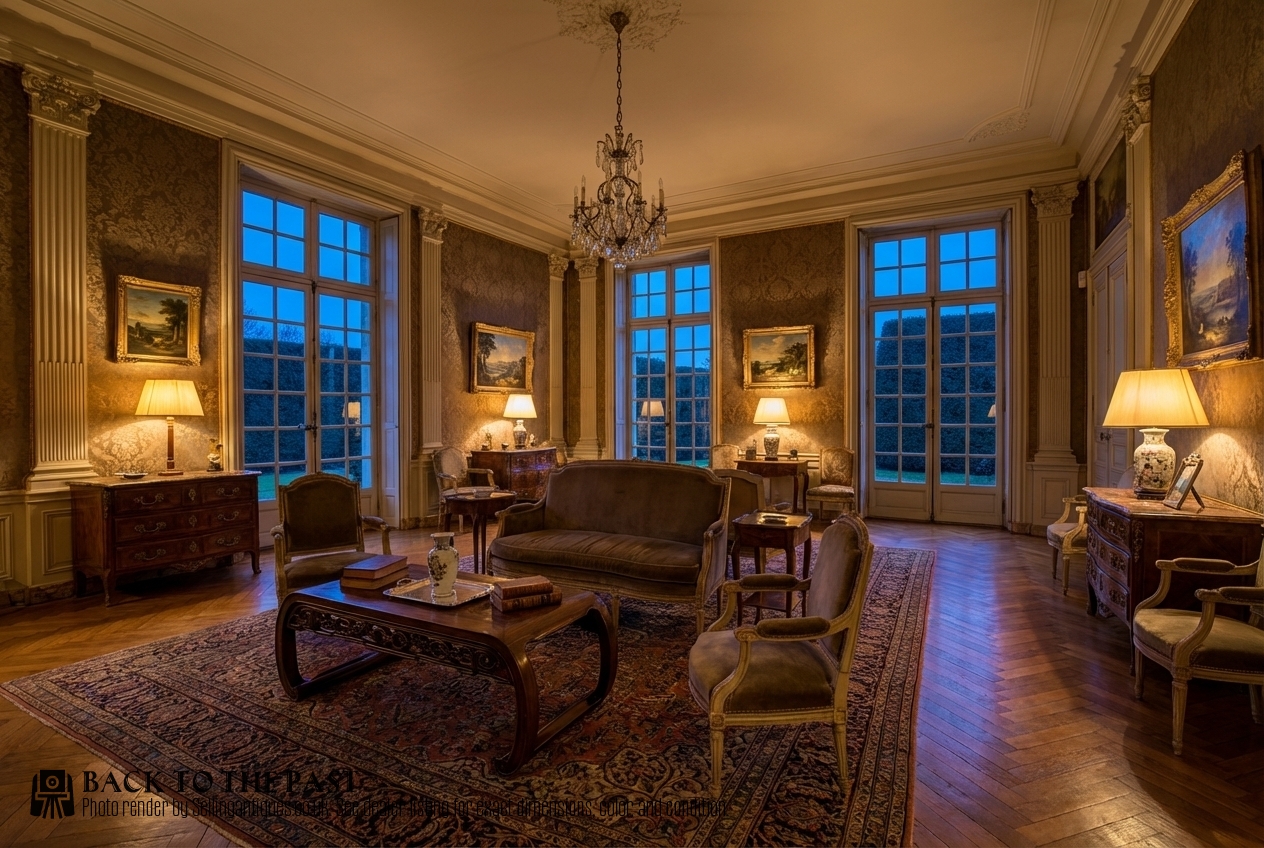
These low timber surfaces function effectively as modern coffee tables placed in front of low seating or modular sofas. Their reduced height creates an informal focal point in a living room.
They also serve as display stands for decorative objects, ceramics, or books, adding architectural grain to contemporary interiors without blocking sightlines.
How do I care for a hardwood coffee table?
Maintain the timber by dusting regularly with a dry cloth and occasionally applying a neutral beeswax to nourish the grain. Avoid placing solid wood items in direct sunlight or near heat sources to prevent timber movement.
Using coasters and glass protection where appropriate helps preserve historic lacquer and polished surfaces from moisture marks.
What distinguishes a kang table from a standard low table?
Kang tables originate from the traditional brick sleeping platforms of northern China, featuring shorter proportions and often distinct rolling scroll ends. They were built to sit upon another surface or directly on the floor for domestic tasks.
Standard low tables are engineered for floor-level use in general rooms, typically lacking the specific scrollwork associated with traditional kang platforms.
How do I identify elm furniture?
Elm displays a distinct, open grain pattern with interlocking fibres that give the timber a robust and textured appearance. It tends to be lighter in weight than dense rosewood or padouk.
Antique elm pieces often exhibit a rustic charm with visible knots and a warm golden-brown patina developed over decades of use.
Are nesting tables practical for everyday living?
Nesting tables offer exceptional versatility because the smaller units pull out to provide extra surface area when entertaining guests. They slide back into a single compact footprint when floor space is required.
This modular design makes them suitable for smaller apartments and flexible living spaces where furniture needs to adapt quickly.