
Asian Silk Embroidery
Asian silk embroidery encompasses centuries of intricate textile art, offering vibrant wall hangings and decorative pieces that bring historical depth to any room.
Asian Silk Embroidery
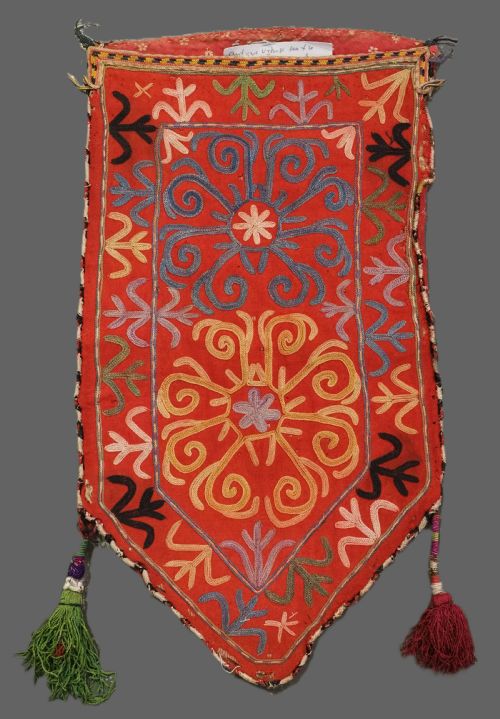
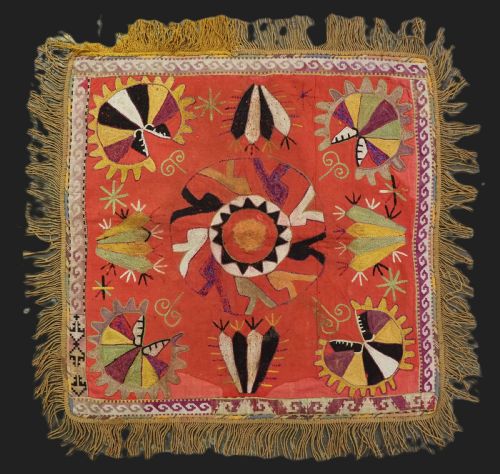
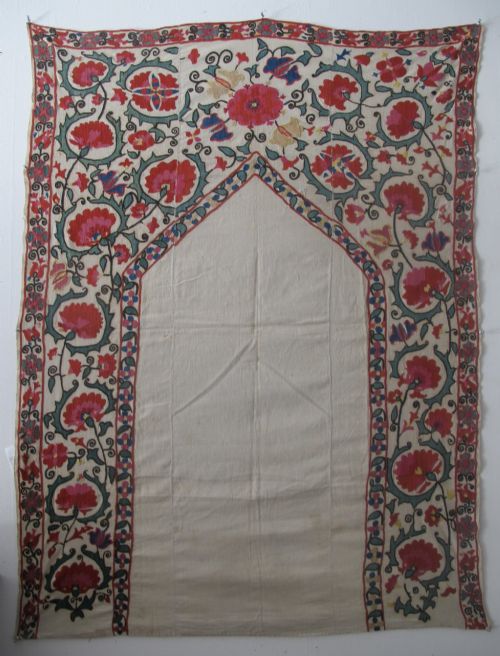
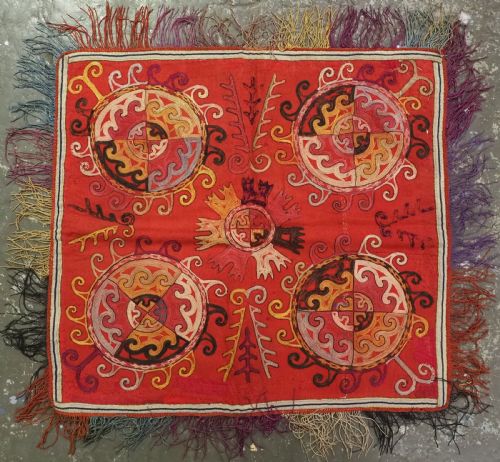
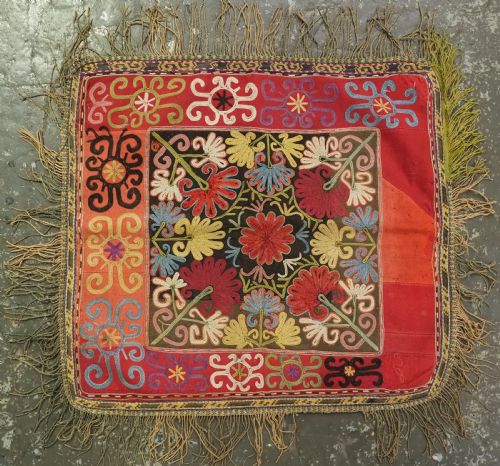
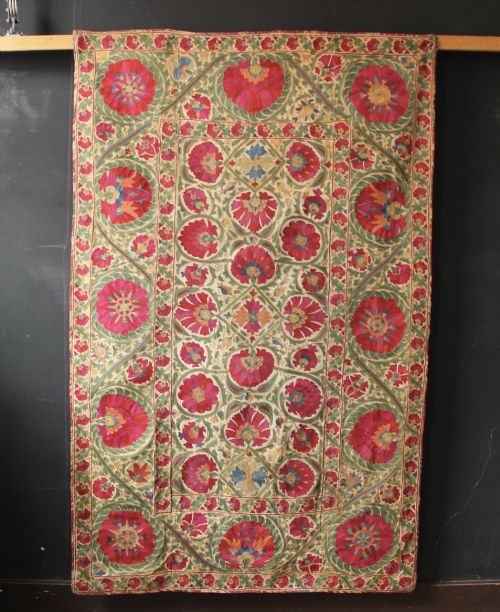
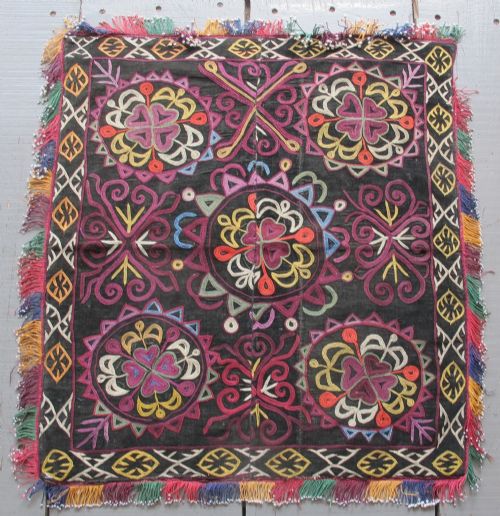
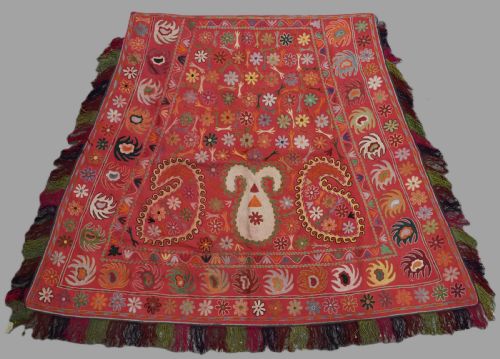
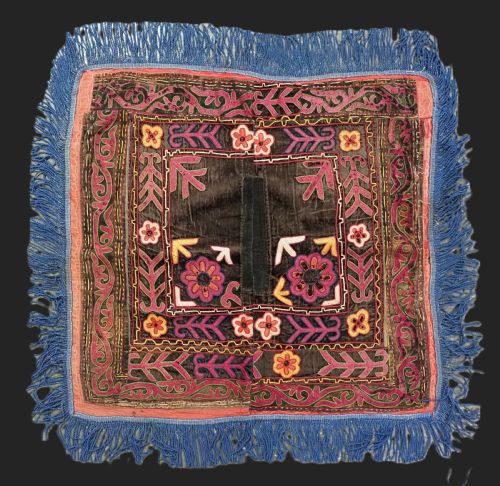
The most common items found on this page are Central Asian suzanis, dowry embroideries, and tribal wall hangings created by Uzbek, Lakai, and Bokhara makers. These pieces often feature traditional floral motifs, architectural designs, and geometric patterns suited for domestic display.
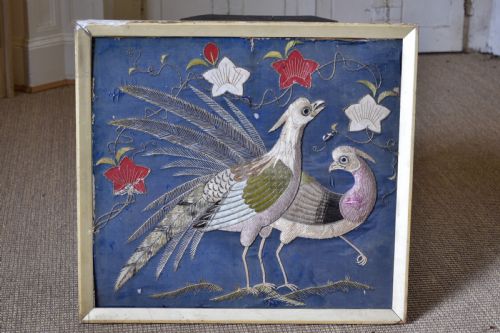
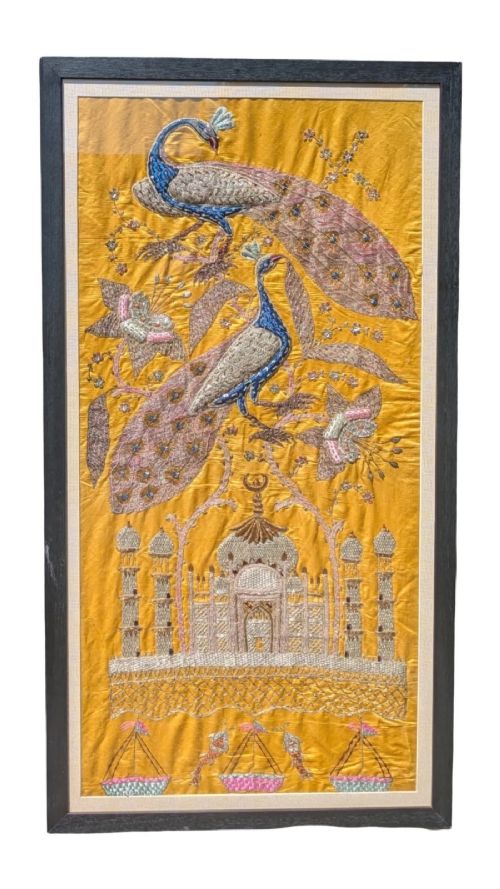
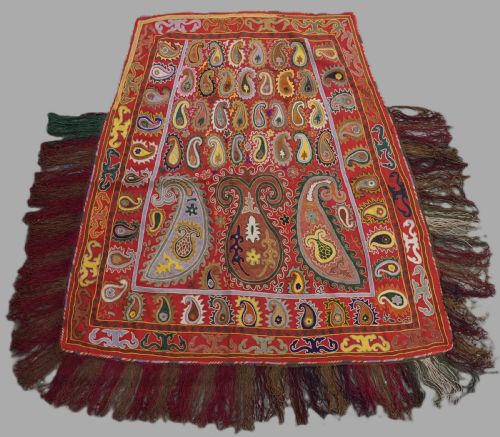
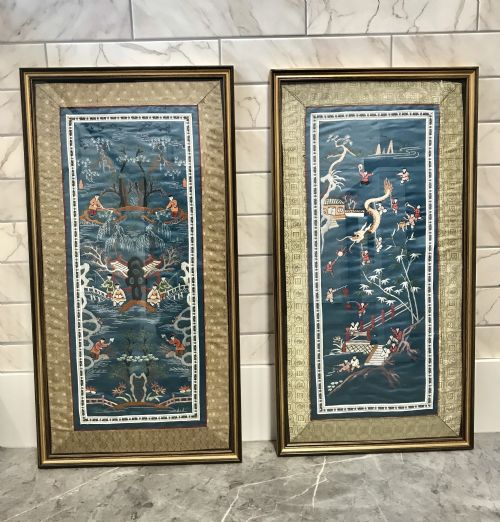
Other recurring forms include Indian and Chinese silk panels depicting figures, animals, and architectural landmarks like the Taj Mahal, alongside ceremonial horse covers and saddle rugs. Each textile serves as a physical record of regional needlework traditions spanning from eighteen hundred to the nineteen thirties.
How they were made
Makers utilised fine silk threads, often combined with metallic thread and cotton, worked onto grounds of silk, wool, velvet, or felt. Needlework techniques varied from delicate hand-sewn panels to dense tambour and surface embroidery.
Ground fabrics frequently provided contrasting backdrops, such as Mogul red wool or coloured silk foundations, which made the detailed thread work stand out. Regional workshops employed specific stitch methods to build up architectural elements, floral medallions, and figurative scenes.
Several nineteenth-century horses wore elaborate embroidered armour that now hangs peacefully on living room walls.
What varies in quality
Quality rests in the precision of the needlework and the complexity of the design layout, with finer pieces displaying tight, uniform stitches and sophisticated colour blending. The density of the silk thread coverage across the ground fabric alters the visual weight and texture of the textile.
Condition and survival of the original ground material heavily influence the stature of an item, as does the clarity and preservation of the secondary metallic threads or velvet borders. Scale also plays a part, with large medallion suzanis requiring sustained execution across extensive dimensions.
The Asian Silk Embroidery Glossary
- Suzani
- A type of embroidered tribal textile originating from Tajikistan, Uzbekistan, and other Central Asian nations. These large wall hangings traditionally formed part of a bride's dowry.
- Igat
- A dyeing technique used to pattern textiles before dyeing and weaving the threads. It appears in panel backgrounds and fabric borders.
- Torba
- A small hanging bag or trapping produced by Turkmen and related tribal groups. They often feature embroidered faces and silk highlights.
- Lakai
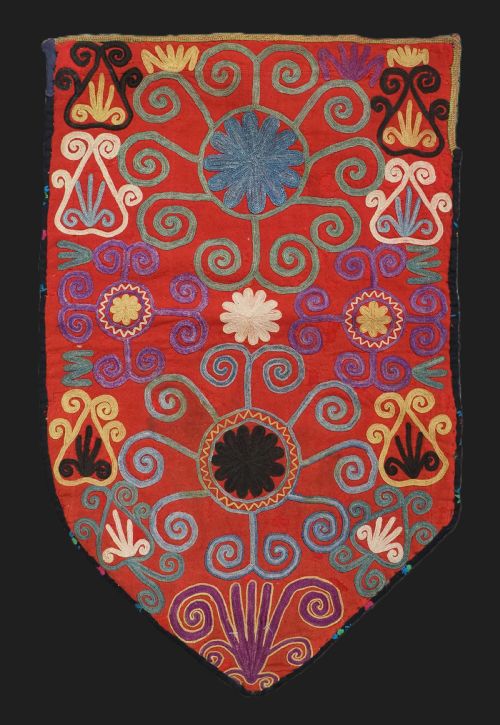
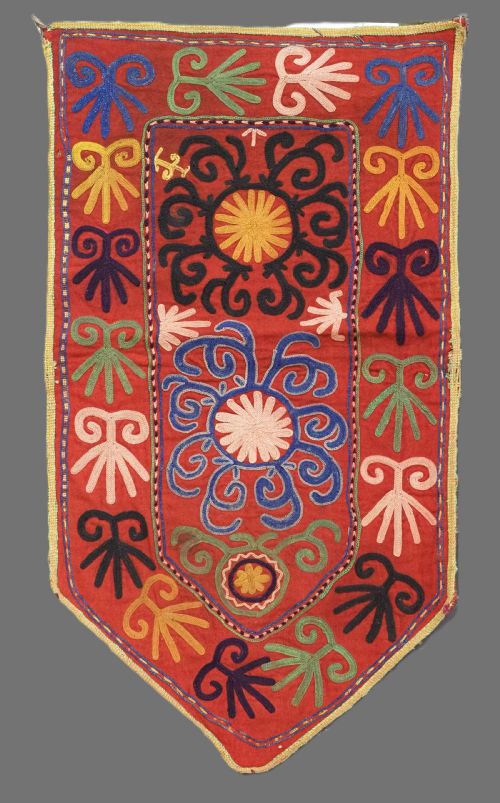
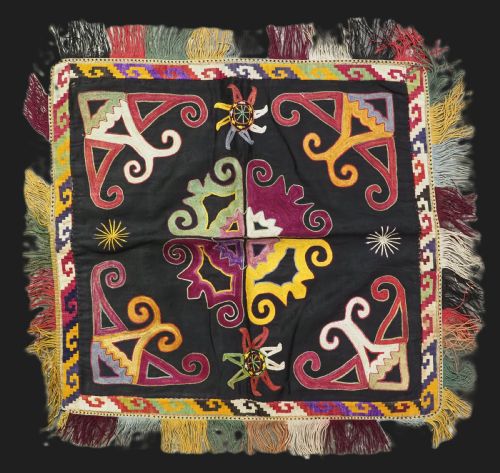
- A Turkic tribal group known for distinctive embroidery characterised by bold geometric forms and energetic compositions. Their dowry pieces and horse covers utilise vibrant silk threads.
- Nim suzani
- A smaller variant of the standard suzani wall hanging. These compact textiles suit interior display spaces where full-sized pieces prove too large.
Asian Silk Embroidery: Frequently Asked Questions
What is a suzani used for?
Suzanis traditionally functioned as dowry items, wall hangings, and bed covers within Central Asian households. Families displayed them during significant domestic ceremonies.
Today, collectors mount these textiles on walls or use them as decorative throws to introduce texture and colour to historic and modern interiors.
How do I care for antique silk embroidery?
Historic textiles require protection from direct sunlight to prevent silk fibres and dyed threads from fading. Keep them away from excessive moisture and heat sources.
Mount wall hangings securely to distribute weight evenly across the backing fabric. Consult a professional textile conservator for cleaning rather than attempting domestic washing.
How can I tell regions apart?
Regional styles reveal themselves through distinct motifs and colour palettes. Uzbek suzanis often showcase large floral medallions and trailing vines, while Lakai pieces favour dynamic geometric shapes.
Chinese and Indian examples frequently incorporate figurative scenes, dragons, or architectural landmarks executed in fine, painted-effect silk needlework.
What are horse covers used for?
Ceremonial horse covers and saddle rugs served decorative purposes during tribal celebrations, weddings, and processions in Central Asia. Lakai makers embroidered these utilitarian shapes with protective symbols and vibrant patterns.
In modern settings, these shaped textiles hang on walls as sculptural art objects rather than serving equestrian functions.