






Asian Open Display Shelves
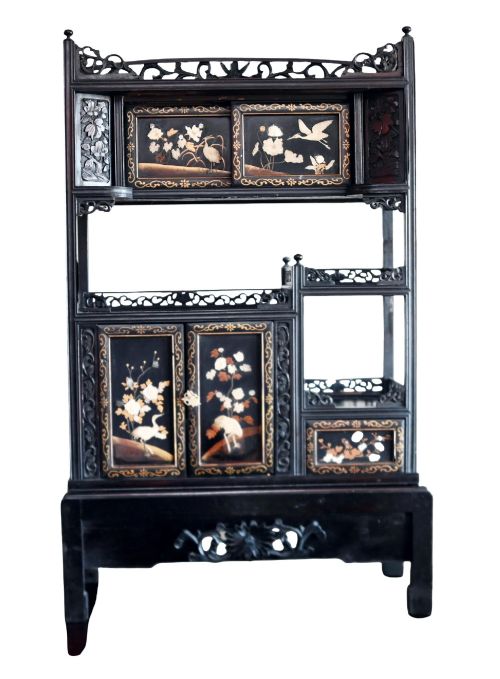
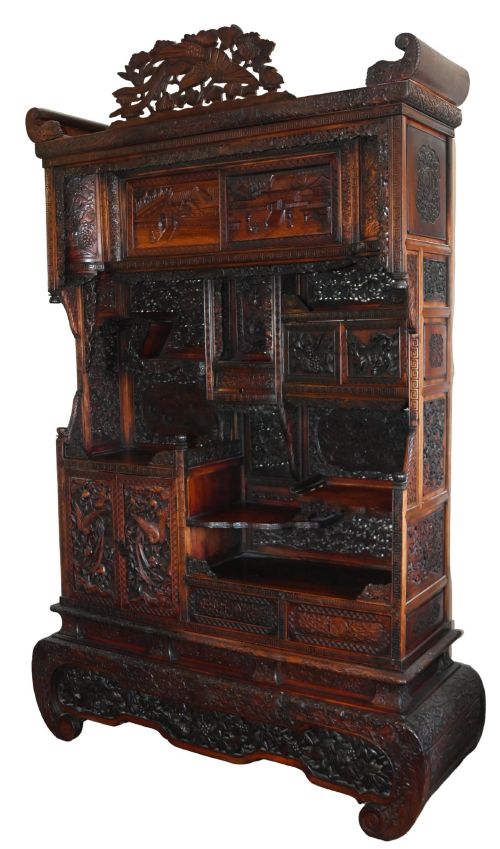
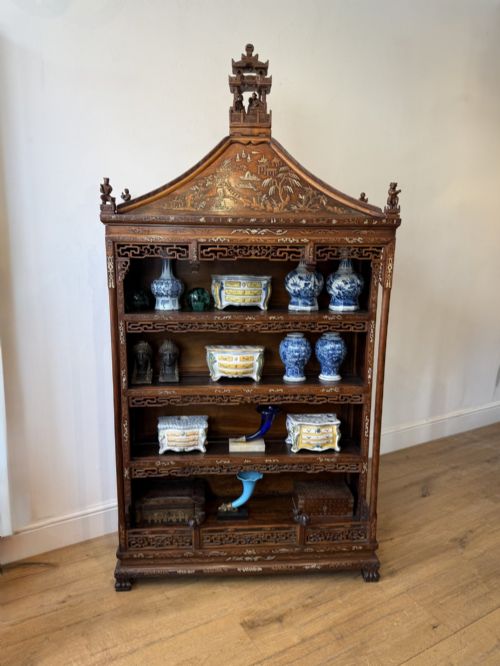
Asian open display shelves are intricate cabinets built to exhibit prized possessions, bringing historic craftsmanship and versatile compartmentalised storage into a room.
Asian Open Display Shelves
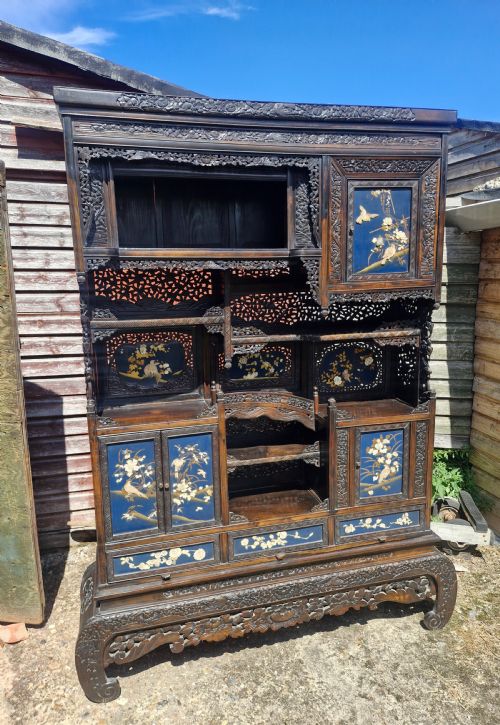
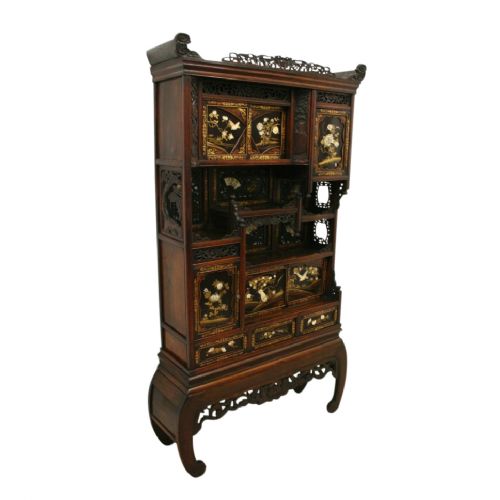
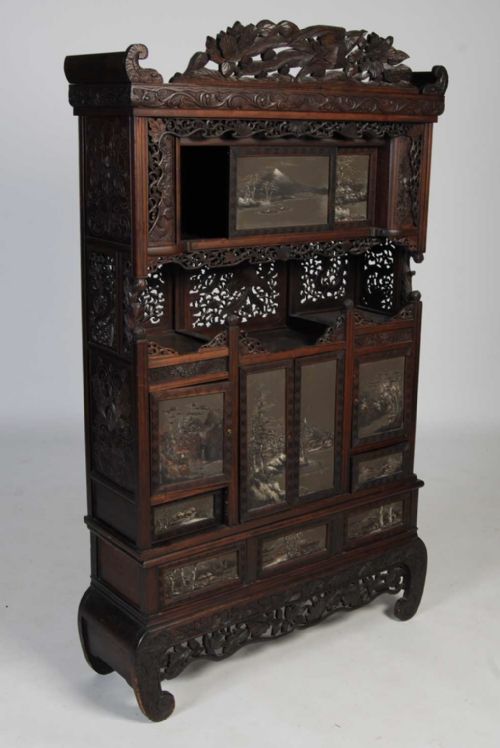
When you search for asian open display shelves, you encounter an array of nineteenth and early twentieth century furniture including Japanese shodana cabinets, Chinese display cabinets, and carved whatsnot units. These pieces range from Meiji period Japanese examples to Qing dynasty Chinese styles, reflecting distinct regional craftsmanship.
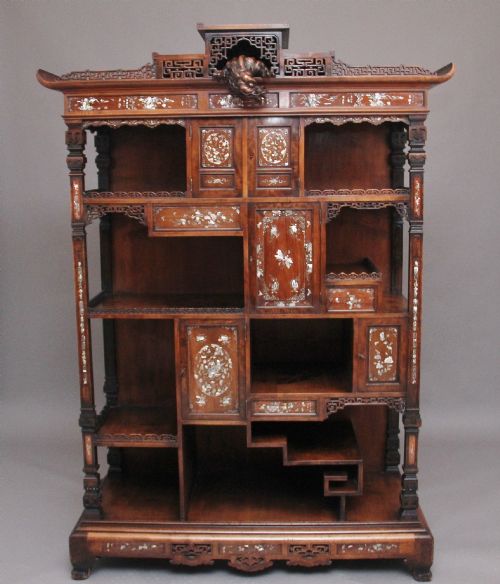
The layout typically combines asymmetric open shelving with enclosed cupboards and small drawers, designed originally for scholars or collectors to display ceramics and objects d'art. You will most frequently find hardwood and rosewood constructions, alongside lacquered finishes and pieces featuring intricate bone or mother of pearl inlay.
Origins span Japanese Meiji workshops and Chinese traditional production centres, with occasional European interpretations such as French shodona or Chinoiserie pieces bridging Eastern and Western design movements. Each cabinet offers a unique arrangement of tiers and compartments tailored for decorative display.
Materials and construction methods
Construction relies heavily on dense timbers such as hardwood, rosewood, elm, and lacquered wood, joined with traditional carpentry techniques that support intricate open tiers without sagging. Workshops selected these sturdy woods to bear the weight of carved architectural elements and stacked shelving units.
Surface decoration integrates contrasting materials including mother of pearl and bone inlay, alongside metal or brass hardware and detailed carving. Lacquer finishes applied in multiple layers provide a durable and reflective surface characteristic of both Japanese and Chinese traditions.
Asian Open Display Shelves Retail Price Guide 2026
Typical asking prices for asian open display shelves among the pieces listed under this phrase on Sellingantiques today, from the lower quarter to the upper quarter. They describe what is for sale here now, not the wider market.
Materials represented across the inventory include elm, metal, hard woods, and mother of pearl details.
Assessing quality in construction and detail
Quality rests upon the depth and crispness of the carving, the precision of the joinery within the asymmetric shelving, and the integrity of any inlaid bone or mother of pearl. Superior examples display seamless alignment in sliding doors and tight joints across multi-tiered compartments.
The selection of timber dictates the distinction between standard and finer specimens, with dense rosewood and heavy hardwoods commanding greater presence than softer elm alternatives. Surface treatments like smooth red lacquer or finely polished wood grain further elevate the finished object.
The Asian Open Display Shelves Glossary
- Shodana
- A traditional Japanese tiered display cabinet featuring staggered shelves and small cupboards. These pieces originated for the display of artistic objects and curios.
- Hardwood
- A dense, durable timber category frequently utilised in nineteenth-century Chinese cabinetmaking. It provides structural stability for heavily carved display pieces.
- Meiji Period
- The era in Japanese history spanning from eighteen sixty-eight to nineteen twelve, known for intricate decorative arts and export-quality cabinetry. Pieces from this time often exhibit refined carving and lacquerwork.
- Qing Dynasty
- The final imperial dynasty of China, lasting until nineteen twelve, which produced the ornate hardwood display cabinets and carved whatsnot units found today.
- Bone Inlay
- A decorative technique where small pieces of bone are set flush into the wooden surface to form geometric or floral patterns. It adds contrasting texture and pale detail against dark timber.
Asian Open Display Shelves: Frequently Asked Questions
What are asian open display shelves used for?
These cabinets were originally designed for scholars and aristocrats to exhibit small ceramics, bronzes, and scholarly objects of contemplation.
Today, they serve a similar function in modern interiors, providing asymmetric shelving to display books, plants, and decorative items.
How do I date a Chinese or Japanese cabinet?
Dating relies on examining the timber density, construction methods, tool marks, and stylistic markers associated with specific periods like the Meiji era or Qing dynasty.
Later twentieth-century reproductions often feature machine-cut joints and modern adhesives, whereas nineteenth-century examples show hand-carved details and traditional joinery.
Where should I place a display cabinet at home?
Position these cabinets against a stable interior wall away from direct sunlight and dramatic temperature fluctuations, which can dry out historic lacquer and timber.
Because they feature open shelves on multiple levels, placing them in a living room or study allows light to pass through and highlights the objects placed upon them.
What is the difference between a shodana and a whatnot?
A shodana is specifically a Japanese tiered cabinet featuring an asymmetrical arrangement of shelves, sliding doors, and small compartments.
A whatnot is a broader Victorian or European term often applied to open-tiered shelving units, though nineteenth-century trade imported and adapted these forms across cultures.