




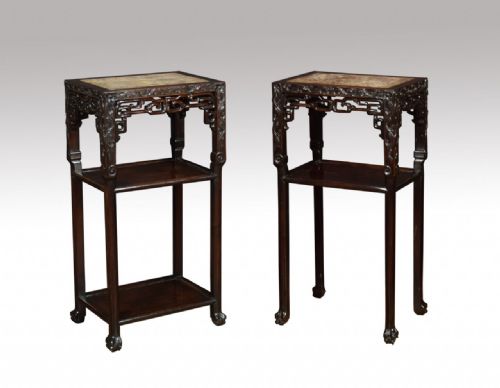


Chinese Hardwood Display Cabinet
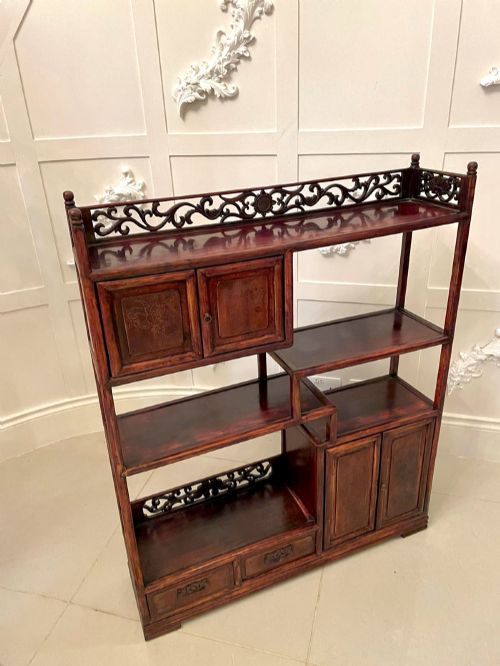
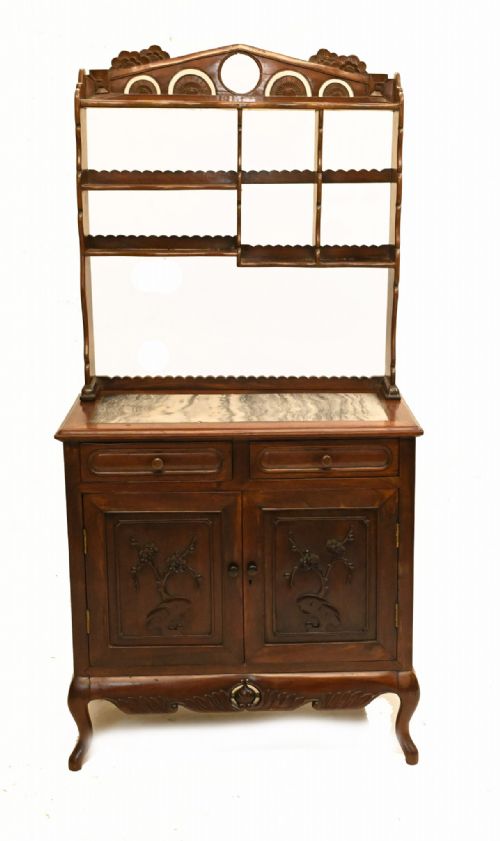
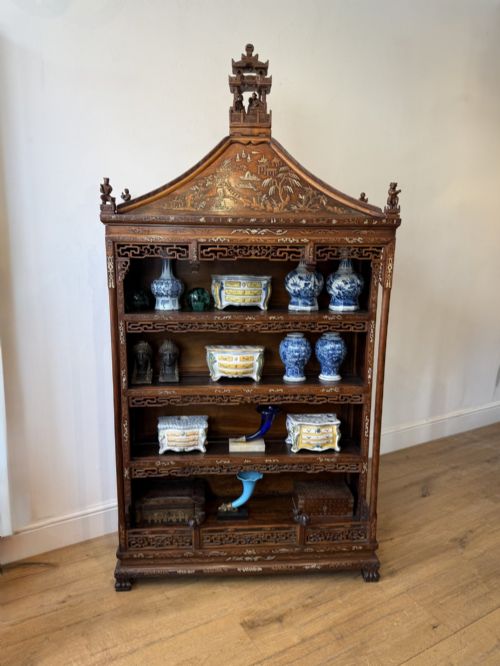
A chinese hardwood display cabinet brings structured warmth and intricate carving into a room, designed to showcase treasured possessions with traditional elegance.
Chinese Hardwood Display Cabinet
A chinese hardwood display cabinet serves as a focal point for exhibiting ceramics and decorative items, drawing on centuries of craftsmanship. You encounter pieces spanning from the mid nineteenth century through the early twentieth century, reflecting distinct periods of production.
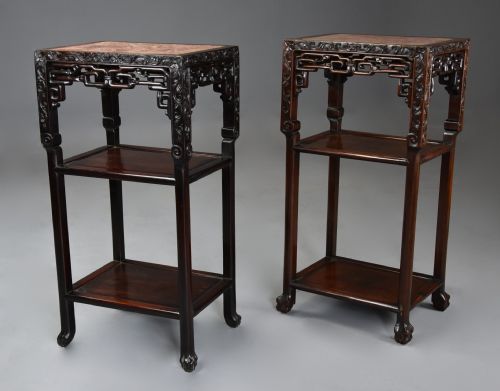
The selection ranges from tall glazed vitrines and pagoda cabinets to open stands and dwarf side-cabinets. Many examples incorporate glass panels, marble inserts, or tiered shelving designed for practical arrangement.
Originating primarily through Qing Dynasty traditions and Chinese Export workshops, these cabinets showcase dense timber structures. Pieces vary from restrained forms to profusely carved surfaces featuring traditional motifs.
Materials and Construction
Construction relies heavily on dense timbers such as rosewood, hongmu, zitan, and cherrywood, chosen for their strength and rich grain. Carpenters utilised traditional joinery methods to build stable frames capable of supporting heavy ornaments and stone inserts.
Chinese Hardwood Display Cabinet Retail Price Guide 2026
Typical asking prices for chinese hardwood display cabinet among the pieces listed under this phrase on Sellingantiques today, from the lower quarter to the upper quarter. They describe what is for sale here now, not the wider market.
Some nineteenth century artisans thoughtfully added mother of pearl insects into the floral carvings, ensuring your cabinet comes with permanent uninvited guests.
Assessing Quality
The distinction between standard and exceptional pieces rests in the depth and crispness of the wood carving. Master carvers produced intricate, undercut details that retain sharp edges, whereas lesser examples show softer, shallower execution.
Selection of the timber and the precision of fitted components also dictate the standard of a piece. High quality cabinets feature well-matched grain patterns, secure inlay work, and robust structural integrity across joints and panels.
The Chinese Hardwood Display Cabinet Glossary
- Hongmu
- A dense tropical hardwood prized in traditional Chinese furniture making. It translates literally to red wood and provides a heavy, durable structure.
- Zitan
- An extremely dense and heavy dark hardwood used for high status furniture. It is valued for its fine grain and ability to take deep, crisp carving.
- Mother of Pearl
- The iridescent inner layer of certain mollusc shells used for decorative inlay. Artisans cut thin sections to create floral or geometric patterns set into the wood.
- Chinoiserie
- European decorative style reflecting Chinese artistic influences. This aesthetic appears in carved wooden cabinets produced for export markets.
- Shodana
- A term occasionally applied to multi-tiered Asian display shelving units. These pieces feature asymmetrical compartments designed for displaying small objects.
Chinese Hardwood Display Cabinet: Frequently Asked Questions
How do I date a Chinese hardwood cabinet?
Dating relies on stylistic markers, construction methods, and material choices associated with specific reigns and decades. Pieces from the mid nineteenth century often display heavier proportions and distinct carving depths compared to early twentieth century examples.
Examining the joinery and the integration of secondary materials such as marble or brass hardware provides further clues to the period of manufacture.
Where should I place a display cabinet?
Position these cabinets against interior walls away from direct sunlight to protect the timber and any inlaid materials. Placing them in a principal reception room allows the glazed doors or open shelves to showcase collections effectively.
Ensure the floor surface is level to maintain the stability of heavy hardwood structures and stone tops.
How do I clean hongmu and rosewood?
Dust the timber regularly with a soft, dry cloth to prevent particle buildup within carved recesses. Avoid commercial polishes that leave silicone residues and instead use traditional wax sparingly when the wood appears dry.
Take care around inlaid sections of mother of pearl or bone to prevent moisture from loosening the adhesive.
What is the difference between an open cabinet and a glazed cabinet?
Open cabinets and stands feature unsealed shelving designed for accessible display and plant placement. Glazed cabinets incorporate glass doors to protect delicate contents from dust while maintaining visibility.
Both forms utilise dense hardwoods, but glazed versions often emphasise formal presentation and security for prized objects.