





Asian Lacquer Armoire
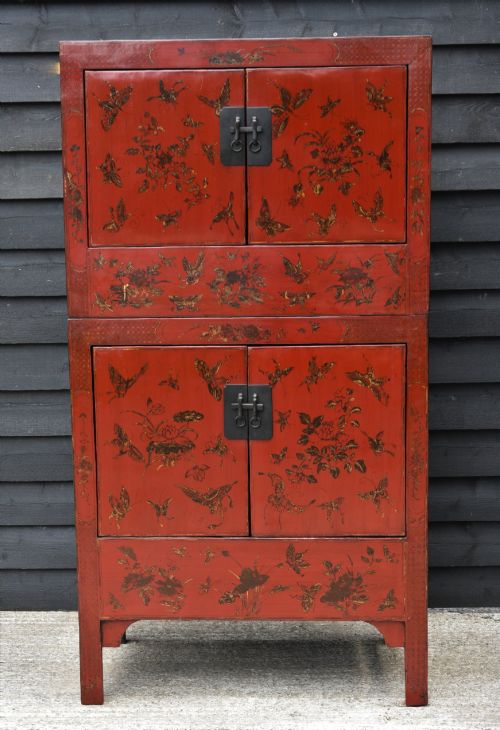
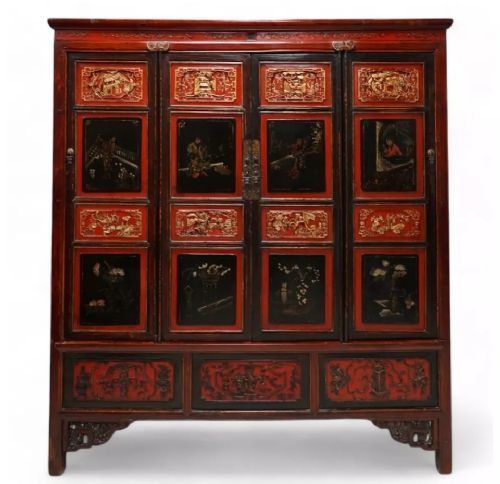
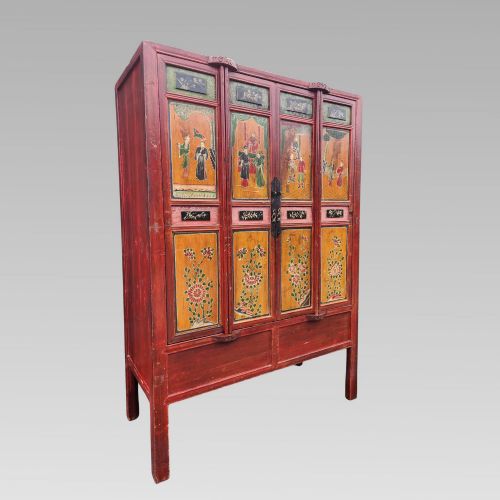
An asian lacquer armoire brings deep red and black finishes, elm construction, and traditional forms directly from the nineteenth century into a room.
Asian Lacquer Armoire
An asian lacquer armoire encompasses large wedding and marriage cabinets, compactum wardrobes, and compound cupboards originating from China during the nineteenth century. These substantial storage pieces serve as striking focal points in modern interiors while retaining their historic utility.
The versions most frequently met on this page date from the 1800s to 1910 and display traditional Chinese design influences, including Qing Dynasty aesthetics and Chinoiserie styles. They range from monumental cupboards to paired cabinets designed for domestic storage.
Buyers seek these cabinets for their commanding presence and rich surface decoration, which combines traditional woodworking with layered lacquer finishes. Each piece reflects specific regional craftsmanship from periods such as the late nineteenth century.
How they were made
Makers constructed these cabinets primarily using elm and other structural woods to form a stable framework for the heavy lacquer coatings. Iron and brass hardware, such as hinges and mounting plates, provide functional reinforcement and visual contrast against the dark or brightly coloured surfaces.
The finishing process involved applying multiple layers of red or black lacquer to the wooden body, occasionally enhanced with gold leaf accents or inlaid details. This meticulous technique created a durable, lustrous shell that protected the underlying timber while displaying deep colour.
Asian Lacquer Armoire Retail Price Guide 2026
Typical asking prices for asian lacquer armoire among the pieces listed under this phrase on Sellingantiques today, from the lower quarter to the upper quarter. They describe what is for sale here now, not the wider market.
The inventory includes marriage cabinets, compactum wardrobes, and compound cupboard forms.
What varies in quality
The preservation of the original lacquer surface heavily influences the standing of a piece, as layers of red or black coating endure wear differently across decades. The clarity and retention of gold leaf details or inlaid elements distinguish finer examples from simpler utilitarian cupboards.
Construction integrity within the elm framework and the survival of original brass or iron hardware determine the overall standard of a cabinet. Monumental proportions and balanced pairs also elevate certain pieces above standard domestic storage forms.
The Asian Lacquer Armoire Glossary
- Lacquer
- A durable resin finish applied in multiple coats to wood surfaces. It provides a glossy protective coating that deepens in colour over time.
- Chinoiserie
- A European decorative style reflecting Chinese artistic influences. It often appears in British interpretations of Eastern motifs on furniture.
- Elm
- A sturdy hardwood utilised for historic cabinet framing. Its strong grain supports heavy lacquer applications without warping.
- Compound cabinet
- A tall storage unit constructed in stacked sections. This traditional form allows for easier transport and reassembly of monumental pieces.
- Gold leaf
- Thinly hammered sheets of gold applied to decorative surfaces. It highlights specific carvings and borders on red and black lacquer grounds.
Asian Lacquer Armoire: Frequently Asked Questions
What is an asian lacquer armoire used for?
These cabinets serve as substantial storage furniture for clothing, linens, and household goods.
In modern interiors, their striking red and black finishes allow them to function primarily as statement display pieces.
How do I date an asian lacquer armoire?
Dating relies on examining the construction methods, wood types like elm, and the characteristics of the lacquer finish.
Pieces on this page originate predominantly from the nineteenth century up to the early twentieth century.
Where were these cabinets made?
The pieces originate from China, with specific examples associated with regions such as Fujian.
They reflect traditional Chinese craftsmanship spanning the Qing Dynasty and later nineteenth-century periods.
How do I care for lacquer furniture?
Maintain the finish by keeping the cabinet away from direct sunlight and fluctuating humidity levels.
Dust gently with a soft cloth and avoid chemical polishes that might damage the historic surface.