
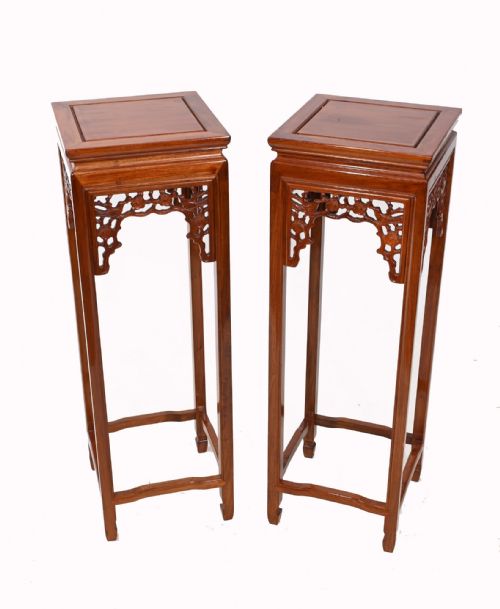
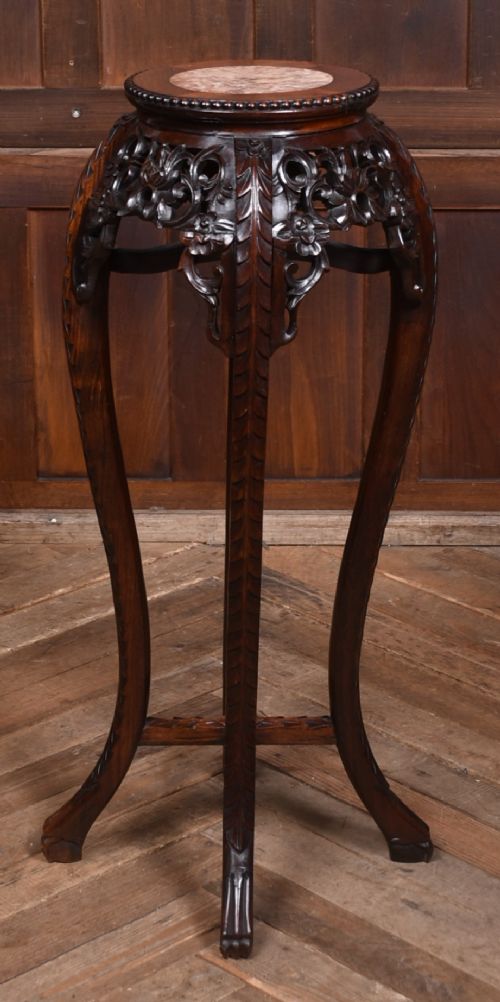

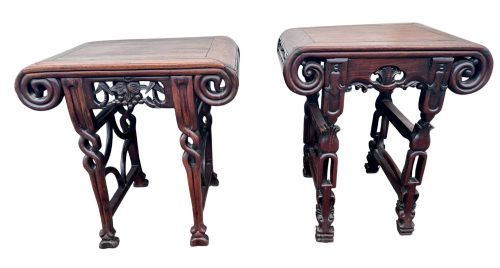


Asian Hardwood Display Pedestal
An asian hardwood display pedestal brings a striking sculptural anchor to a room, designed to elevate pottery and plants.
Asian Hardwood Display Pedestal
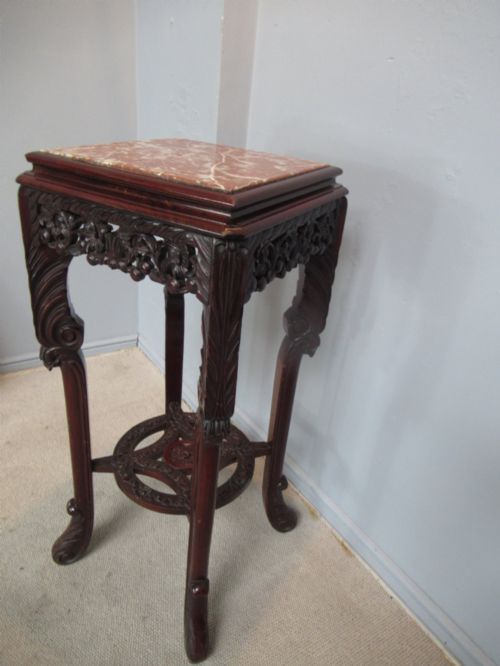
The asian hardwood display pedestal encompasses forms such as plant stands, vase stands, jardiniere stands, and occasional tables originating from the nineteenth century. Most examples date from the Victorian era, the Meiji period, and the Qing dynasty, reflecting traditional Chinese export and regional craftsmanship.
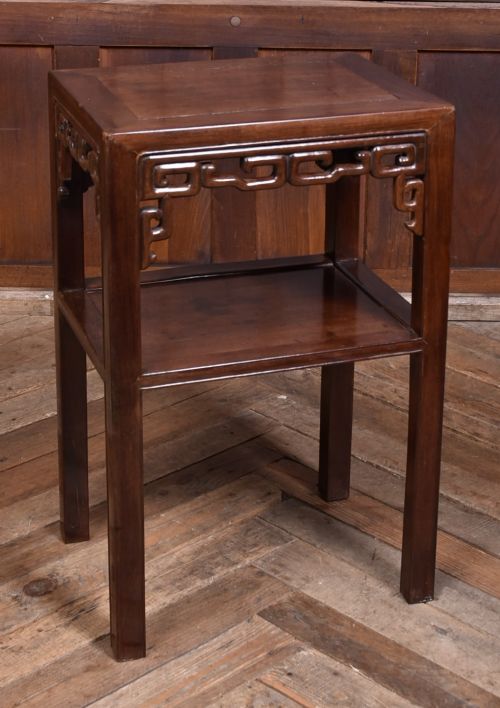
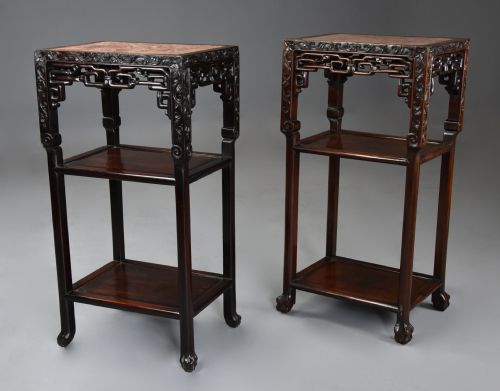
Buyers frequently encounter freestanding pot stands and two-tier pedestals designed with round or multi-sided tops. These pieces function variously as side tables, lamp tables, and display surfaces for ornamental vessels.
The materials span dense imported woods alongside indigenous timbers, frequently paired with inset stone or shell decoration. Their scale ranges from neat low stools to taller pedestals intended to showcase individual decorative objects.
Materials and Construction
Construction relies heavily on dense tropical hardwoods, rosewood, hongmu, and padouk, selected for their structural strength and capacity for intricate relief carving. Timber frames are joined using traditional methods to support heavy stone inserts without warping.
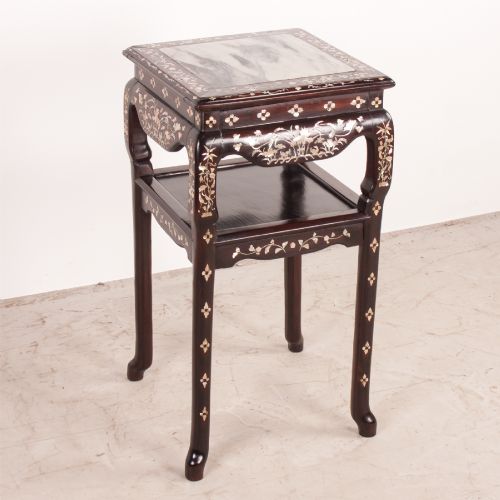
Many surfaces incorporate inset marble panels or detailed mother of pearl inlay work set flush into the wooden frame. Lacquer finishes and careful hand-carving provide the decorative detail characteristic of nineteenth-century production.
Every plant stand harbours ambitions of holding something far heavier than a fern.
Judging Quality
Quality reveals itself in the crispness of the wood carving and the weight and grain of the chosen hardwood or hongmu. Superior examples feature deeply undercut foliage and figures that remain sharp and well-defined.
The integration of the marble top into the wooden rebate indicates the level of joinery skill. Tightly fitted stone inserts and stable, well-balanced frames separate finer workshop pieces from standard commercial export items.
The Asian Hardwood Display Pedestal Glossary
- Hongmu
- A dense, dark red-brown hardwood traditionally utilised in fine Chinese furniture making. It is prized for its heavy weight and capacity to hold fine carved detail.
- Jardiniere
- A large ornamental pot or container for plants, which these stands were specifically built to elevate. They offer a stable platform for heavy ceramic vessels.
- Padouk
- A durable tropical timber exhibiting a rich reddish hue used across nineteenth-century Asian furniture. It provides both structural stability and a smooth finished surface.
- Qing Dynasty
- The final imperial dynasty of China, spanning from the seventeenth to the early twentieth century. Pieces from this era often display traditional carving motifs and formal symmetry.
Asian Hardwood Display Pedestal: Frequently Asked Questions
How were these stands originally used?
These pieces served primarily to elevate heavy porcelain vessels, bronze vases, and large indoor plants within formal rooms. Raising the object protected delicate floors and brought the decorative piece closer to eye level.
They also functioned as occasional side tables for lamps and small decorative objects in Victorian and export interiors. Their sturdy construction allowed them to bear significant weight from stone and ceramic items.
Are marble tops original to the stands?
Marble inserts are typically original to the nineteenth-century stands designed to hold damp plant pots or heavy vases. The stone provided a cool, water-resistant surface that protected the surrounding hardwood frame.
Craftsmen fitted the stone directly into a recessed rebate within the wooden top to ensure stability. The figure and colour of the marble generally match the period and origin of the timber base.
How do I care for a hardwood stand?
Maintain the timber by keeping the piece away from direct heat sources and sudden temperature fluctuations that can dry out dense woods. Regular dusting with a soft, dry cloth preserves the polished finish without building up residue.
Treat the marble insert with a damp cloth and mild soap if needed, avoiding acidic cleaners that etch the stone. Ensure the stand rests on a level surface to prevent undue stress on the joinery.
How do I distinguish nineteenth-century pieces?
Nineteenth-century examples display dense tropical hardwoods like hongmu and rosewood, coupled with hand-cut joinery and traditional patination. The depth of the carving and the weight of the timber reflect the materials standard of the period.
Stylistic markers such as Qing dynasty motifs or Meiji period characteristics help anchor the date. Examining the underside reveals the tool marks and construction methods characteristic of earlier workshops.