


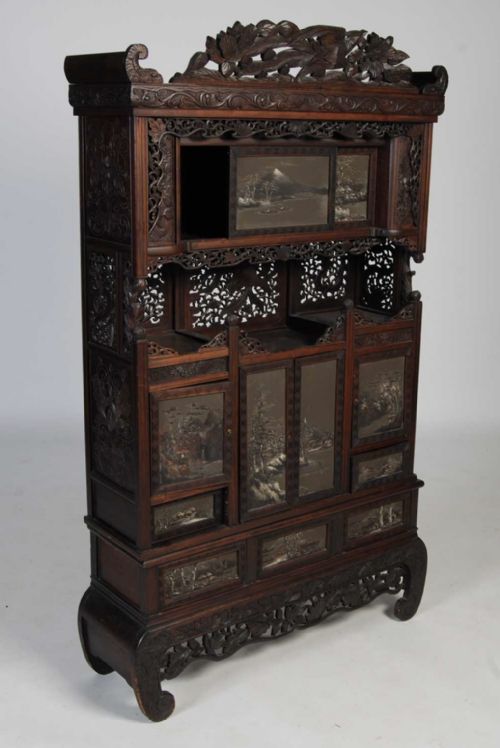


Asian Display Shelves
Asian display shelves gather the finest traditions of oriental cabinet-making, offering tiered platforms to showcase small treasures.
Asian Display Shelves
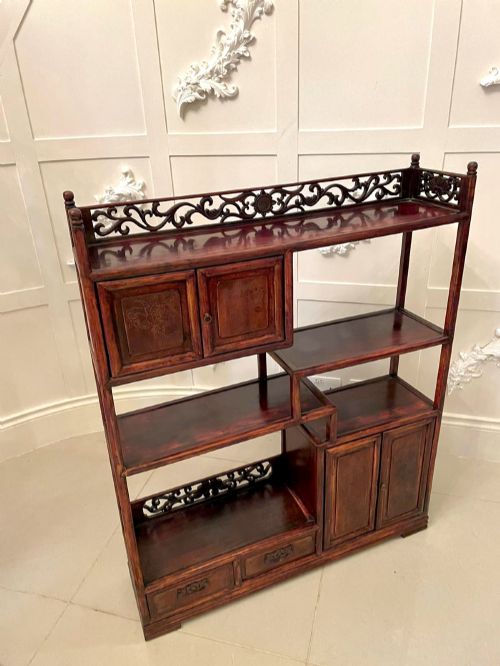
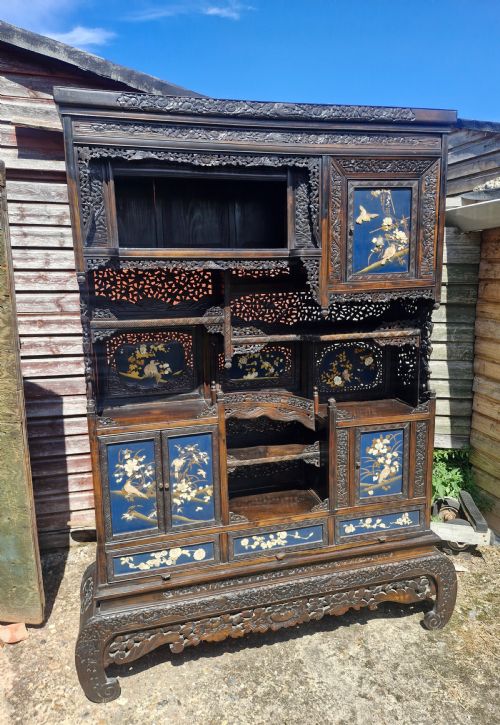
Asian display shelves comprise intricate cabinetry, dwarf side-cabinets, and Shodona units designed to exhibit decorative objects. These pieces range from the Meiji period in Japan to the Qing Dynasty in China, encompassing styles such as Chinoiserie and Asian Export.
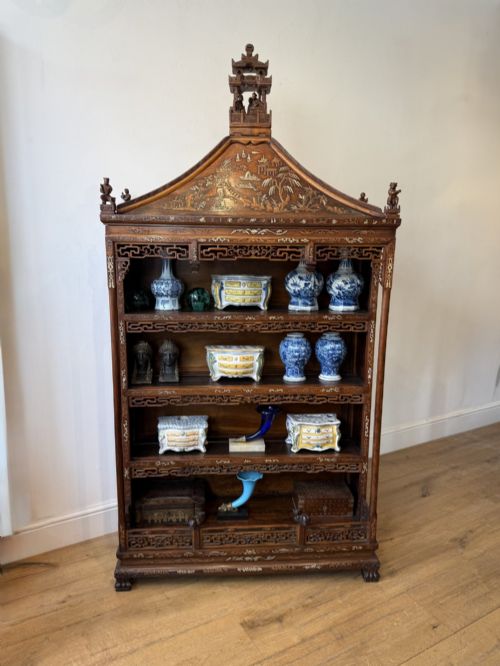
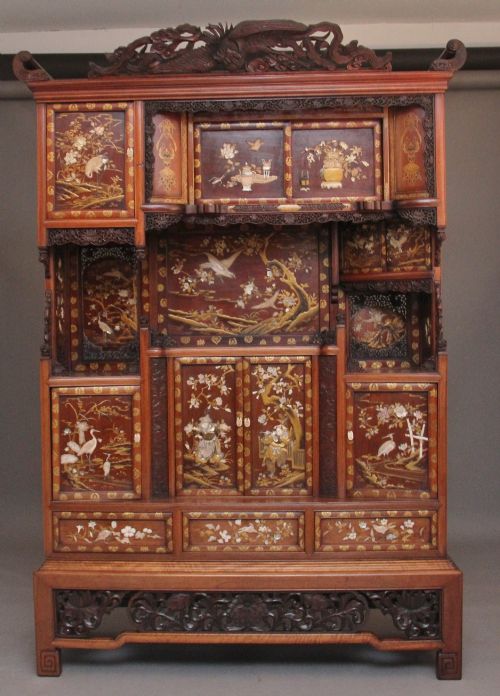
The inventory on this page centres on pieces from the 19th century and early 20th century. Buyers frequently encounter forms described as Shodona cabinets, pagoda display cabinets, and display stands.
Objects vary from tall standing units to dwarf side-cabinets, alongside floor clocks and display cabinets. Each item reflects the distinctive craftsmanship of Chinese and Japanese workshops from the 1870s to the 1920s.
Materials and Construction
These items are constructed primarily from dense timbers such as hardwood, rosewood, and Hongmu. Artisans often utilised red lacquer to coat surfaces, establishing a smooth and durable finish.
Detailing involves bone inlay, mother of pearl, and brass fixtures. Profuse carving defines the exterior woodwork, creating complex motifs across panels, doors, and stands.
One towering clock stands quietly among the cabinets, keeping time while the shelves hold their still-life of tiny treasures.
Evaluating Quality
Distinction in quality relies on the depth and crispness of the carving across the hardwood or rosewood structure. Pieces that retain precise joinery and intact lacquer show superior original manufacture.
The integration of decorative elements such as bone inlay and mother-of-pearl panels separates standard utility storage from exceptional cabinet-making. Condition of the brass mounts and structural stability on original stands further determine the grade of a piece.
The Asian Display Shelves Glossary
- Shodana
- A Japanese multi-tiered display cabinet featuring staggered shelves and small cupboards. These pieces were designed for presenting ornaments and ceramics.
- Hongmu
- A dense hardwood used in traditional Chinese furniture manufacturing. It is prized for its weight and ability to hold fine carved details.
- Chinoiserie
- A Western stylistic interpretation of Chinese artistic traditions. It appears in European and export furniture decoration.
- Meiji Period
- The era of Japanese history spanning from 1868 to 1912. Cabinets from this period often display elaborate wood carving.
- Qing Dynasty
- The final imperial dynasty of China, ruling from 1644 to 1912. Pieces from this era frequently utilise hardwood and intricate panel work.
Asian Display Shelves: Frequently Asked Questions
What were Asian display shelves used for?
These cabinets served to exhibit small decorative objects, ceramics, and scholarly items within traditional interiors. The staggered shelving allowed owners to curate varied collections on open platforms while storing documents or smaller items behind enclosed doors.
In modern rooms, they continue to function as display furniture for ornaments and collectibles, bringing vertical wood grain and intricate carving into living spaces.
How do I tell Japanese and Chinese pieces apart?
Japanese pieces from the late nineteenth century frequently take the form of a shodana, characterised by asymmetrical shelving arrangements and distinct joinery. Chinese examples often lean towards symmetrical layouts, pagoda tops, or heavier hardwood construction like Hongmu.
Stylistic motifs on the carved panels also point to origin, with certain floral and architectural themes aligning specifically with Qing Dynasty or Meiji period workshops.
Where should I place a display cabinet at home?
These cabinets suit living rooms, studies, or hallways where their tiered shelves can be viewed without obstruction. Placing them away from direct sunlight protects the lacquer and delicate timber surfaces from fading.
Ensure the floor is level so that tall units or cabinets on stands remain stable, particularly when displaying heavier ceramic or bronze items.
What materials should I look for?
The listings feature dense timbers such as hardwood, rosewood, and Hongmu, which provide structural strength. Decorative elements frequently include mother of pearl, bone inlay, and brass hardware.
Red lacquer finishes also appear on specific pieces, offering a smooth surface that contrasts with the surrounding carved woodwork.