
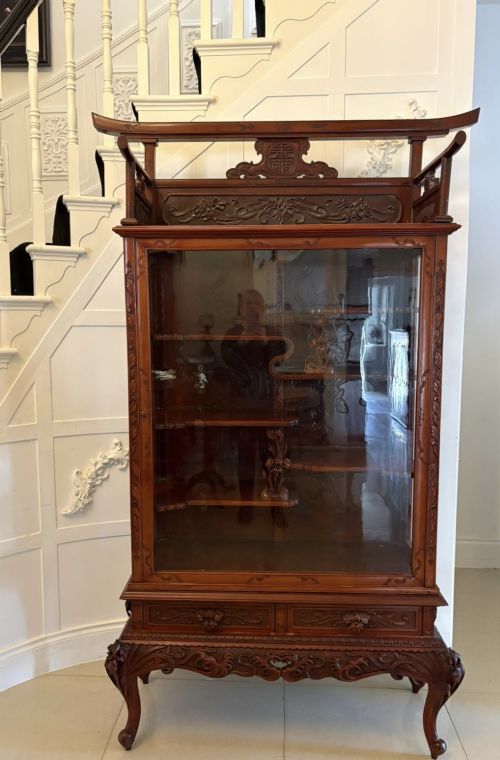
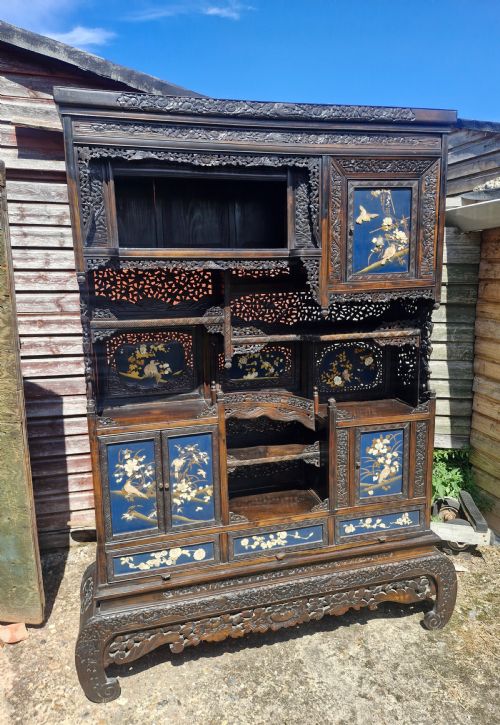
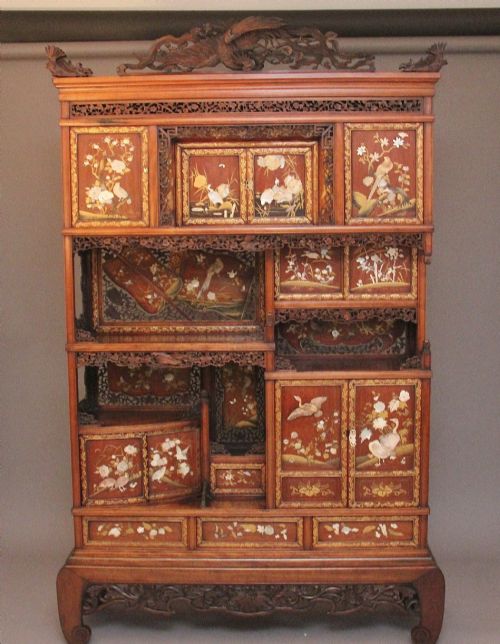
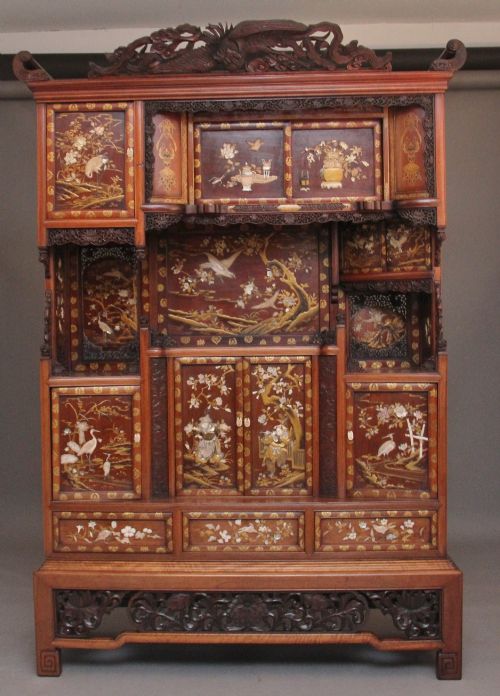


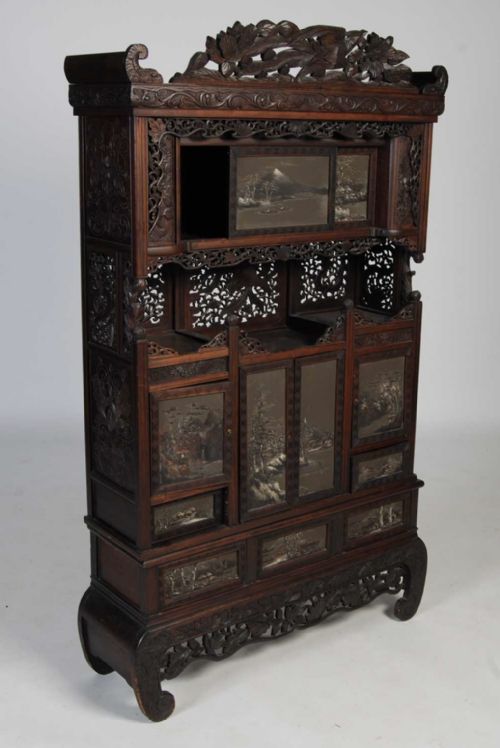


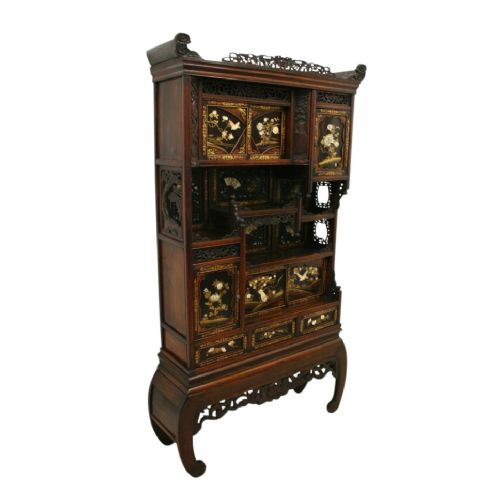
Hardwood Japanese Cabinet
A hardwood japanese cabinet brings intricate Meiji craftsmanship and rich materials directly into a room.
Hardwood Japanese Cabinet
A hardwood japanese cabinet encompasses ornate display pieces, writing desks, and tabletop storage units originating from the late nineteenth century. These items showcase the distinct aesthetics of the Meiji period, often reflecting the global fascination with Japonisme design during the Victorian era. Buyers searching this phrase typically encounter elaborate forms designed to showcase precious objects.
Makers utilised dense exotic timbers as the structural foundation, mounting them with delicate decorative panels. The influence of Asian export production is evident in the scale and ambition of these works. Each piece balances architectural shelving with meticulous surface ornamentation.
How they were made
Makers constructed these cabinets using sturdy hardwoods, applying traditional joinery techniques to create multi-tiered structures. Surfaces received lavish treatments including red lacquer, intricate carving, and polished finishes. These dense timbers provided a stable canvas for complex decorative programmes.
Artisans inlaid mother-of-pearl, bone, and bronze animal decoration directly into the wood to create contrasting textures and pictorial scenes. Shibayama techniques brought multi-coloured shell and ivory elements to the surface, while Yosegi parquetry introduced geometric wood mosaic patterns. Glazed panels and metal mounts completed the structural assembly.
Bronze animal decorations occasionally peer out from unexpected corners of tabletop cabinets.
What varies in quality
The hierarchy of quality rests upon the depth of the carving and the precision of the inlay work. Finer examples display seamless integration of mother-of-pearl and bone elements, where motifs remain crisp and firmly seated within the timber. Lesser pieces rely on simpler surface treatments with minimal depth or relief.
Structural ambition dictates distinction, separating standard storage boxes from exhibition-quality shodonas featuring complex asymmetrical shelving. The presence of specialised techniques, such as meticulous Yosegi parquetry or detailed bronze animal mounts, elevates a piece. Harmony between the timber frame and the decorative panels distinguishes superior craftsmanship from routine manufacture.
Gabriel Viardot
The Hardwood Japanese Cabinet Glossary
- Shodana
- A traditional Japanese tiered display cabinet featuring asymmetrical shelving, cupboards, and sliding doors. These cabinets were designed to hold small artistic treasures and curiosities.
- Meiji Period
- The era in Japanese history spanning from eighteen-sixty-eight to nineteen-twelve, marked by rapid modernisation and extensive export of decorative arts to the West. Pieces from this time often blend traditional motifs with Western display preferences.
- Shibayama
- A decorative technique involving the inlay of precious materials such as mother-of-pearl, ivory, and shell to create raised pictorial reliefs. This method produces shimmering, multicoloured surface designs on wood.
- Yosegi
- A complex Japanese wood mosaic technique using natural contrasting timbers to form intricate geometric patterns. It is frequently applied to the surfaces of boxes, desks, and small cabinets.
- Japonisme
- A nineteenth-century Western artistic movement influenced by Japanese aesthetics, ukiyo-e prints, and decorative objects. European makers adopted these stylistic elements in furniture design.
Hardwood Japanese Cabinet: Frequently Asked Questions
What is a shodana cabinet?
A shodana is a traditional Japanese tiered cabinet featuring asymmetrical shelving, sliding panels, and small cupboards designed for displaying precious objects.
These pieces were constructed to organise and exhibit art collections within the home, balancing architectural joinery with decorative surfaces.
How do I date a Meiji cabinet?
Dating relies on stylistic markers, construction methods, and materials associated with the late nineteenth century and the Victorian era. Many pieces carry documentation or stylistic traits specific to the eighteen-eighties and nineties.
Examining the joinery, lacquer application, and inlay techniques helps distinguish pieces made during the height of the Meiji period from later revivals.
Where were these cabinets made?
These cabinets originated in Japan primarily for export to Western markets during the late nineteenth century, aligning with the global appetite for Asian decorative arts.
European makers influenced by the Japonisme movement also produced similar furniture styles locally during the same period.
How should I care for lacquer and inlay?
Maintaining these pieces requires keeping them away from direct sunlight and maintaining stable room humidity to protect delicate wood and inlays.
Dusting gently with a dry, soft cloth preserves the polished lacquer surfaces without damaging the bone and mother-of-pearl elements.