








Asian Carved Plant Pedestal
An asian carved plant pedestal brings weight and rich timber grain to an interior, elevating a pot or bronze above the floor.
Asian Carved Plant Pedestal
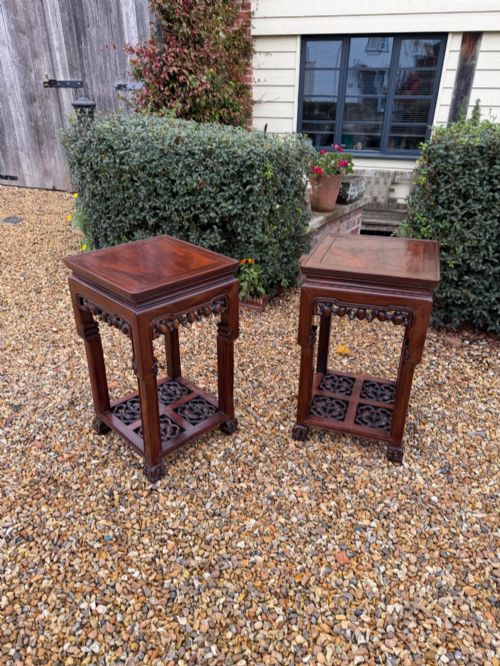
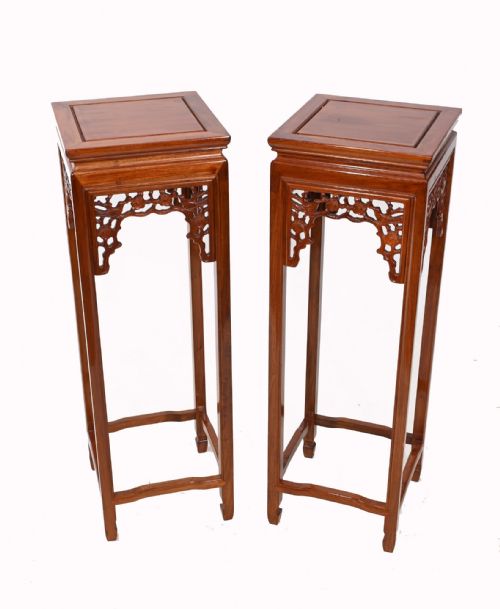
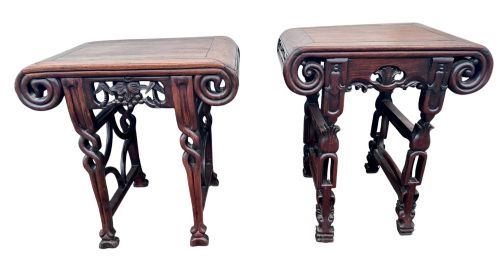
When you search for an asian carved plant pedestal, you enter a field dominated by Chinese hardwood furnishings created for domestic display. These pieces function as stands for vessels, planters, and lamps, taking the form of low stools, tall torchiere columns, and multi-tiered tables.
The versions most commonly met on this page date from the nineteenth and early twentieth centuries, spanning the late Qing Dynasty and the Meiji period. Makers shaped them from dense timbers, often incorporating inset marble panels or mother-of-pearl inlay.
Form follows function closely in these objects, designed with sturdy tops and stable legs to bear the heavy weight of bronze urns, ceramic jardiniere pots, and large floral arrangements.
How they were made
Cabinetmakers utilised dense native timbers such as hongmu, huali, padouk, and rosewood, which allowed for crisp, deep carving without splintering. These heavy woods were joined using traditional framing techniques that accommodated the natural movement of timber over time.
Many surfaces received inset panels of veined marble, soapstone, or quartz, providing a cool, stable surface for damp plant pots. Artisans also applied lacquer and paint, or set mother-of-pearl into the dark wood grain to create contrasting geometric and floral patterns.
Asian Carved Plant Pedestal Retail Price Guide 2026
Typical asking prices for asian carved plant pedestal among the pieces listed under this phrase on Sellingantiques today, from the lower quarter to the upper quarter. They describe what is for sale here now, not the wider market.
Listings feature woods including hongmu, padouk, rosewood, and rootwood, frequently paired with inset marble panels.
What varies in quality
The depth and crispness of the carving distinguish finer examples from simpler production. Master carvers undercut foliage and animal motifs so that limbs and petals stand free from the background with sharp detail.
The selection of the timber grain and the quality of the marble inset alter the presence of the object. Heavier, highly figured hongmu or rosewood combined with well-matched stone panels marks the upper end of the range.
The Asian Carved Plant Pedestal Glossary
- Hongmu
- A dense, dark tropical hardwood favoured for traditional Chinese furniture. It translates literally as red wood and develops a deep sheen with age.
- Jardiniere
- A large ornamental pot or container for plants or flowers. These stands were specifically proportioned to elevate such vessels.
- Torchiere
- A tall standing lamp or column designed to hold a light source or decorative object high above the floor. They often feature slender shafts supported by carved tripod or quadrapod bases.
- Mother-of-pearl
- The iridescent internal layer of mollusc shells, cut into thin pieces and set flush into wood. It creates shimmering contrast against dark timbers.
- Meiji Period
- An era in Japanese history spanning from eighteen sixty-eight to nineteen twelve. Pieces from this time often share stylistic crossovers with contemporary Chinese export work.
Asian Carved Plant Pedestal: Frequently Asked Questions
What were plant pedestals used for?
These pieces served practical roles in traditional interiors by elevating heavy ceramic planters and bronze vessels away from damp floors. This protected flooring and placed decorative displays at eye level.
They also functioned as occasional tables, lamp stands, and surfaces for scholar objects in receiving rooms.
How do I style a plant stand at home?
Place a heavy ceramic pot, a bronze vase, or a sculptural lamp on the top surface to balance the visual weight of the carved base. They fit well in corners, beside seating, or as freestanding accents in a hallway.
Keep the surrounding space clear so the detailed woodwork and inset marble panels remain visible from multiple angles.
How do I identify Qing Dynasty pieces?
Look for dense Asian hardwoods like hongmu and huali combined with deep, undercut carving of floral or zoomorphic motifs. Inset marble tops and traditional joinery without metal screws point to this period.
Many examples also display specific forms such as multi-tiered tea tables and tall torchiere columns associated with nineteenth-century production.