
Asian Carved Cabinet
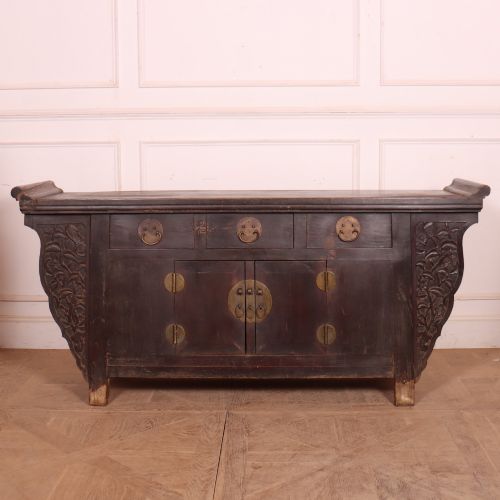
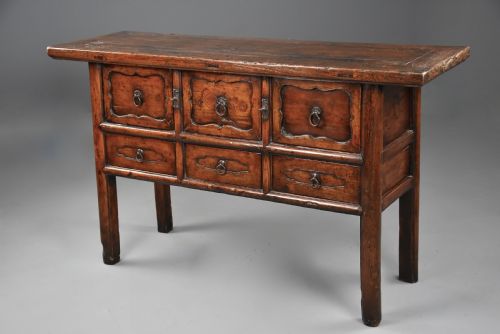
An asian carved cabinet brings dense regional iconography and figured timber into a room, offering both sculptural presence and enclosed storage.
Asian Carved Cabinet
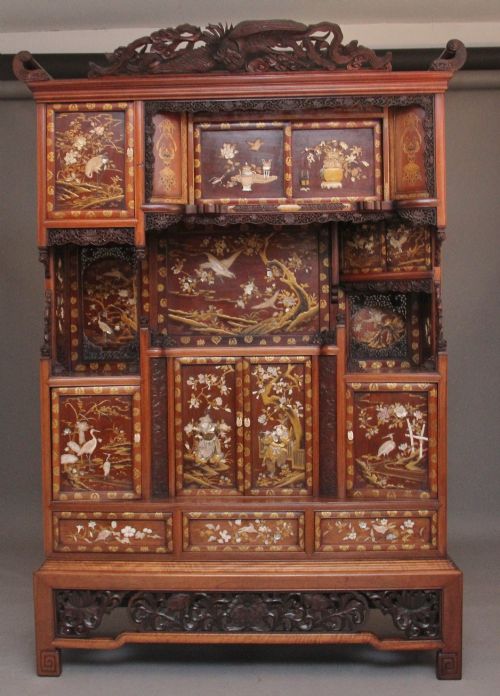
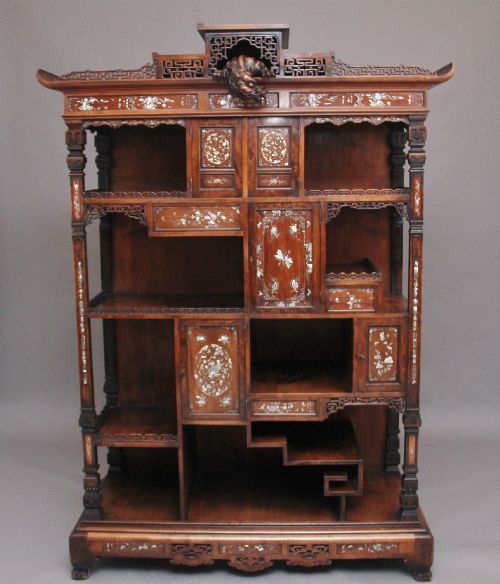
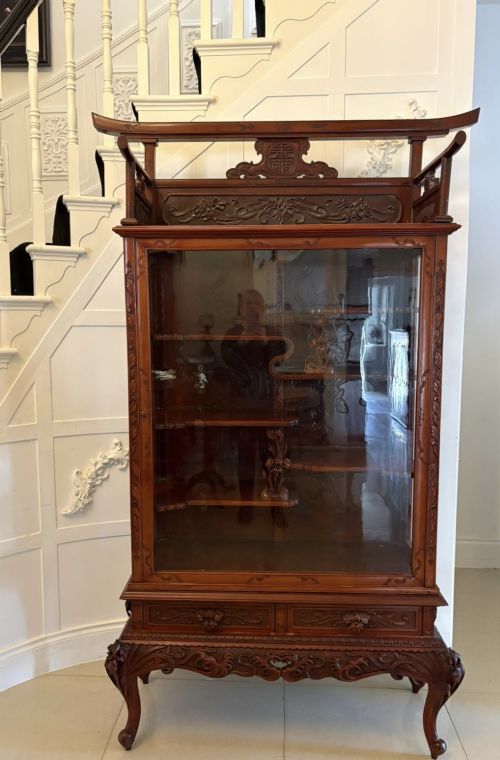
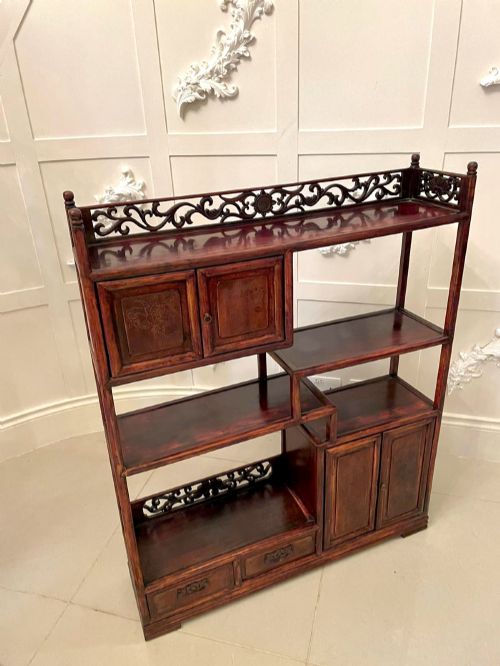
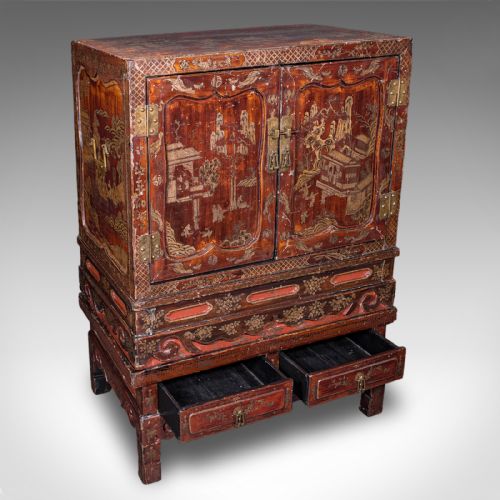
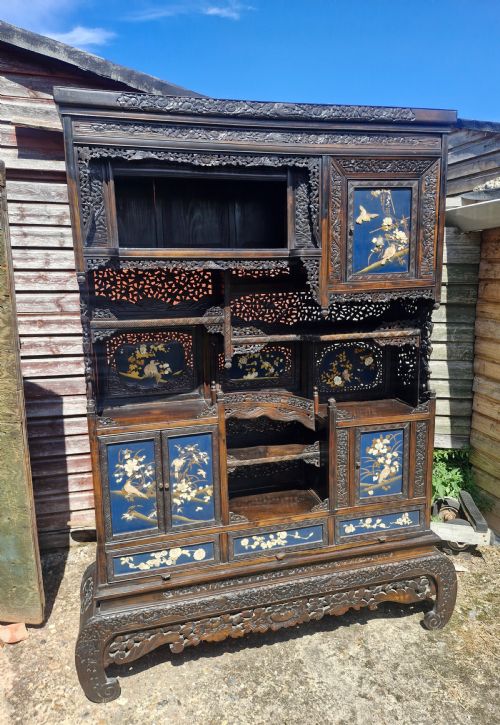
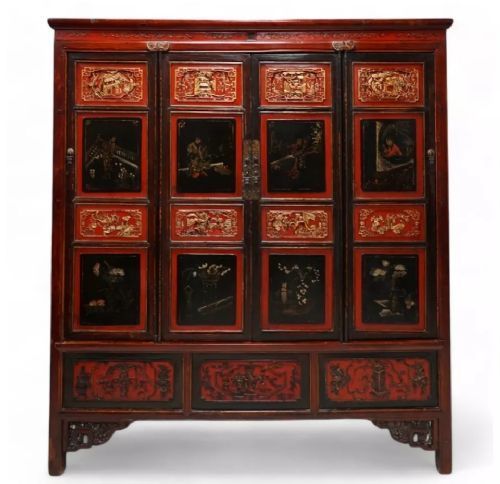
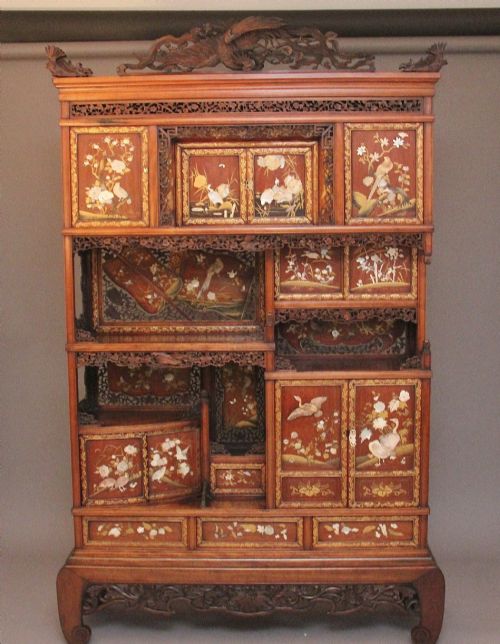
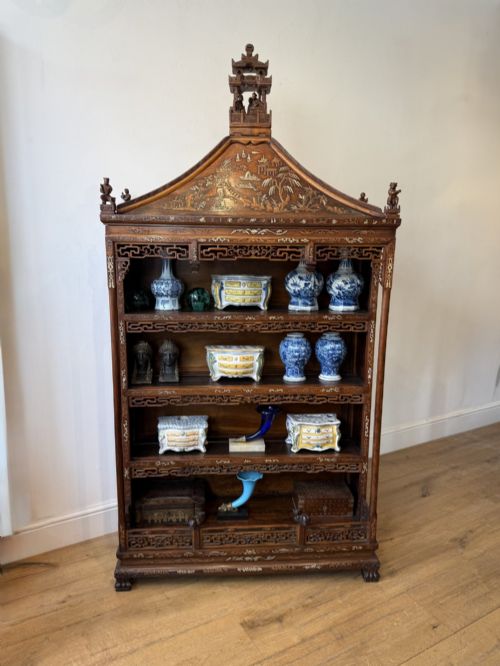
When searching for an asian carved cabinet, buyers encounter diverse forms ranging from large display cases and marriage cupboards to smaller shodana cabinets and shrines. The selection spans the nineteenth century alongside earlier examples, reflecting distinct regional traditions from China and Japan.
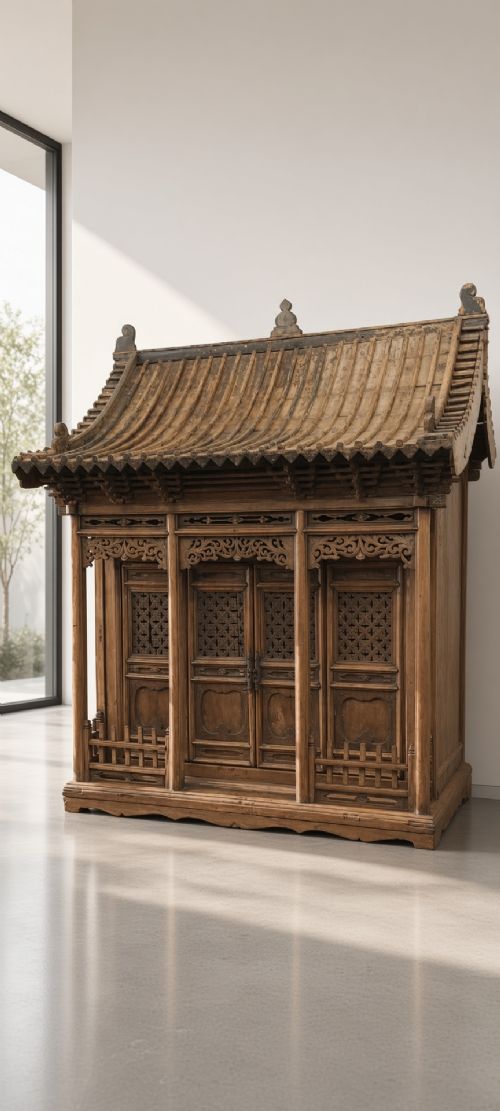
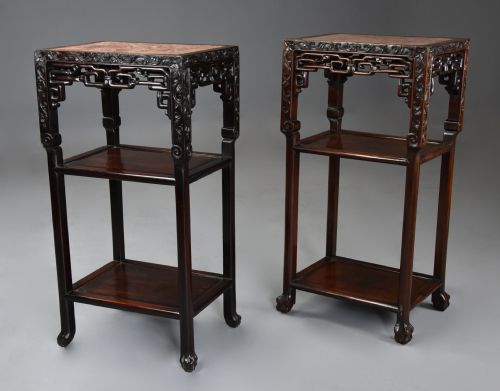
Pieces frequently incorporate architectural elements such as pagoda tops, open lattice shelving, and deep relief panels depicting floral or figural motifs. Many items sit upon separate carved stands or incorporate stands directly into their structural design.
Materials and Construction
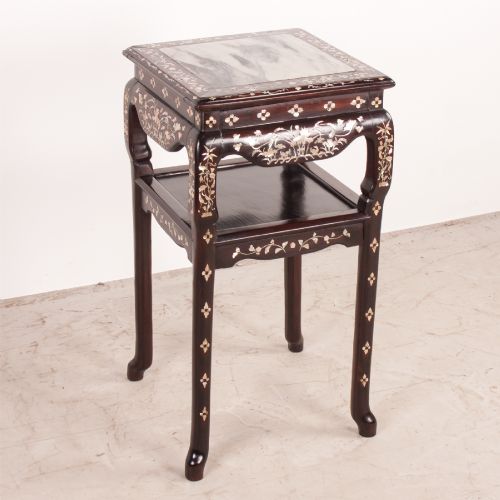
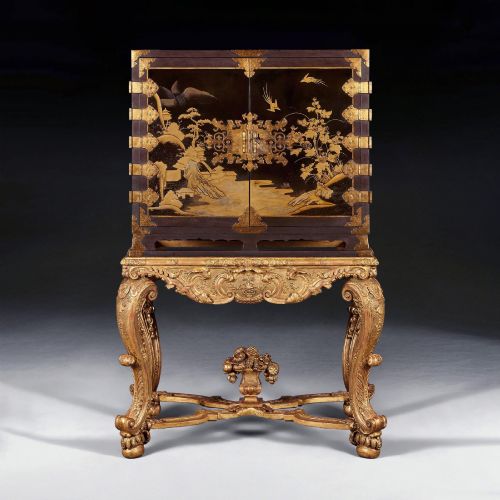
Cabinetmakers utilised dense timbers such as hardwood, elm, rosewood, and camphor wood, often pairing them with brass hardware or mother-of-pearl inlay. Surface finishes rely heavily on red or black lacquer, sometimes augmented by gilding.
Joinery techniques accommodated complex carved panels, multi-tiered shelving, and integrated drawer assemblies. Structural elements frequently combine structural timber frames with applied decorative mouldings and inlaid panels.
Several cabinets come with mysterious inner compartments designed for secrets that were probably just spare tea leaves.
Evaluating the Pieces
Quality rests in the crispness of the wood carving and the depth of the lacquer finish. Superior examples display precise joinery where doors, panels, and internal shelving meet without warping.
The integration of decorative details such as mother-of-pearl inlay or brass mounts distinguishes finer instances. Well-preserved patination across hardwood and lacquer surfaces indicates careful handling over generations.
The Asian Carved Cabinet Glossary
- Shodana
- A Japanese multi-tiered display cabinet featuring asymmetrical shelving, sliding doors, and small compartments. These pieces originated during the Meiji period.
- Chinoiserie
- European artistic style reflecting Chinese aesthetic influences, commonly applied to furniture through lacquerwork and decorative painting. It gained popularity across various historical periods.
- Lacquer
- A durable resin finish applied to wooden surfaces in multiple coats, often polished to a high sheen and decorated with carving or gilding. This technique protects the underlying wood.
- Hongmu
- A category of dense, dark Asian hardwoods prized for furniture making. The term translates to red wood and encompasses several species.
- Regence
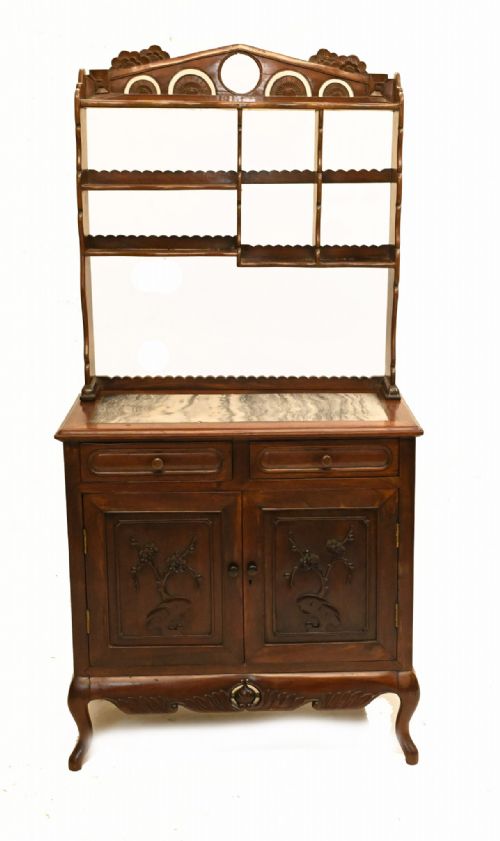
- A French decorative style bridging the classical Louis XIV and rococo periods, occasionally seen on European stands paired with imported Asian cabinets.
Asian Carved Cabinet: Frequently Asked Questions
What is a shodana cabinet?
A shodana is a Japanese display cabinet characterised by staggered shelves, enclosed cupboards, and small sliding doors. These pieces were designed to showcase small art objects and curios.
They emerged prominently during the Meiji period and often incorporate intricate woodwork, pierced carving, and fine joinery without metal fasteners.
How do I care for lacquer furniture?
Lacquer surfaces require stable indoor humidity and protection from direct sunlight to prevent drying and cracking. Dust them gently with a soft, dry cloth.
Avoid chemical polishes, silicone sprays, and abrasive cleaners that can damage the delicate resin finish over time.
Are these cabinets purely decorative?
While many examples feature intricate carving and display shelving, they were built for functional storage. Cupboards, sideboards, and marriage cabinets offered practical space for household goods, textiles, or documents.
Smaller table cabinets and chests served to organise smaller personal items while adding sculptural weight to a room.
How do I distinguish Chinese from Japanese pieces?
Chinese cabinets often emphasise symmetry, heavy hardwood construction, and deep relief carving depicting dragons, flora, or symbols of longevity. Elm, rosewood, and zitan are common timber choices.
Japanese examples, particularly shodana cabinets, frequently display asymmetrical shelf arrangements, delicate lattice work, and refined lacquer finishes with metal mounts.