


Asian Carved Bench
An asian carved bench brings solid wood craftsmanship and intricate regional forms into a room, offering seating with deep cultural history.
Asian Carved Bench
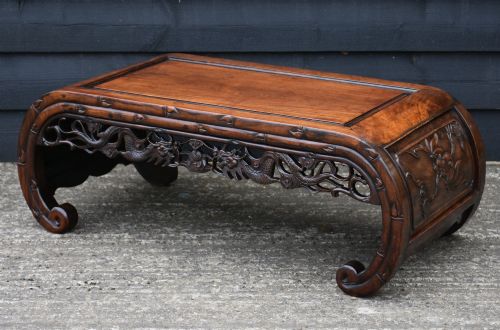
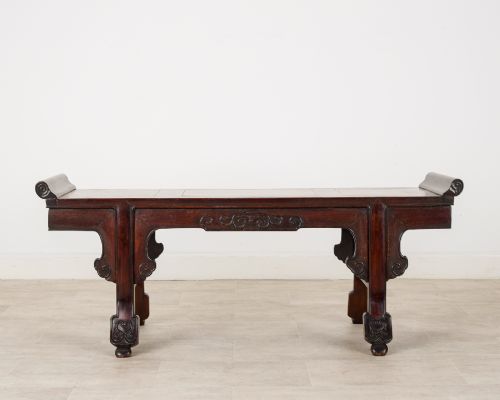
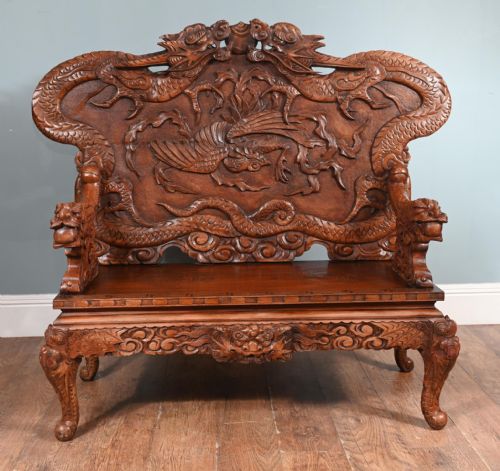
When you search for an asian carved bench, you encounter seating and low furniture shaped by Chinese traditions spanning the nineteenth and early twentieth centuries. The selection includes hall benches, window seats, and settles alongside related forms like low tables and day beds.
Many examples emerge from the Qing Dynasty and later regional workshops, reflecting styles such as Chinese Export and Asian Folk Art. These pieces function practically as seating while displaying sculptural wood and lacquer work.
Materials and construction
Carvers utilised dense timbers including rosewood, hongmu, elm, huanghuali, and polished hardwood to build sturdy frames that hold detailed chisel work. These woods provide the natural weight and grain required for deep relief carving.
Surface treatments incorporate cinnabar lacquer and inlaid details that complement the carved woodwork. Artisans joined timbers using traditional techniques suited to heavy seating and low tables.
Elephants occasionally join the dragons, appearing as sculpted seats with full bodies and tusks ready to greet visitors.
Assessing quality
Quality rests in the crispness of the carving, particularly around dragon details, scroll ends, and figural motifs on the seat or back. Finer pieces demonstrate precise tool control and well-balanced proportions across the entire frame.
The choice of timber heavily influences the standard of the piece, with dense rosewoods and hongmu yielding a superior finish compared to softer woods. Integration of lacquer and inlay work further distinguishes standard production from exceptional examples.
The Asian Carved Bench Glossary
- Qing Dynasty
- The final imperial dynasty of China, lasting from sixteen-forty-four to nineteen-twelve. Pieces from this era often feature traditional dragon motifs and carved hardwood construction.
- Hongmu
- A category of dense, heavy Asian hardwoods translated literally as red wood. Craftsmen prized this material for its rich colour and durability in carved furniture.
- Kang table
- A low platform table placed on a heated brick bed or used independently for tea and seating. These tables share similar carved details with larger benches.
- Cinnabar lacquer
- A technique involving multiple layers of red lacquer applied to a base and carved when dry. This method creates textured surfaces with deep colour.
Asian Carved Bench: Frequently Asked Questions
What is an asian carved bench used for?
These benches serve as functional seating in hallways, living rooms, and bedroom window spaces. They also act as decorative focal points that display traditional wood carving.
Historically, low variants functioned on platforms for dining or resting, while taller settles provided formal seating in halls.
How do I date an asian carved bench?
Dating relies on stylistic markers from periods like the Qing Dynasty, combined with the type of wood and construction methods visible in the frame. Nineteenth-century pieces often display heavier proportions and deeper hand carving.
Later pieces from around nineteen-thirty show shifts in regional workshop output while retaining traditional Chinese motifs.
Which woods are common in these benches?
Makers utilised various dense timbers including rosewood, hongmu, elm, and huanghuali. These woods support intricate relief carving without splitting.
Some pieces incorporate lacquered surfaces or contrasting inlays to enhance the visual texture of the timber.
How do I care for a carved wooden bench?
Maintain the wood by keeping the piece away from direct heat sources and sudden humidity changes. Dust regularly with a soft, dry cloth to protect the carved details and lacquer.
A light application of appropriate furniture wax preserves the finish without building up residue in the recessed carvings.