

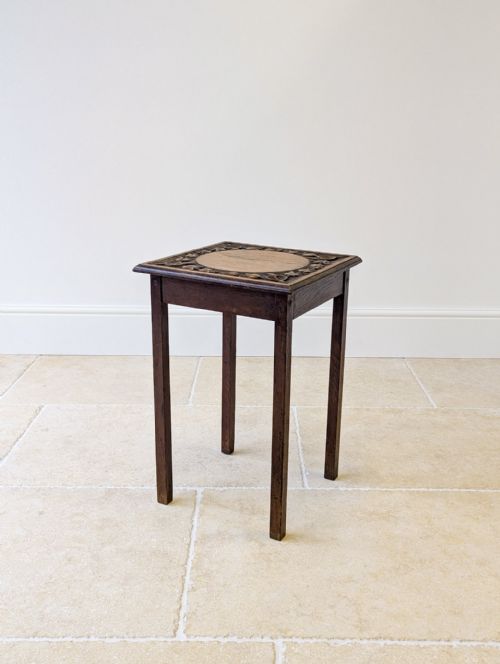
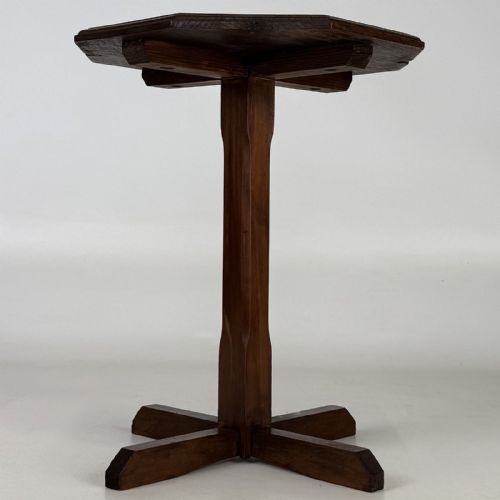
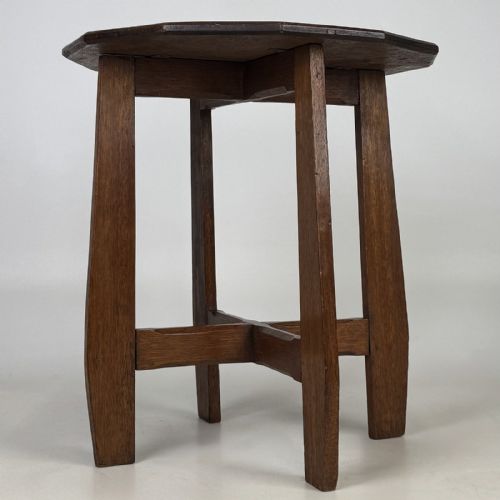
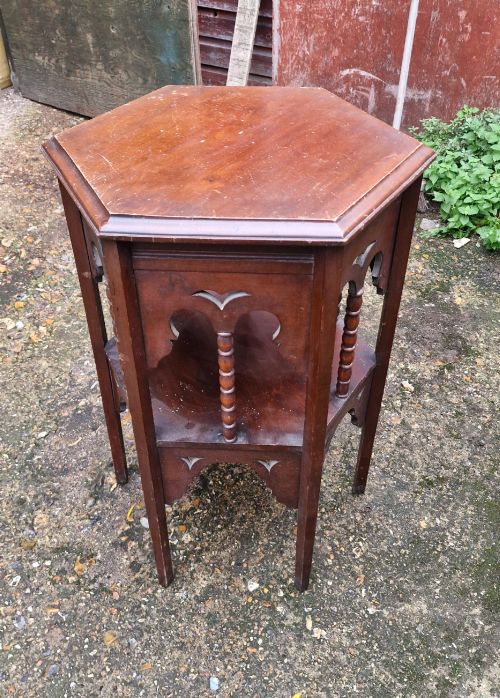
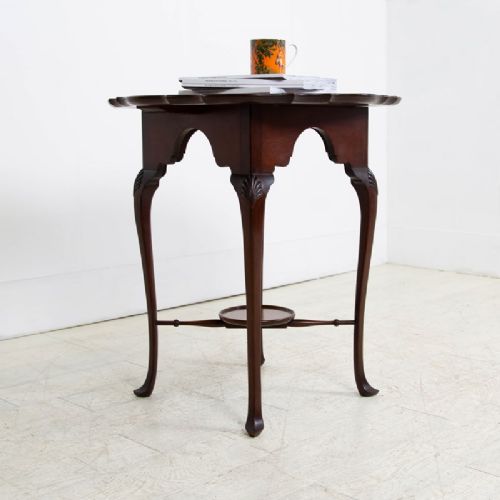
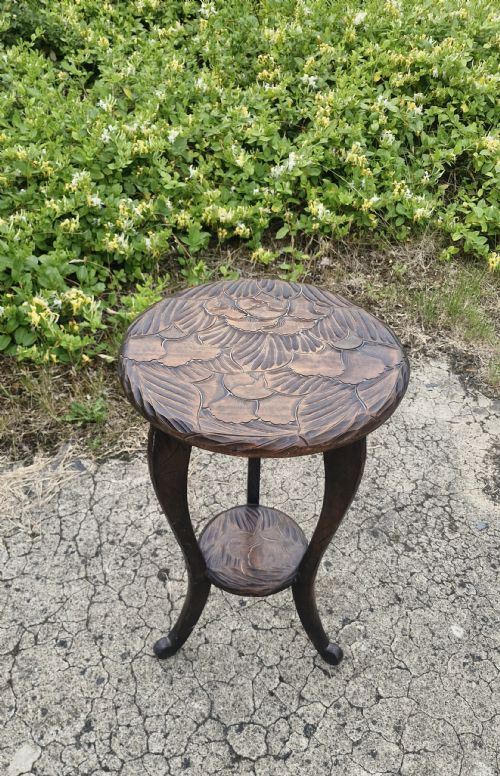
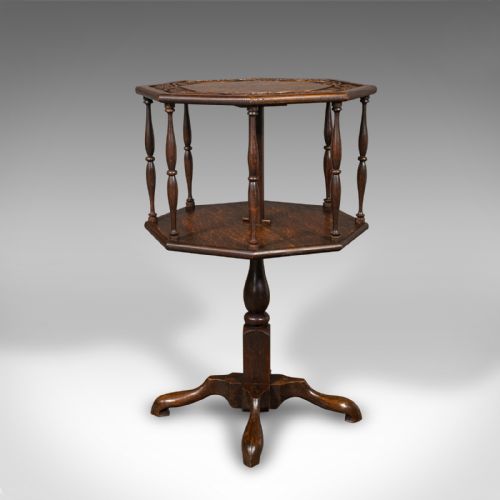

Arts Crafts Wine Table
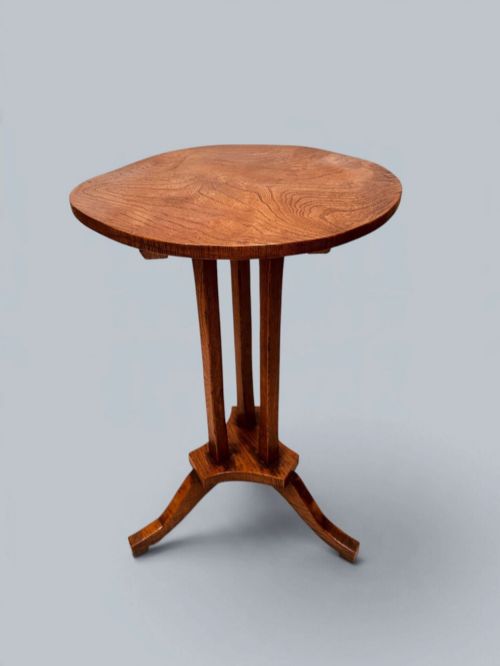
These arts crafts wine table examples combine honest construction with simple utility, making them ideal low surfaces for a quiet glass by the hearth.
Arts Crafts Wine Table
When you search for arts crafts wine table items, you encounter modest domestic surfaces designed for holding drinks and small objects during the late nineteenth and early twentieth centuries. These pieces belong broadly to the Arts and Crafts movement, the Edwardian era, and the late Victorian period.
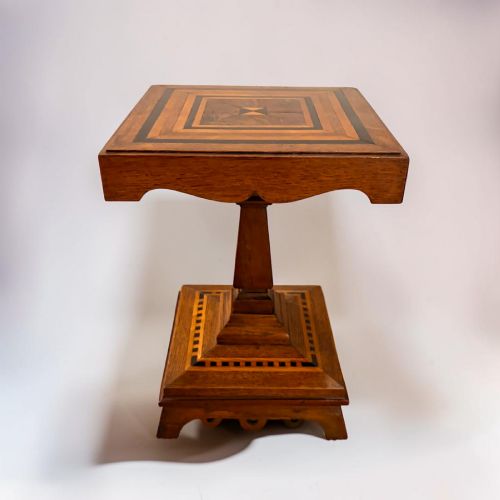
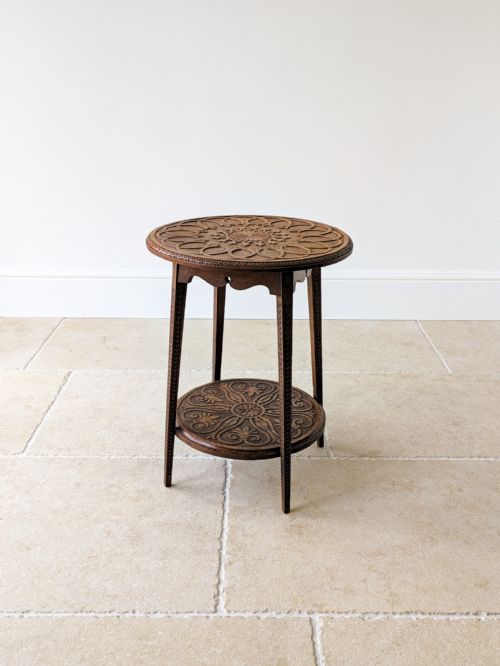
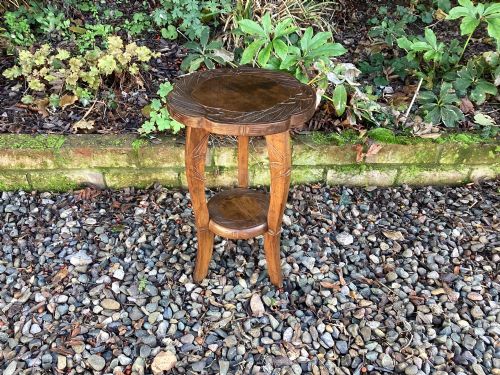
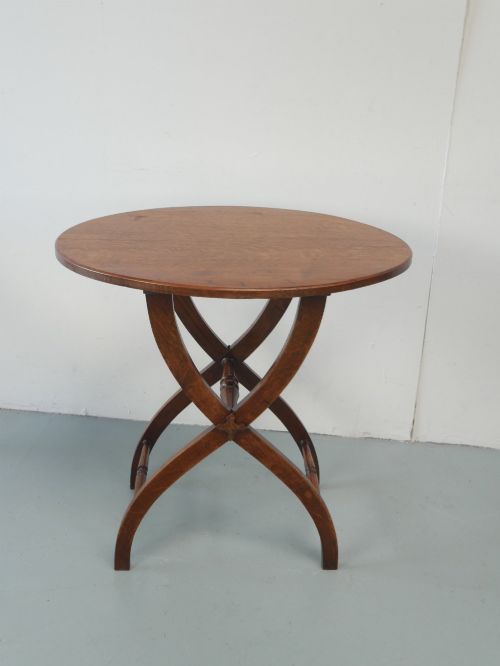
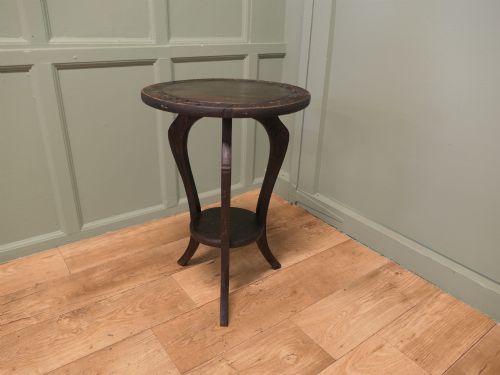
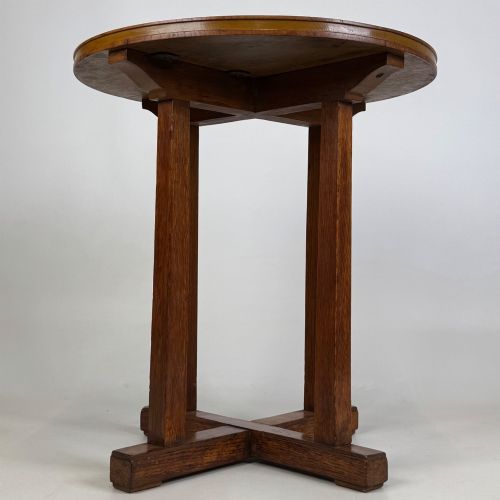
The versions you are most likely to meet on this page take the form of small occasional tables, round or octagonal side tables, and low wine tables. Many exhibit simple tripod legs, two tiers, or built-in shelving suited to compact spaces.
Makers and designers of the period favoured functional forms over elaborate ornament, resulting in clean lines and sturdy proportions. Oak appears as the predominant wood, accompanied occasionally by mahogany, beech, softwood, and carved hardwood.
Assessing quality in construction and design
The distinction between standard workshop output and superior production lies in the selection of timber and the precision of the joinery. Heavier gauge oak and well-balanced tripod bases command greater respect than lighter softwood alternatives.
Attribution to known workshops or distinctive regional groups, such as the Cotswold School, elevates a piece through thoughtful detailing like carved quatrefoils or integrated book shelves. The integration of decorative copper work or Moorish design influences also marks out finer execution.
Arts Crafts Wine Table Retail Price Guide 2026
Typical asking prices for arts crafts wine table among the pieces listed under this phrase on Sellingantiques today, from the lower quarter to the upper quarter. They describe what is for sale here now, not the wider market.
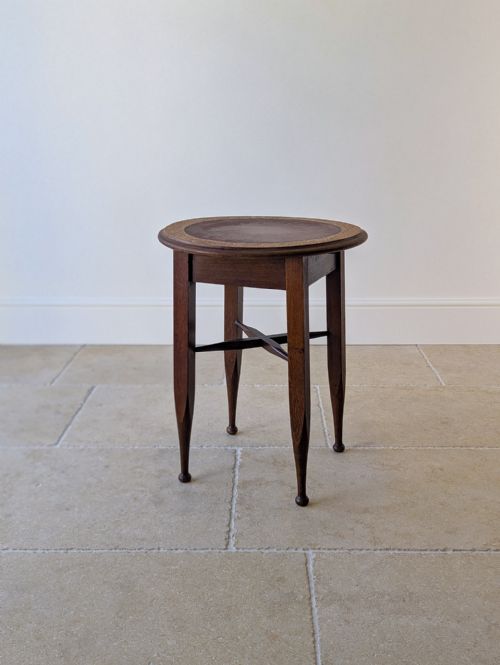
Copper and leather surface inserts appear alongside traditional turned tripod legs and octagonal table tops.
Shapland and Petter·Liberty's
The Arts Crafts Wine Table Glossary
- Occasional table
- A small, movable table designed for a specific, transient use in a sitting room or parlour. These surfaces suit small items like books or glasses rather than heavy dining.
- Tripod base
- A three-legged support structure commonly found on small round tables. This arrangement prevents rocking on uneven historical floorboards.
- Cellarette
- A low cabinet or stand originally designed to hold bottles of wine securely. In this context, it refers to specialised low furniture for beverages.
- Cotswold School
- A regional grouping of designer-makers influenced by Ernest Gimson and the Barnsley brothers. Their work emphasises honest hand-craftsmanship and visible construction.
Arts Crafts Wine Table: Frequently Asked Questions
What is an arts crafts wine table?
These pieces are small, functional surfaces produced during the late nineteenth and early twentieth centuries. They were designed to hold drinks, lamps, or books in domestic interiors.
Most examples share the sturdy construction and unpretentious aesthetic associated with the wider Arts and Crafts movement. Oak is the most frequent material encountered.
How were these small tables used?
Households placed them beside armchairs or in corners to hold wine glasses, smoking paraphernalia, or reading material. Their portable size allowed them to be moved easily around the room as needed.
Some variants included lower shelves or book compartments for convenient storage of periodicals. They served as versatile everyday furniture rather than formal showpieces.
How do I care for an oak wine table?
Maintain the timber by dusting with a dry cloth and avoiding placement near direct heat sources. Excessive temperature changes can cause old wood to split or warp.
Applying a traditional beeswax polish occasionally will nourish the grain and preserve the finish. Avoid modern chemical sprays that may damage historical surfaces.
How can I tell Edwardian pieces from Victorian ones?
Victorian examples often display heavier ornamentation, darker finishes, or eclectic influences such as Moorish design motifs. They date from before nineteen hundred.
Edwardian and later pieces tend towards lighter oak tones and simpler, more restrained silhouettes. Construction details and recorded dates on similar pieces help confirm the era.