


Arts Crafts Table Mirror
An arts crafts table mirror brings honest materials and thoughtful design to a dressing space, offering a functional glass framed by skilled hands.
Arts Crafts Table Mirror
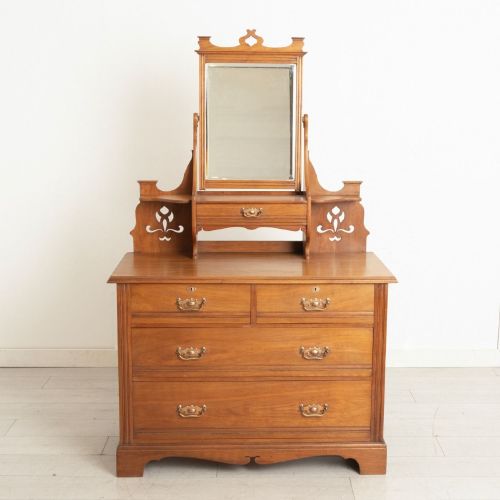
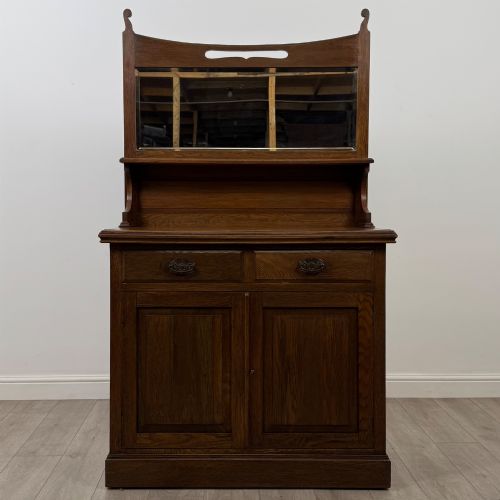
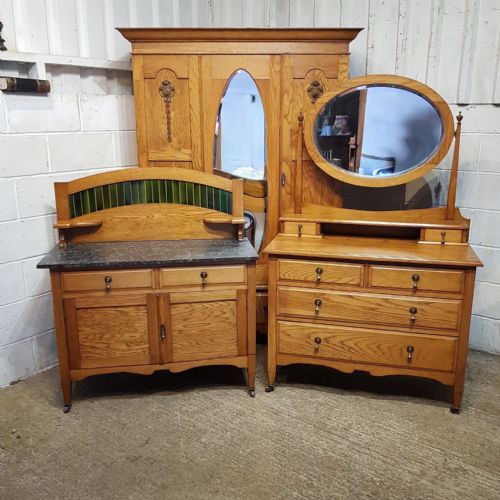
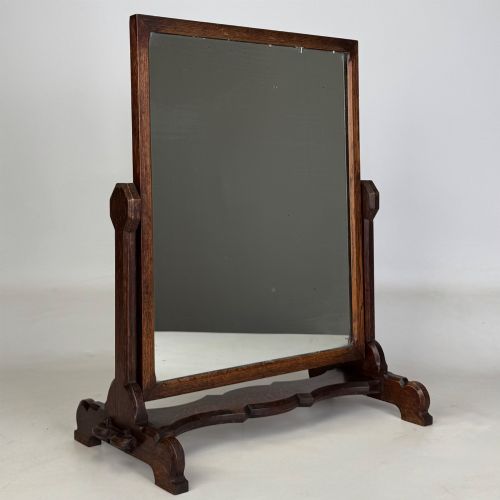
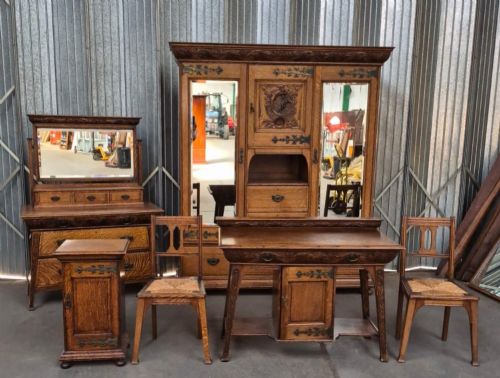
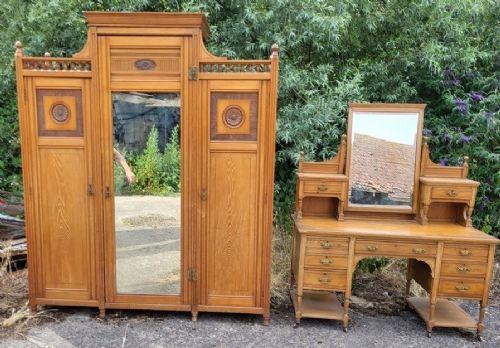
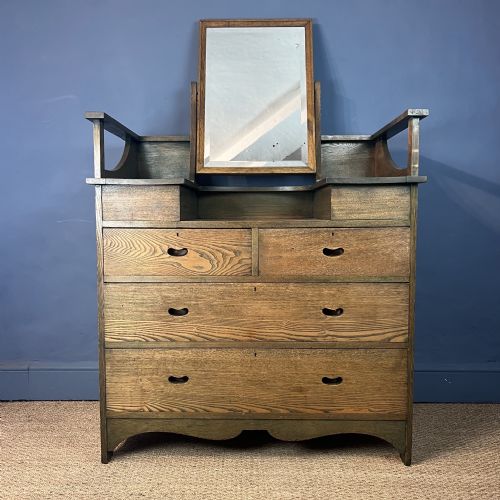
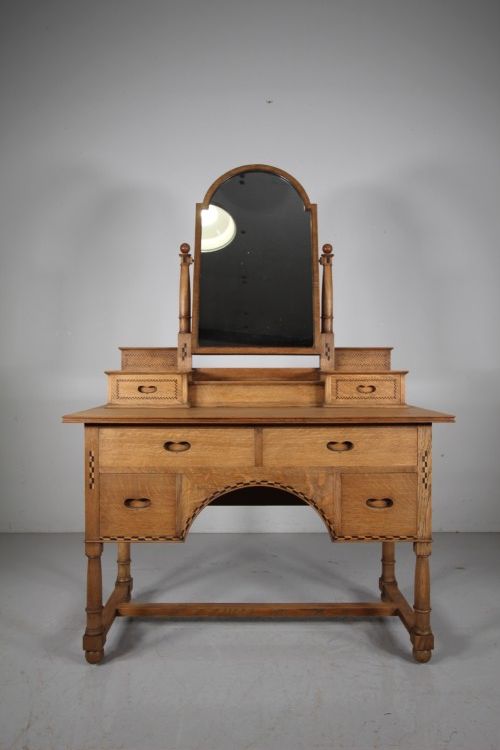
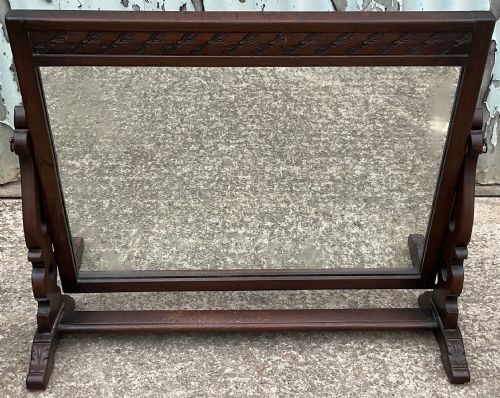
When you search for an arts crafts table mirror, you encounter pieces designed for dressing tables, chests, and consoles spanning from the late nineteenth century into the twentieth century. These objects include adjustable swing mirrors, cheval glass, and mirrors integrated into larger bedroom furniture suites or dressing stands.
The version you are most likely to meet on this page is an oak table mirror or dressing chest swing glass, often showing the influence of the Cotswold School or makers like Shapland and Petter and Heals. Oak forms dominate the selection, alongside occasional examples in ash, mahogany, walnut, and burr pitch pine.
Many of these mirrors date from the Edwardian era and the decades around nineteen hundred, carrying the straightforward construction and utility championed by the movement. They range from simple bevel-edged swing mirrors to elaborate pieces featuring integrated drawers, brass fittings, and decorative metalwork.
What Varies in Quality
The distinction between standard production and top tier pieces rests on the ambition of the design and the pedigree of the maker. Workshop attribution, such as labels or stamps from Heals, Shapland and Petter, or George Walton, elevates a piece significantly above uncredited regional work.
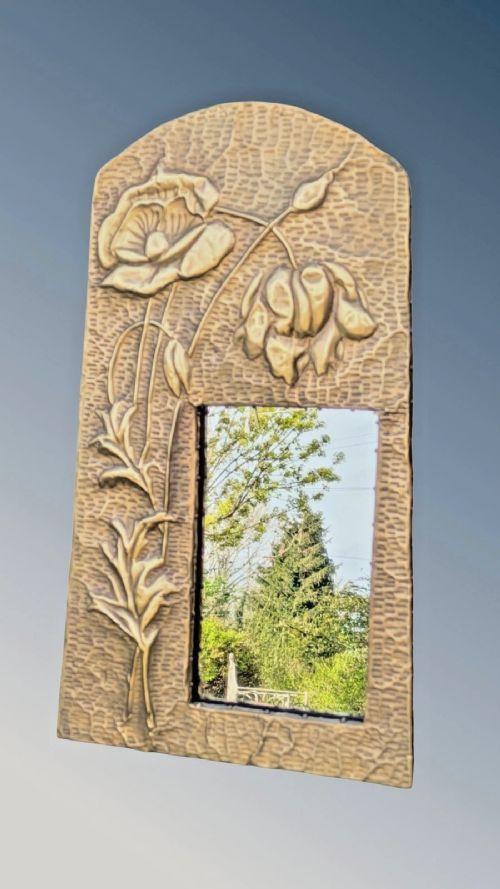
Material selection and decorative execution differentiate the range, with superior examples featuring high grade golden oak, burr pitch pine, or finely executed silvered copper and brass repoussé. The crispness of carved details, the subtlety of wood inlay, and the integration of ceramic or tile elements reveal the maker's hand.
Some copper frames capture nature permanently with hand hammered honesty seed pods frozen in metal.
Shapland & Petter·George Walton·Heals of London·Wright & Hunter of Belfast·Harris Lebus of London·J. Shoolbred·Minton
The Arts Crafts Table Mirror Glossary
- Swing mirror
- A glass plate hung on pivoting side supports that allows the angle of reflection to be adjusted. This form is common on dressing chests and table stands.
- Repoussé
- A metalworking technique where the metal is hammered from the reverse side to form a raised design in relief. This method appears on brass and copper mirror frames.
- Bevel edge
- An angled ground edge around the perimeter of the glass plate. This finish adds depth and catches the light gracefully.
- Cheval mirror
- A full length glass mounted in a standing frame that tilts vertically. These allow the viewer to see their entire outfit.
Arts Crafts Table Mirror: Frequently Asked Questions
Where should I place a table mirror?
These mirrors sit comfortably on top of a dressing chest, console table, or sideboard to create a dedicated grooming space. They bring functional height and reflective light to a bedroom or hallway surface.
Ensure the supporting furniture is deep and sturdy enough to hold the weight of the mirror frame safely. Positioning the glass opposite a window maximises natural light in the room.
How do I adjust the swing mirror?
Most table mirrors use side pivots or screws that can be gently tightened or loosened by hand or with a proper tool. This mechanism allows you to tilt the glass to your preferred angle.
Take care not to force the pivots, as older wooden arms and metal fittings can be delicate. Regular, gentle adjustment keeps the tension balanced without straining the joints.
Can I mount these mirrors on the wall?
Table mirrors are engineered with integrated stands, bases, or tenons designed to rest upon furniture rather than hang from a wall. Attempting to wall mount them usually requires bespoke brackets that alter the original structure.
It is best to appreciate these pieces in their intended configuration on a flat surface. Their proportions and weight distribution suit tabletop placement.
How do I care for the oak wood?
Dust the oak frame regularly with a dry, soft cloth to prevent buildup in the grain and carved recesses. Avoid applying modern silicone polishes that can leave a heavy residue on the surface.
Keep the mirror away from direct heat sources and strong sunlight to protect the wood and finish. Occasional application of a suitable wax helps maintain the natural lustre of the timber.