




Arts Crafts Oak Pedestal
These arts crafts oak pedestal pieces bring honest joinery and sturdy timber into everyday rooms, offering a practical workspace or display surface.
Arts Crafts Oak Pedestal
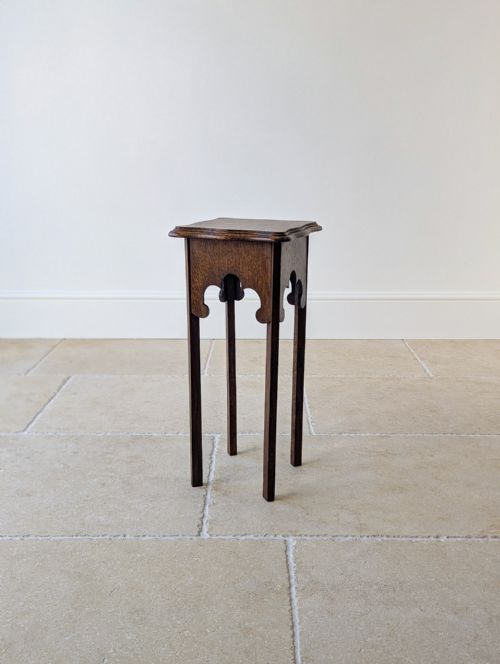
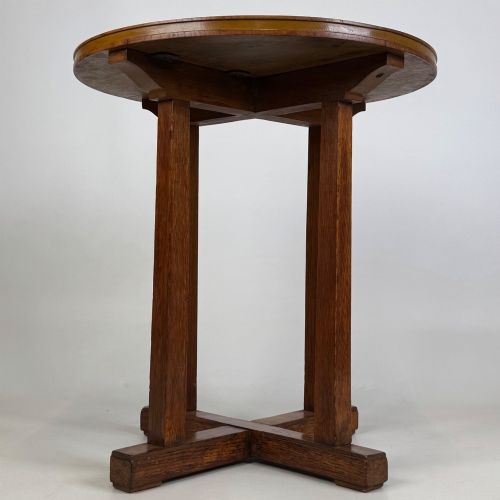
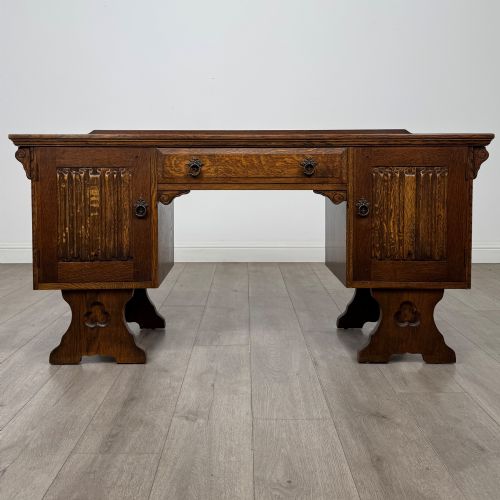
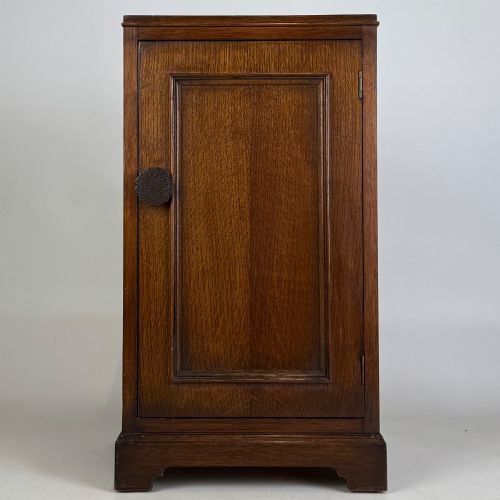
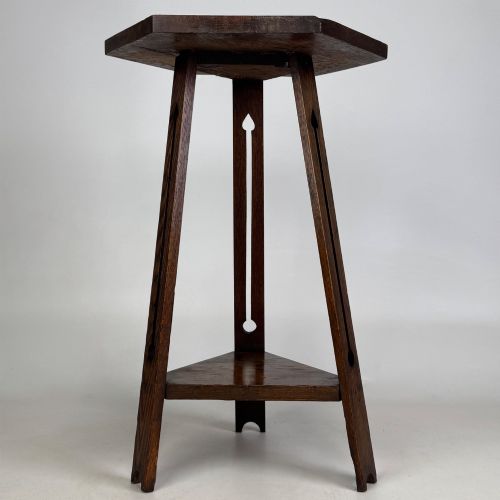
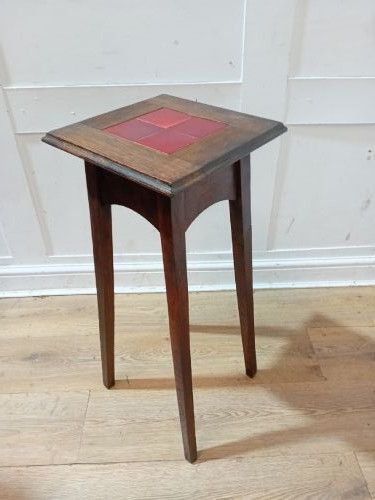
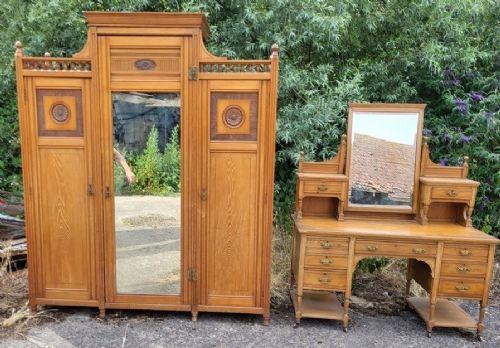
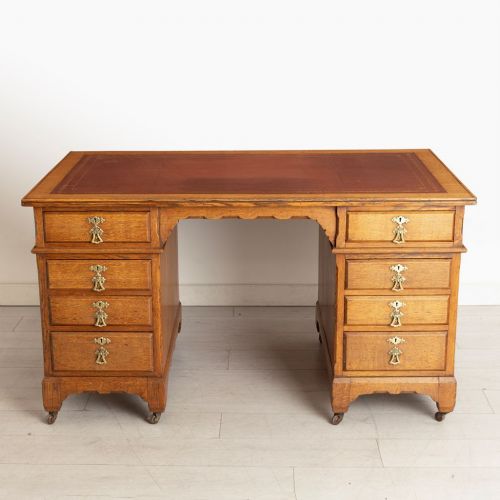
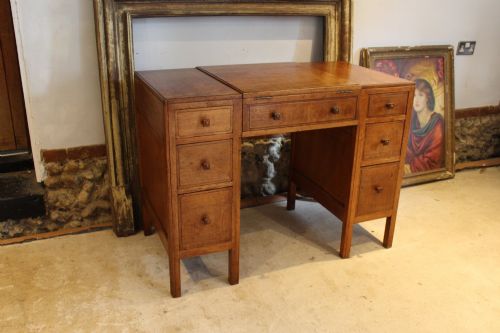
An arts crafts oak pedestal piece typically takes the form of a sturdy kneehole desk, a tiered plant stand, or a compact occasional table. These items emerge primarily from the Edwardian era and the early twentieth century, carrying the hallmarks of a movement that valued utility alongside straightforward construction.
The materials and styles seen across these listings span simple rustic folk art forms to more defined Gothic Revival or Cotswold School expressions. While heavy partners desks and mirrored sideboards appear in the archive, smaller plant stands and side tables are the versions most frequently met on this page.
Makers working in this tradition embraced the natural grain of timber, shaping furniture to serve domestic life without excessive ornamentation. Buyers searching for this phrase seek that specific balance of heavy oak framing and honest craftsmanship.
Materials and Construction
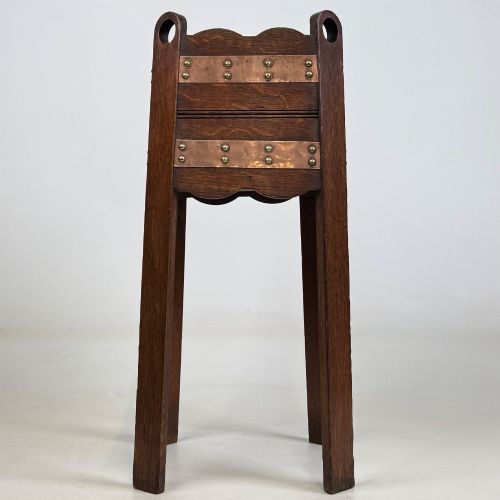
Solid oak forms the primary structure of these pieces, often selected for its pronounced grain and enduring strength. Workshops utilised brass, copper, and iron for hardware such as handles, hinges, and decorative mounts, adding metallic contrast to the warm timber.
Joinery techniques prioritize visible construction methods like tenons and pegged joints, celebrating the physical assembly rather than concealing it. Leather inserts occasionally surface on desk writing surfaces, while carved linenfold decoration and fruiting vine motifs appear on panels and bowls.
Listings for this phrase include oak, walnut, ash, brass, copper, iron, and leather across pieces dated from the Victorian era through the 1930s.
Evaluating Quality
The distinction between standard utility furniture and superior examples lies in the selection of the timber and the precision of the hand-carved details. Higher quality items display carefully matched oak boards with consistent figuring across large surfaces, alongside crisp, deliberate carving rather than hurried factory stamping.
Proportion and structural integrity also separate fine pieces from ordinary ones, with superior desks and stands offering balanced weight distribution and robust joints. The integration of secondary materials, such as hammered copper fittings or well-fitted brass hardware, signals a workshop's commitment to complete design execution.
Baillie Scott·Shapland and Petter·Heal and Sons·Liberty and Co
The Arts Crafts Oak Pedestal Glossary
- Pedestal desk
- A heavy writing table supported by two banks of drawers rather than four separate legs. This form provides substantial storage beneath the main writing surface.
- Cotswold School
- A twentieth-century design movement focusing on handcrafted furniture produced in Gloucestershire. Artisans working in this manner emphasised simple lines and exposed, honest joinery.
- Linenfold
- A style of woodcarving that imitates folded parchment or linen cloth. Craftsmen frequently applied this decorative relief to panels on cabinets, desks, and cupboards.
- Jardiniere stand
- A tall piece designed to hold a plant pot or floral display off the floor. These items often feature multi-tiered platforms for small displays.
- Gothic Revival
- An architectural and decorative style drawing inspiration from medieval forms. Pieces in this category incorporate pointed arches, heavy mouldings, and structural verticality.
Arts Crafts Oak Pedestal: Frequently Asked Questions
What is an arts and crafts pedestal desk?
An arts and crafts pedestal desk is a heavy workspace featuring two supporting columns of drawers beneath a solid top. These desks rely on visible construction methods and the natural grain of oak rather than applied veneers.
Craftsmen built them to serve as functional writing stations for home offices or studies. Their robust proportions give them a commanding presence in a room.
How do I identify an Edwardian plant stand?
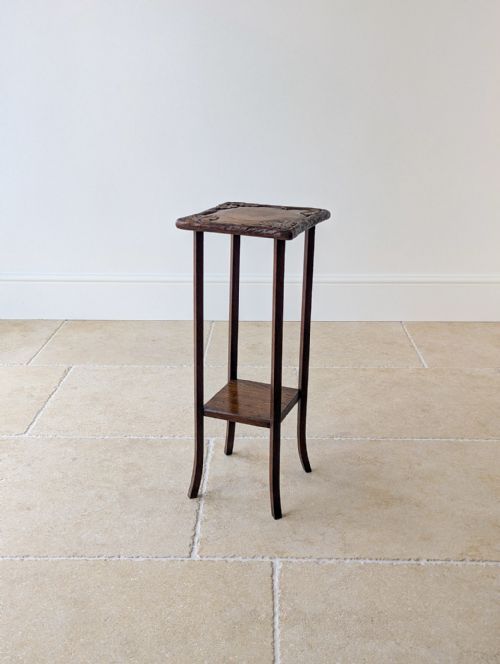
Edwardian plant stands usually feature a small square or round top supported by slender legs, sometimes connected by lower shelves for stability. They emerged during a period when domestic horticulture inside the home gained immense popularity.
Look for solid oak construction and simple chamfered edges rather than elaborate turnings. Their compact footprint makes them easy to place in corners or beside windows.
Where should I place a heavy oak pedestal table?
A heavy oak pedestal table suits spaces where the wood grain can catch natural light, such as a hallway or a living room corner. Because these pieces are structurally solid, they anchor a room well.
Keep them away from direct heat sources like radiators to prevent the timber from splitting. Regular dusting with a dry cloth keeps the surface finish healthy.
How can I tell Cotswold School furniture apart?
Cotswold School pieces are distinguished by their emphasis on hand-tooling and unpretentious forms. The surfaces often show subtle plane marks left by the maker's hand.
They avoid mass-produced decorative flourishes, relying instead on the inherent beauty of solid timber. The construction prioritises utility and structural honesty above all else.