
Art Pottery Ceramic Vases
Art pottery ceramic vases bring together late nineteenth and early twentieth century studio craftsmanship, sculptural form and rich experimental glazes.
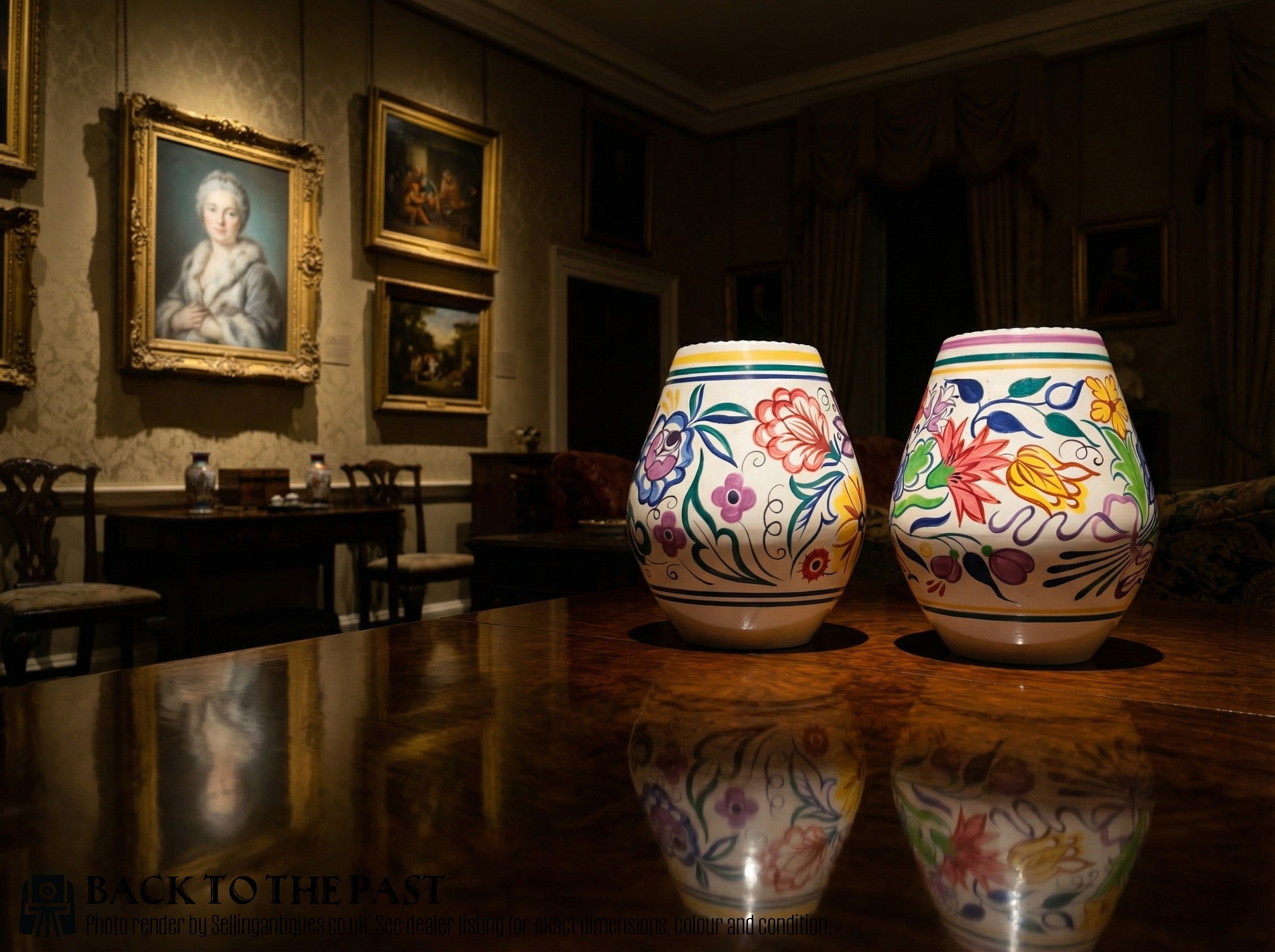
Art Pottery Ceramic Vases
Art pottery ceramic vases encompass decorative vessels produced from the late Victorian and Edwardian eras through the interwar decades, spanning British studio potteries, continental European manufacturers and Japanese export kilns. These items range from small domestic bud vases to monumental exhibition pieces, jug forms, ewers and wall pockets.
How they were made
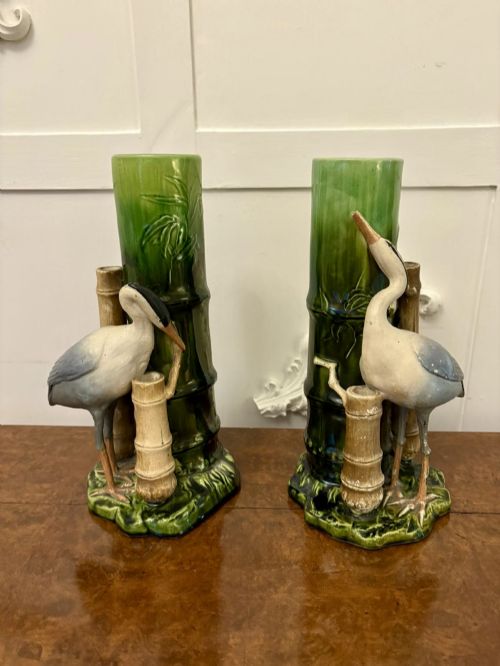
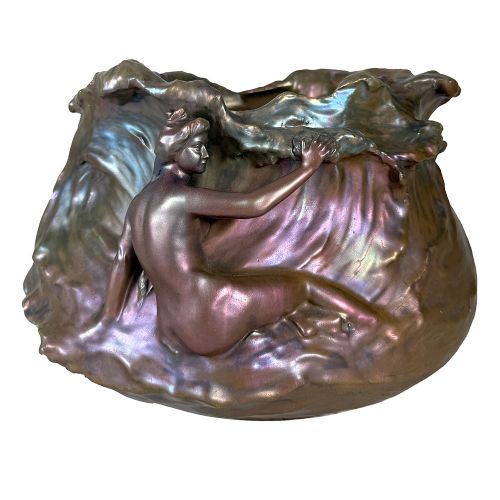
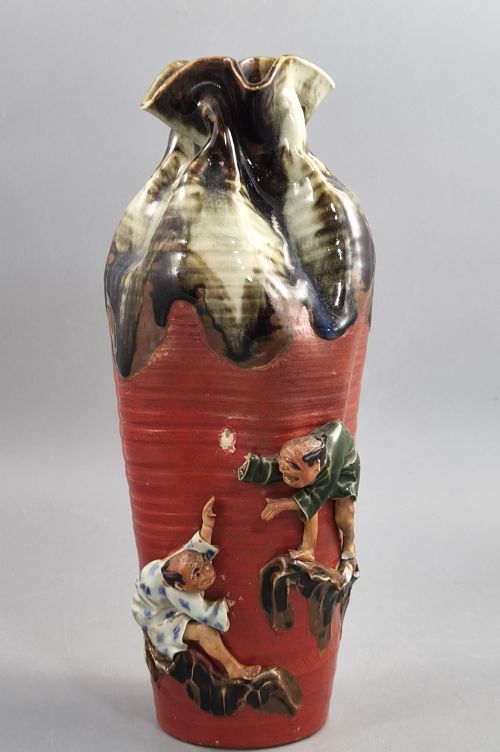
Potters shaped these vessels using earthenware, stoneware or porcelain bodies, often employing manual throwing, slip-casting or intricate hand-modelling techniques. Sculptural elements like applied figures, cabochons and pinched rims required skilled manipulation of the clay before firing.
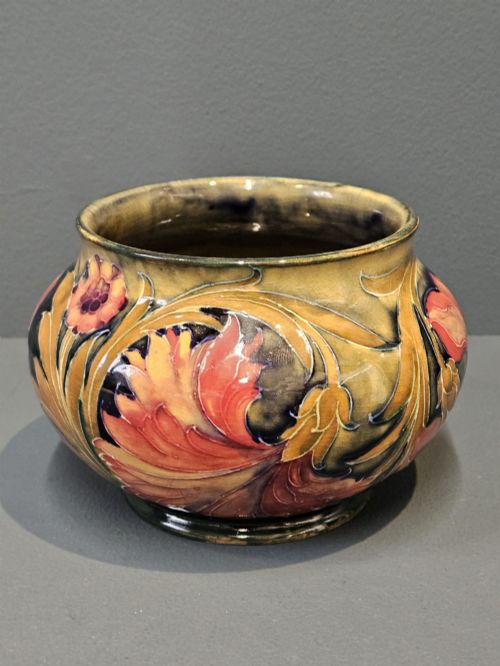
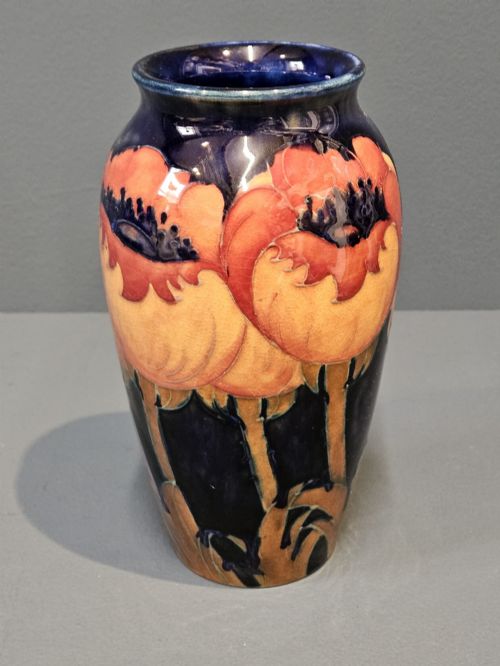
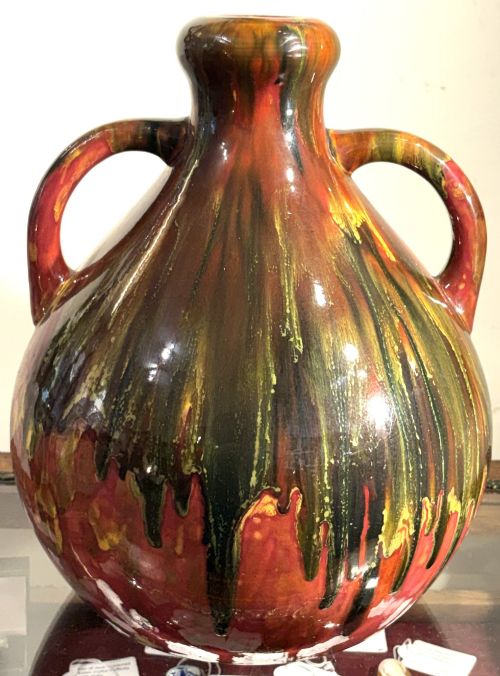
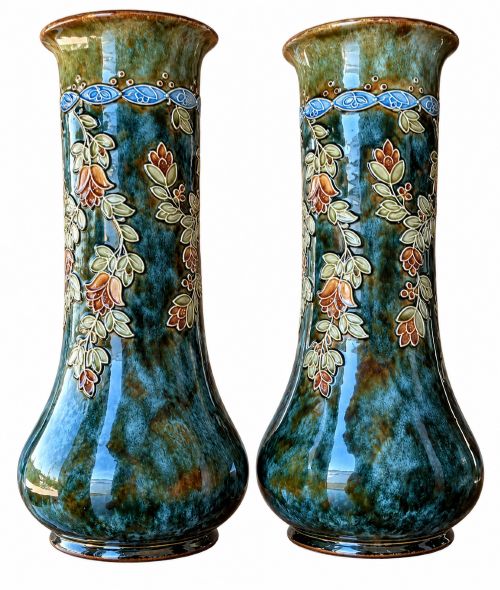
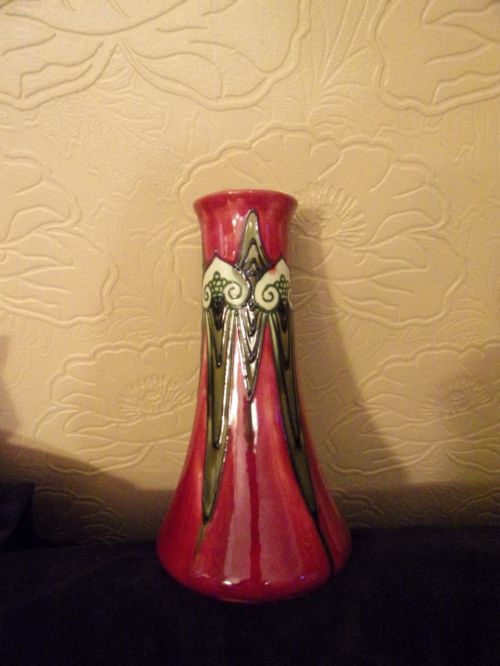
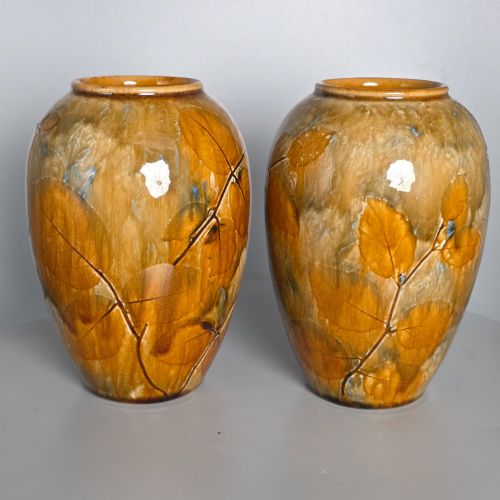
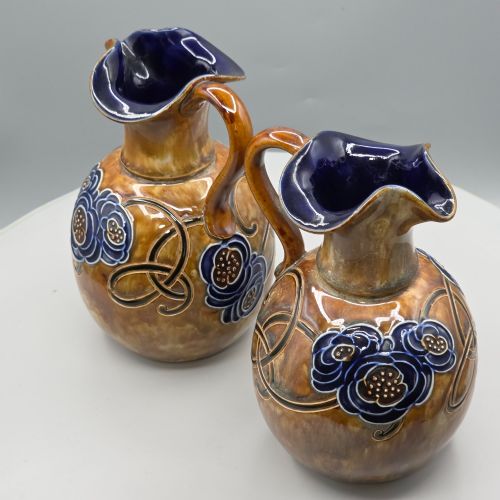
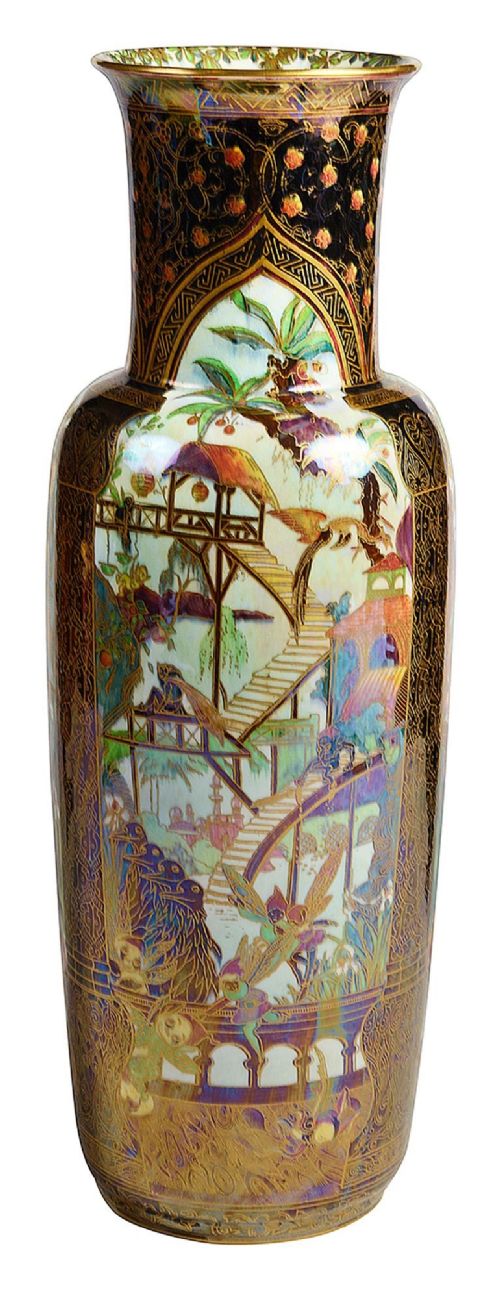
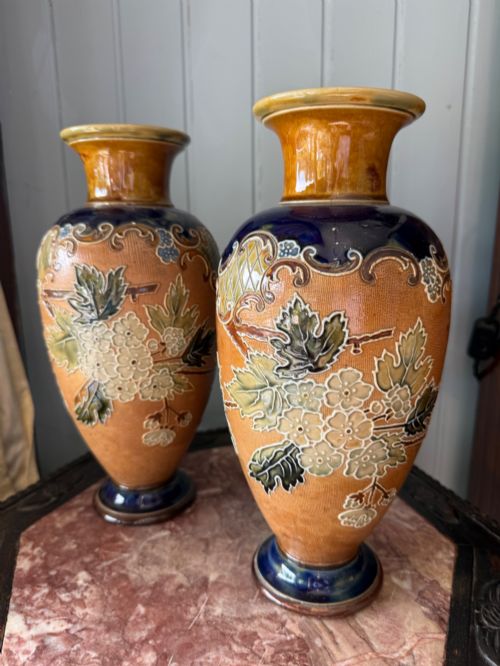
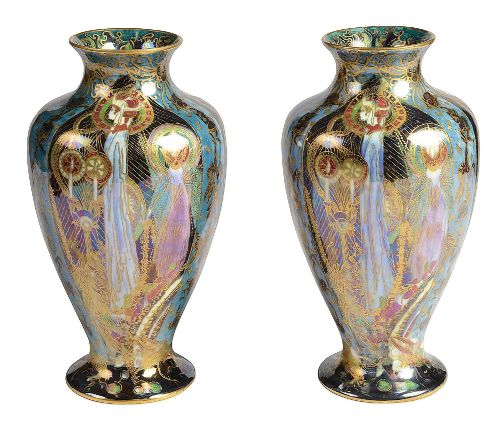
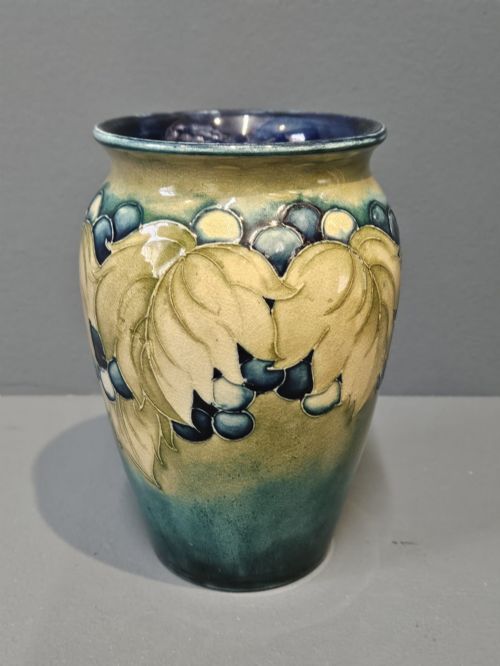
Makers applied rich decorative surfaces using glazes, enamel, gold leaf and tube-lining techniques where raised clay lines contained pools of colour. Flambé and lustre glazes depended upon precise kiln chemistry to achieve their iridescent and variegated visual depths.
Several Japanese export pieces feature small clay figures climbing up the rims, as if inspecting the glaze themselves.
What varies in quality
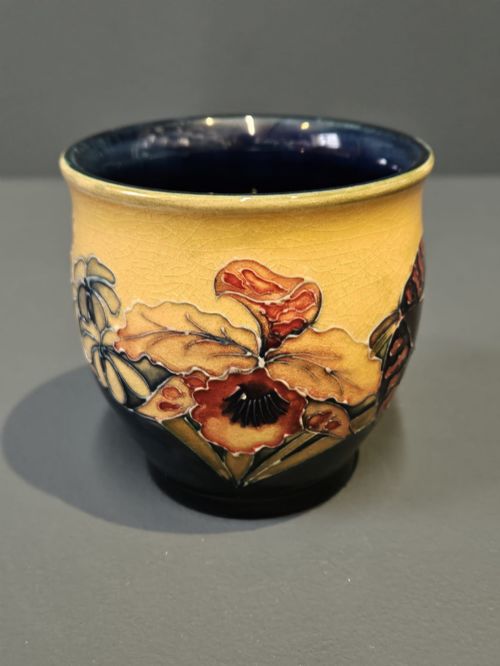
Quality rests upon the ambition of the design, the crispness of the modelling and the technical success of the glaze chemistry during firing. Pieces designed by named artists and executed with intricate hand-painted decoration or complex tube-lining stand apart from standard factory output.
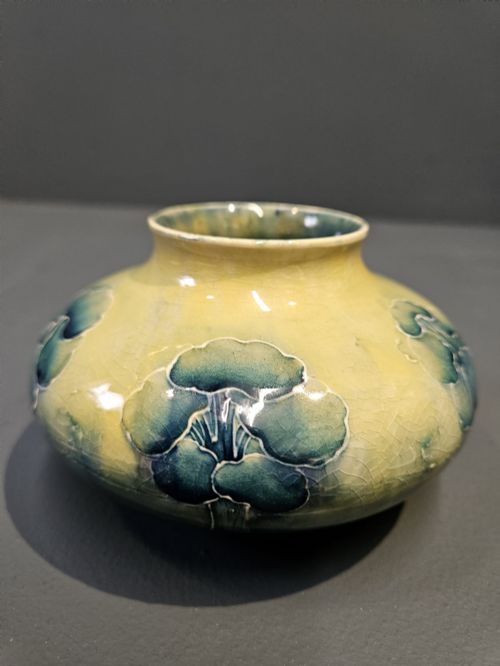
The depth and uniformity of a lustre finish or the controlled pooling of a flambé glaze distinguish superior studio examples. The harmony between the sculptural form and the surface ornament ultimately defines the finest examples in this field.
Royal Doulton Lambeth·Moorcroft·Wedgwood·Makuzu Kozan·Reissner Stellmacher and Kessel
The Art Pottery Ceramic Vases Glossary
- Tube-lining
- A decorative technique where a thin trail of liquid clay is squeezed onto the pottery body to outline patterns before glazing. This creates raised contours that hold pools of colour during firing.
- Lustre
- A type of ceramic glaze containing metallic salts that produce an iridescent, reflective surface sheen when fired in a reduced oxygen atmosphere. It was widely used by potteries in the early twentieth century for decorative effect.
- Baluster
- A cylindrical vessel form that swells towards the lower portion before tapering at the neck. It provides a stable and classic silhouette well suited to display floral or abstract motifs.
- Earthenware
- Porous pottery fired at relatively low temperatures that requires a glaze to become impermeable to liquids. It served as the primary body for many decorative and art pottery lines.
- Stoneware
- A robust, vitrified ceramic fired at high temperatures until the body becomes dense and non-porous. It accepts salt and heavy chemical glazes exceptionally well.
Art Pottery Ceramic Vases: Frequently Asked Questions
What is art pottery?
Art pottery refers to distinctive ceramic pieces produced from the late nineteenth century onward that prioritised artistic design, experimental glazing and individual craftsmanship over mass-produced utility.
These vessels emerged from studio potteries and larger factories where artists and chemists collaborated to explore new decorative styles, including Art Nouveau and the Arts and Crafts movement.
How do I identify periods?
Periods are identified through a combination of stylistic markers, clay bodies, glaze recipes and factory stamps or artist signatures found on the base. Victorian and Edwardian pieces often display dense floral ornamentation or rich stoneware textures.
Later pieces from the nineteen-twenties and nineteen-thirties tend to favour geometric lustre designs, cleaner silhouettes or transitional Japanese influences from the Meiji and Taisho eras.
Where were these vases made?
These vases originated from diverse international centres, with significant production in British studios across London, Staffordshire and the West Country. Continental European workshops in France, Hungary and Austria also contributed major output.
Additionally, Japanese kilns produced specialised export wares such as Sumida Gawa and Satsuma pottery specifically tailored for Western aesthetic tastes during the late nineteenth and early twentieth centuries.
How should I display them?
These vases can be displayed on stable surfaces where natural light can catch the reactive qualities of their glazes and metallic lustres. Because many feature intricate hand-painted details or raised slip work, placing them away from heavy foot traffic protects their surfaces.
Pairing pieces of similar heights or contrasting forms helps highlight individual characteristics without cluttering the display space.