


Art Nouveau Timepiece
An art nouveau timepiece brings sinuous organic lines and thoughtful craft into daily domestic life.
Art Nouveau Timepiece
An art nouveau timepiece unites the organic motifs of the turn of the twentieth century with functional clockwork. When you search for an art nouveau timepiece, you encounter desk clocks, mantel clocks, and boudoir pieces designed during the Edwardian period and the late nineteenth century.
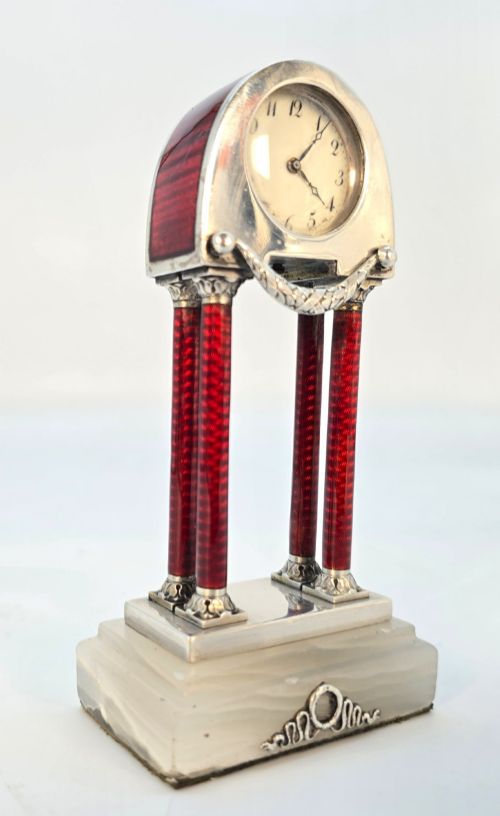
The objects span varied workshops across Britain, continental Europe, and beyond. Pieces range from modest timber cases to elaborate enamelled silver designs and distinctive pewter creations.
Materials and construction
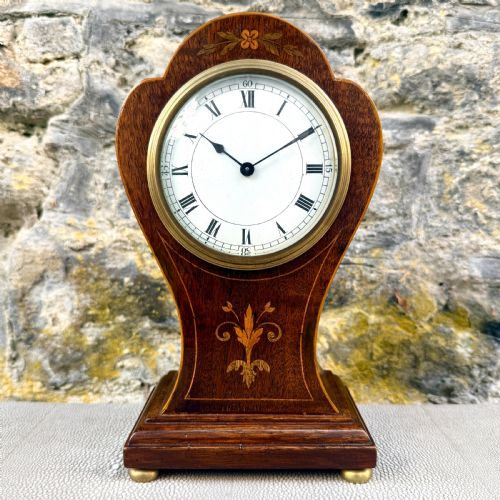
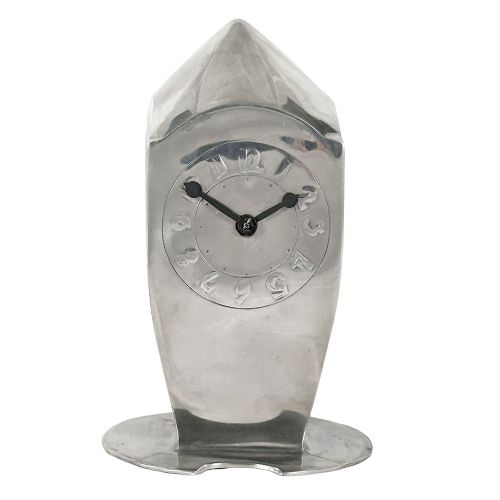
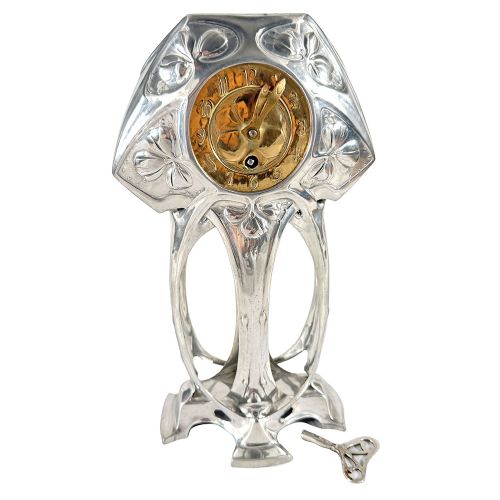
Maker workshops utilised traditional cabinet timbers such as mahogany, oak, and satinwood, often pairing them with inlaid details. Metalwork formed a major component, utilising brass, copper, pewter, silver, and silver plating.
Surface decoration frequently incorporated glass, champlevé enamel, floral enamelling, and abalone shell inlays. Movements were housed securely within these varied housings, ranging from simple strut easel frames to substantial mantel clock cases.
Poppies, floral enamel, and abalone shell ensure these clocks keep floral time long after the garden fades.
Judging quality and execution
Quality rests in the harmony between the metalwork or woodwork and the integrated decorative details. Pieces featuring signed designer attribution or recognised factory production demonstrate higher levels of artistic ambition.
The clarity of enamelling, the precision of timber inlay, and the weight of the metal chassis distinguish finer examples from standard production.
Archibald Knox·Liberty & Co·Georg Adam Scheid·Friedrich Adler·Osiris·WMF·David Veasey
The Art Nouveau Timepiece Glossary
- Jugendstil
- The continental German-language variant of Art Nouveau, sharing the characteristic flowing floral and vegetal motifs. It appears frequently on metalwork and clocks from central European makers.
- Tudric
- The trade name used by Liberty & Co for their distinctive pewter ware, often associated with designs by Archibald Knox. This alloy provides a dark, subdued metallic sheen suited to organic forms.
- Champleve enamel
- A technique where troughs are dug into a metal surface and filled with enamel powder before firing. It creates vibrant coloured patterns flush with the surrounding metal.
- Strut clock
- A portable timepiece fitted with a hinged rear prop for standing upright on a desk or dressing table. These often feature decorative silver or gilt fronts.
- Mantel clock
- A clock designed to stand upon a fireplace mantelpiece, typically featuring a substantial wooden or metal case. They serve as prominent architectural focal points within a room.
Art Nouveau Timepiece: Frequently Asked Questions
What is an art nouveau timepiece?
An art nouveau timepiece is a clock created during the height of the organic design movement around nineteen hundred. These objects combine functional timekeeping with the distinctive flowing motifs of the era.
They appear in forms ranging from small boudoir strut clocks to large mahogany mantel clocks. The style emphasises natural shapes, floral patterns, and expressive craftsmanship.
How do I display a mantel clock?
Mantel clocks sit comfortably on flat surfaces such as fireplace shelves, sideboards, or console tables. Their finished cases allow them to be viewed from multiple angles.
Ensure the surface is stable and level to protect the antique movement. Keep them away from direct sunlight and excessive moisture to preserve the timber and enamel details.
How do I identify a Jugendstil clock?
Jugendstil clocks originate from the continental European manifestation of the art nouveau movement. Look for characteristic sweeping lines and stylized botanical forms typical of German and Austrian workshops.
Signatures or marks on the metal casing often point towards specific continental makers and manufacturing hubs like Vienna.
What materials were used in these clocks?
Maker workshops worked with a broad palette of materials including mahogany, oak, satinwood, and tortoise shell. Metals ranged from brass and copper to silver and specialised pewter alloys.
Decorative elements frequently incorporated glass, abalone shell, and champlevé or floral enamelling. These combinations gave each piece its distinct tactile quality.