
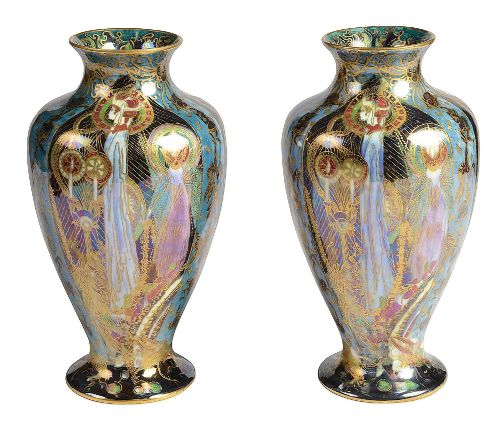
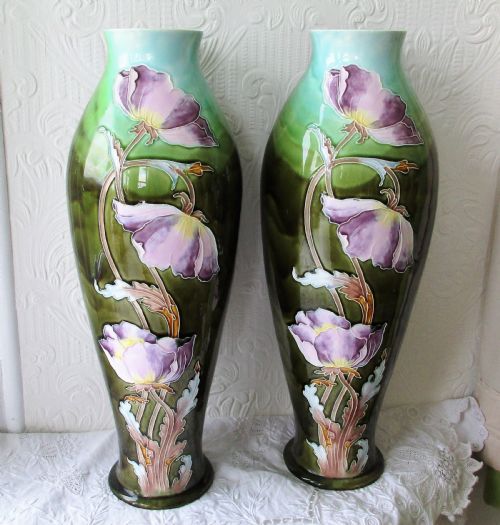
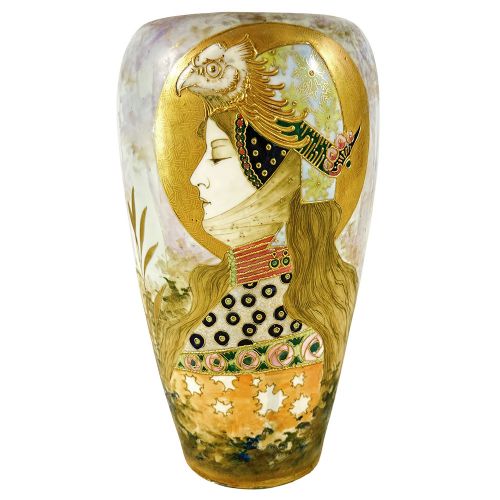


Art Nouveau Porcelain Vase
An art nouveau porcelain vase brings sinuous botanical lines and fluid form into a room, capturing the organic spirit of the turn of the twentieth century.
Art Nouveau Porcelain Vase
When you search for an art nouveau porcelain vase, you encounter decorative vessels shaped by the flowing, plant-inspired aesthetics dominant from the late nineteenth century into the early twentieth century. These objects include baluster vases, spill vases, and cornucopias produced across Britain, France, Austria, Bohemia, and Holland. The majority date from the 1890s through the 1920s, reflecting styles that transition from classic organic curves into later Edwardian and Art Deco tastes.
The assortment on this page ranges from modest bud vases to large pairs of decorative vases, centrepieces, and porcelain figures incorporating natural motifs like water nymphs and water lilies. Makers such as Ernst Wahliss, Royal Dux, and Wedgwood dominate the offerings, spanning earthenware, ceramic, and fine porcelain mediums. Buyers find both delicate hand-painted cabinet pieces and robust utilitarian forms designed to hold florals or stand alone as focal points.
How they were made
Potters shaped these vessels using ceramic, earthenware, and fine porcelain bodies, often employing complex moulding techniques to achieve the signature undulating, asymmetrical contours of the period. Artisans applied rich glazes alongside intricate hand-painting to delineate floral subjects, birds, and portrait scenes. The integration of gold leaf, gilt, and enamel highlights added luminous depth to the fired surfaces.
Workshops utilised specialised techniques such as lustre glazes, seen in iridescent finishes, alongside detailed brushwork by named artists. Once painted and gilded, pieces underwent secondary firings to permanently fuse the enamel and metallic decorations to the porcelain base, ensuring lasting brilliance.
Some nineteenth-century porcelain water nymphs manage to look thoroughly unimpressed while balanced precariously inside giant decorative sea shells.
What varies in quality
The distinction between standard production and the finest work lies in the execution of the hand-painting and the sophistication of the modelling. Superior examples feature intricate, multi-layered brushwork by known artists and designers, coupled with complex, flowing sculptural forms that push the limits of ceramic engineering. Lesser pieces rely on simpler printed transfers or repetitive mould designs with basic glazed finishes.
The application of gilding and enamel work also signals tier levels; dense, raised gold leaf and meticulously shaded enamel details elevate a piece significantly above straightforward commercial output. Furthermore, the presence of factory marks, artist signatures, and well-preserved lustre glazes confirm the higher echelons of period production.
Wedgwood·Rozenburg·Ernst Wahliss·Royal Dux Bohemia·Royal Doulton·Moorcroft Macintyre·Paul Dachsel Amphora
The Art Nouveau Porcelain Vase Glossary
- Baluster vase
- A tall vessel characterised by a rounded body that tapers towards the neck, frequently resting on a widened foot. This form provides a substantial canvas for floral motifs.
- Spill vase
- A narrow, upright container originally intended to hold slender wooden spills used for lighting fires or lamps. They are typically compact and highly decorative.
- Lustre
- A type of ceramic glaze containing metallic salts that produce an iridescent, shimmering surface upon firing. It catches ambient light to create shifting colour effects.
- Cornucopia
- A horn-shaped vessel symbolising abundance, adapted during the period into sweeping, asymmetrical vases. The curved silhouette suits organic botanical designs.
Art Nouveau Porcelain Vase: Frequently Asked Questions
Can I put water in a spill vase?
Most antique earthenware and porcelain spill vases are porous or feature delicate interior glazes susceptible to moisture damage over time. It is generally safer to use them dry or insert a discreet inner glass tube if you wish to display fresh stems.
Water can seep into hairline cracks or unglazed bases, potentially staining the ceramic body or weakening old structural repairs. Protecting the interior preserves the material integrity of the piece.
How do I identify a period piece?
Look for factory impressed marks, painted monograms, and specific pattern numbers underneath the base. The stylistic cues, such as whiplash floral lines and blush porcelain bodies, typically point to production between 1890 and the 1920s.
Comparing the potting weight, glaze texture, and hand-painting style against verified examples helps confirm authenticity. Subtle variations in the hand-finished details indicate true period manufacture rather than modern reproduction.
Where should I display large centrepieces?
Place large centrepieces on sturdy, flat surfaces away from heavy foot traffic or direct sunlight to protect the fragile porcelain and gilt highlights. Dining tables, heavy sideboards, or dedicated display cabinets provide stable platforms that showcase the sculptural forms from multiple angles.
Ensure the surrounding space allows the sweeping handles and figurative elements to be viewed without crowding. Good ambient lighting enhances the lustrous glazes and hand-painted details without risking heat exposure.