


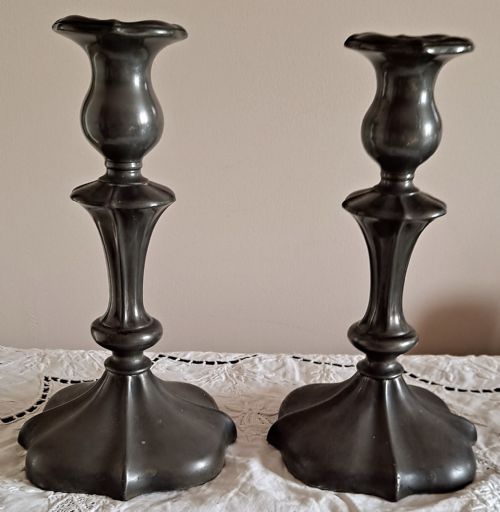
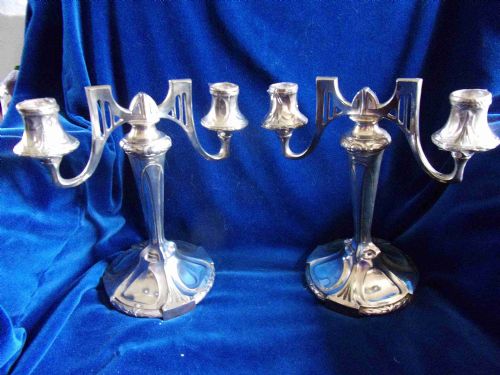


Art Nouveau Lighting Pair
An art nouveau lighting pair brings together organic curves and functional design, offering matched illumination shaped by the aesthetic movements of the late nineteenth and early twentieth centuries.
Art Nouveau Lighting Pair
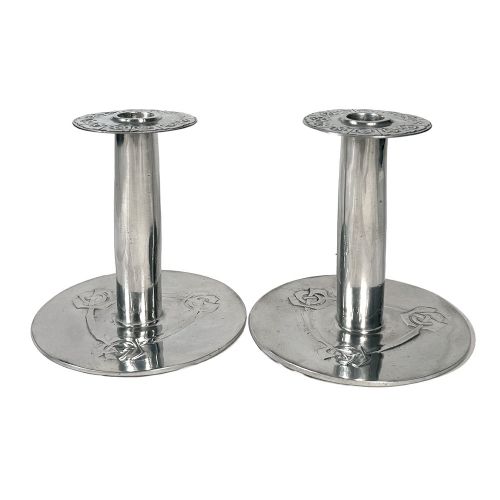
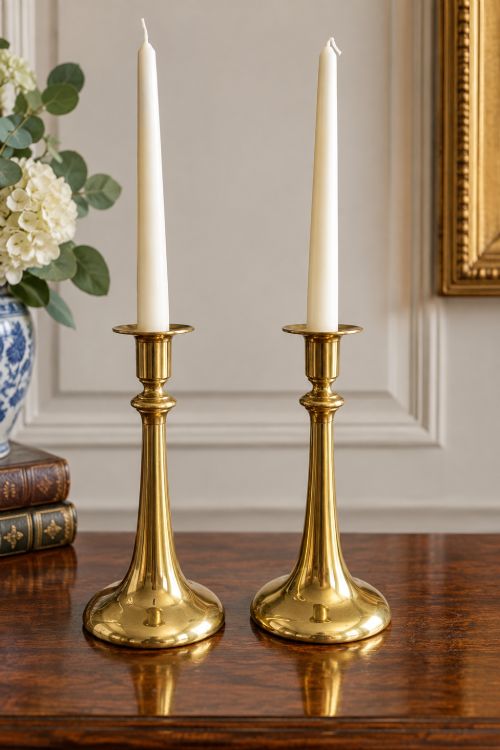
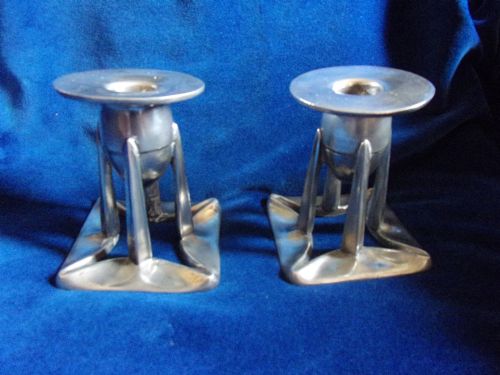
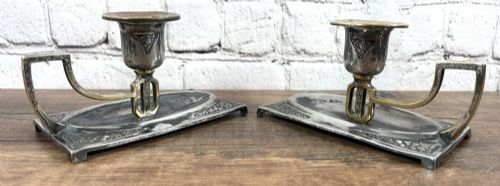
An art nouveau lighting pair consists of matched fixtures created during the height of the international design movement, spanning the late nineteenth and early twentieth centuries. Candlesticks, wall sconces, and pendant lights form the majority of the examples encountered, reflecting the period's preference for symmetrical or balanced dual home ornamentation.
The objects derive from diverse European and English traditions, incorporating related styles such as Arts and Crafts, Jugendstil, and the Amsterdam School. Brass, pewter, and bronze dominate the material record, frequently styled with floral motifs, whiplash lines, and stylized natural forms.
Materials and construction methods
Metalworking techniques define the category, utilising cast and wrought bronze, brass, copper, and pewter. Silver plating and silvered finishes often cover base metals to impart a bright sheen, while specialised variants integrate enamel work or coloured glass elements.
Foundries and guilds employed specialised casting, hammering, and assembly to produce matching pairs. Components such as bobbins, drip pans, and mounting plates were fabricated separately and joined via threaded fittings or riveting.
Art Nouveau Lighting Pair Retail Price Guide 2026
Typical asking prices for art nouveau lighting pair among the pieces listed under this phrase on Sellingantiques today, from the lower quarter to the upper quarter. They describe what is for sale here now, not the wider market.
Cherubs occasionally peek out from unexpected corners of Edwardian wall lights, reminding us that Victorian whimsy survived right into the new century.
Assessing quality in matched pairs
Quality differentiates by the crispness of the cast detail and the integrity of the original surface finish, whether patinated bronze, polished brass, or silvered pewter. Superior examples maintain exact symmetry between both items in the pair, showing uniform wear and identical maker stamps or registry numbers where applicable.
The artistic ambition of the design dictates distinction, separating standard commercial production from the output of recognised designers and prominent metalwork firms. Heavier gauges of metal and careful hand-chasing separate finer creations from mass-market castings.
WMF·Archibald Knox·Liberty and Co·F and C Osler·Hugo Berger Goberg
The Art Nouveau Lighting Pair Glossary
- Jugendstil
- The continental German-language variant of the Art Nouveau movement, emphasising youthful design and sinuous natural motifs. It heavily influenced decorative metalwork and lighting design across Central Europe.
- Pricket candlestick
- A candleholder featuring a sharp metal spike at the centre of the nozzle rather than a socket, designed to impale the base of the candle. This form appears frequently in brass and iron ecclesiastical and domestic lighting.
- Pewter
- A malleable alloy primarily composed of tin, often mixed with copper and antimony. Makers utilised it extensively for cast candlesticks and figural vessels during the early twentieth century.
- Secessionist
- A stylistic descriptor linked to various European art associations that broke from academic traditions, sharing geometric tendencies with Art Nouveau. It characterises certain austere metalwork designs.
- Sconce
- A wall-mounted lighting fixture designed to hold candles or electric bulbs, typically projecting outward from a backplate. Pairs of sconces often feature articulated arms.
Art Nouveau Lighting Pair: Frequently Asked Questions
What defines an art nouveau lighting pair?
An art nouveau lighting pair consists of two matching fixtures sharing organic motifs, curved lines, and manufacturing dates spanning the late Victorian and Edwardian eras. These objects include candlesticks, wall sconces, and pendant lanterns.
Makers utilised metals like brass, bronze, and pewter to create symmetrical designs intended to illuminate domestic spaces in unified pairs.
How do I clean antique brass and bronze safely?
Antique brass and bronze require gentle cleaning to preserve the historic surface patination accumulated over a century or more. Avoid abrasive compounds and harsh chemical dips that strip away the aged finish.
Dust the metal lightly with a soft cloth and apply microcrystalline wax if protection from moisture is necessary. Leave deeper cleaning to specialists to maintain the integrity of the original surface.
Were these fixtures made for candles or electricity?
Many surviving examples began as candle holders, candelabra, or oil lamps before later conversion to electricity during the twentieth century. Original pendant lights and wall sconces often retained wiring channels or gas pipes modified for modern bulbs.
Examine the mounting points and nozzles to determine whether a piece held a candle pricket or an electrical fitting originally.
How do I distinguish Art Nouveau from Arts and Crafts pieces?
Art Nouveau items favor asymmetrical, whiplash curves and floral motifs inspired by growing plants and natural movement. In contrast, Arts and Crafts design emphasises visible construction, hammered metal textures, and structural honesty.
Both movements overlap chronologically, and many makers produced objects incorporating elements from both design vocabularies.