


Art Nouveau Lighting Fixture
An art nouveau lighting fixture brings organic curves and floral motifs into a room, offering both illumination and sculptural presence.
Art Nouveau Lighting Fixture
An art nouveau lighting fixture encompasses ceiling lights, chandeliers, table lamps, pendant lights, wall lights, wall sconces, and floor lamps from the late nineteenth and early twentieth centuries. These objects display the characteristic flowing lines and naturalistic subjects of the movement, spanning periods from the eighteen-eighties to the nineteen-twenties.
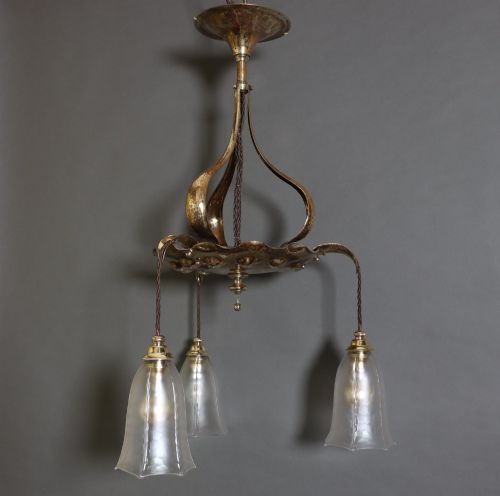
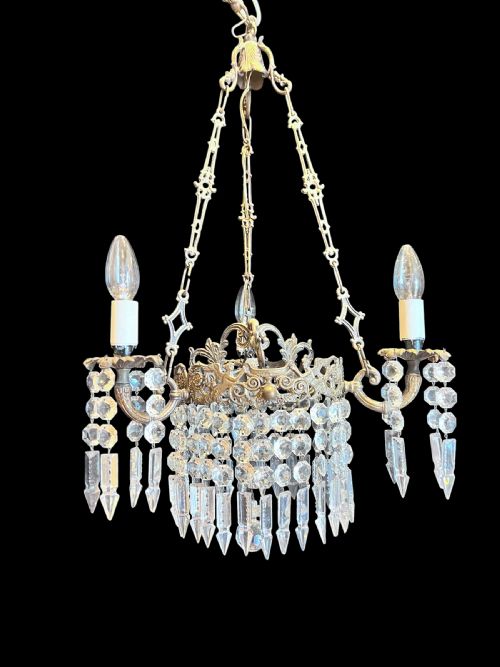
Buyers will most frequently encounter ceiling lights and chandeliers rendered in brass, bronze, and wrought iron, often paired with glass elements. Examples range from simple brass ceiling fittings to elaborate French and Arts and Crafts chandeliers incorporating crystal, frosted glass, and coloured glass bulbs.
The inventory includes specialised forms such as standard lamps, night lights, and figural table lamps. These pieces demonstrate the varied output of makers across Britain, France, the Netherlands, and America during the Edwardian era and surrounding decades.
How they were made
Makers utilised cast and beaten metals including brass, bronze, spelter, silver plating, copper, and wrought iron to form the structural frames and decorative mounts of each art nouveau lighting fixture. These metals were shaped through casting, hand-beating, and forging to achieve the characteristic fluid contours.
Glass components were integral, utilising techniques such as etching, enamelling, leaded construction, and pate de verre. Coloured glass, cranberry glass, cobalt blue leaded glass, and frosted glass shades were combined with metal armatures to diffuse light softly.
Materials appearing in current stock include brass, bronze, wrought iron, crystal, spelter, and multiple varieties of glass.
What varies in quality
The standard of an art nouveau lighting fixture depends upon the crispness of the metalwork casting and the artistic merit of the glass components. Superior examples display refined hand-finished details in the bronze or brass, alongside complex glass techniques like pate de verre or multi-layered etching.
Attribution to recognised makers or notable workshops elevates a piece, as does the integration of figural elements or specialised mechanisms such as rise and fall counterweights. The overall harmony between the metal armature and the glass shade dictates the visual success of the design.
F and C Osler·Liberty·Schneider·Verrerie Des Vosges·Henri Honore Ple·Moreau·Muller Freres
The Art Nouveau Lighting Fixture Glossary
- Pate de verre
- A glass-making technique where crushed glass is packed into a mould and fused in a kiln, producing richly coloured, textured vessels and shades. This method allows for subtle gradations of tone.
- Spelter
- An alloy of zinc used as a less costly alternative to bronze for casting figures and lamp bases. It is typically electroplated or painted to simulate bronze or other metals.
- Rise and fall
- A mechanical pulley system allowing a ceiling light or pendant to be adjusted to different heights. This practical innovation was popular in Edwardian domestic interiors.
- Standard lamp
- A tall floor lamp designed to stand independently and illuminate a room from a raised light source. These pieces often feature adjustable brass or wooden shafts.
- Wall sconce
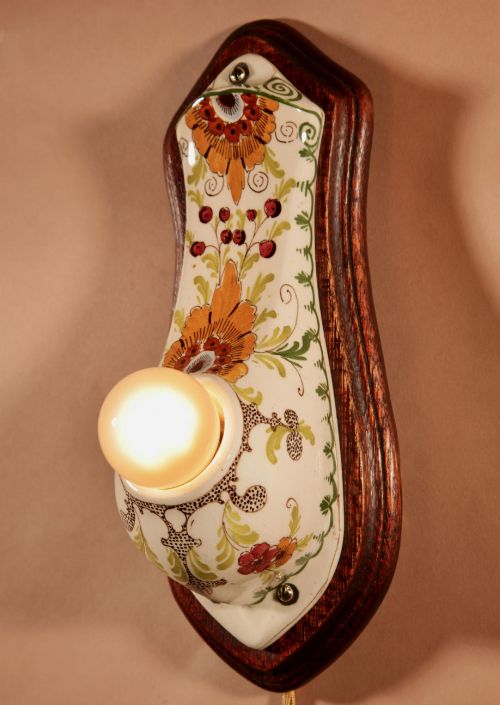
- A lighting fixture fixed to a wall, designed to project light outwards and upwards into a space. They frequently incorporate multiple arms or decorative backplates.
Art Nouveau Lighting Fixture: Frequently Asked Questions
How do I safely hang a heavy chandelier?
Heavy fixtures require professional installation into ceiling joists or adequate structural support using appropriate fixings.
Consult a qualified electrician to ensure the historical wiring or conversion meets current safety standards before mounting.
Were these lamps originally electric?
Many surviving pieces were originally designed for gas or oil, and were subsequently converted to electricity during their lifespan or later.
Conversions often involve retaining the original body while updating the internal lamp holders and wiring for modern use.
How do I clean antique glass shades?
Remove the glass components from the metal frame where possible and wash them gently in lukewarm water with mild soap.
Avoid harsh chemical cleaners or abrasive cloths that might damage etched, enamelled, or iridescent surface treatments.
How do I distinguish French pieces from British ones?
French examples often lean towards sinuous, highly sculptural bronze forms and specialised glass techniques like pate de verre.
British production frequently reflects the Arts and Crafts ethos, favouring hammered copper, straightforward brass work, and structural honesty.