
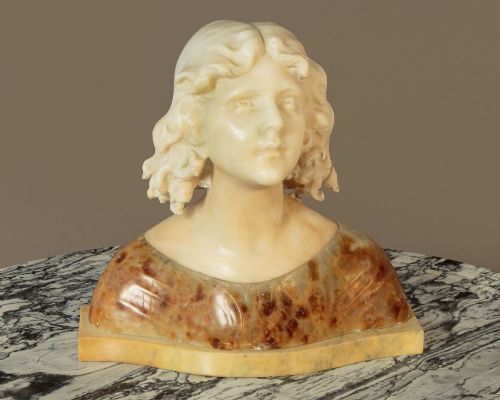


Art Nouveau Head Sculpture
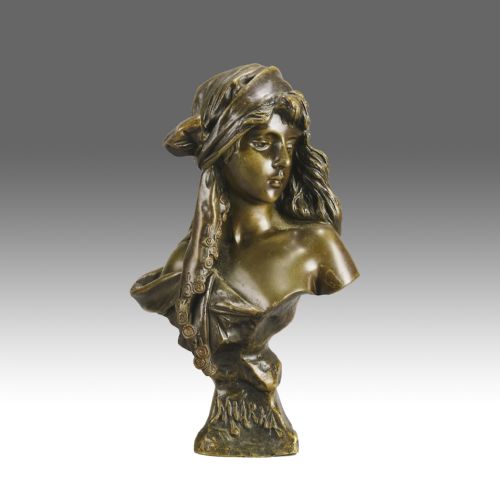
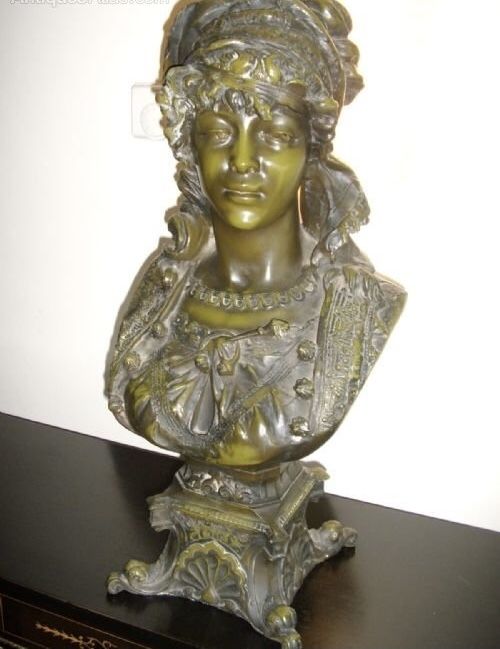
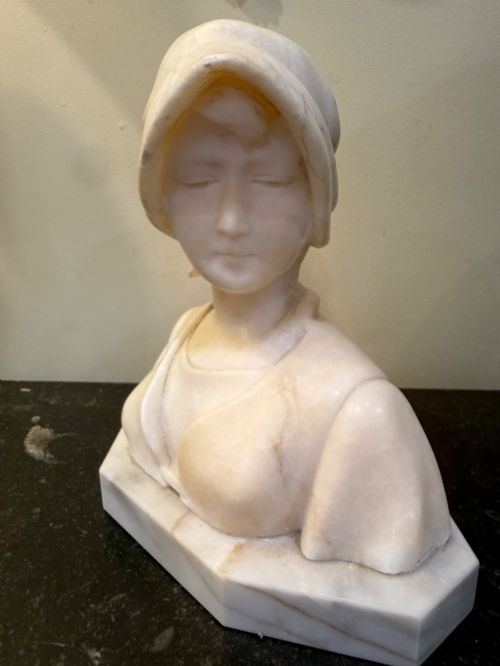
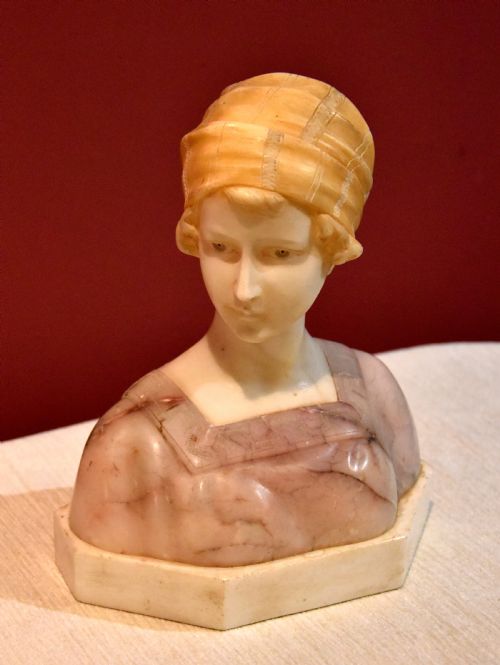
These pieces of art nouveau head sculpture capture the flowing lines and expressive female forms defining turn-of-the-century decorative art.
Art Nouveau Head Sculpture
When you search for art nouveau head sculpture, you encounter portrait busts and figural pieces spanning the late nineteenth century into the early decades of the twentieth century. These works depict young women, maidens, and historical or literary figures like Sappho, rendered in the distinct style of the period.
Materials and construction
Makers utilised traditional casting and carving methods, employing bronze and patinated bronze for metal works, alongside hand-carved alabaster and marble for stone pieces. Terracotta and earthenware also appear, sometimes painted or combined with ormolu mounts to add contrasting metallic detail.
Foundries cast the bronze sculptures using the lost-wax method or sand casting, whilst stone carvers worked directly with alabaster and marble blocks to achieve the characteristic flowing hair and drapery of the style.
An elephant occasionally shares shelf space with classical maidens in the form of a figural bronze inkwell.
Distinguishing quality
The distinction between standard works and finer examples lies in the crispness of the chasing on bronze casts and the subtlety of the carving in stone pieces. Superior works display delicate facial expressions and detailed rendering of hair and fabric.
Original patination on bronzes and the natural figuring within marble and alabaster contribute to the visual strength of a piece, separating workshop productions from master-signed sculptures.
Emmanuel Villanis·George Minne·Georges Morin·Auguste Moreau·Auguste Henri Carli·Ernest Louis Adnin
The Art Nouveau Head Sculpture Glossary
- Patinated bronze
- Bronze that has been treated chemically to produce a specific surface colour or finish. This process protects the metal and enhances sculptural detail.
- Alabaster
- A soft, fine-grained stone used frequently for portrait busts. It takes a smooth polish and allows light to penetrate slightly beneath the surface.
- Ormolu
- Gilded bronze used for decorative mounts and accents. It provides a bright gold-coloured contrast against darker stone or bronze.
- Terracotta
- Fired clay used for sculptural models and finished figures. It offers a warm, matte texture favoured by turn-of-the-century modellers.
Art Nouveau Head Sculpture: Frequently Asked Questions
What materials were used for these busts?
Makers relied primarily on bronze, marble, and alabaster, alongside terracotta, earthenware, and patinated bronze. Some pieces also incorporate ormolu mounts.
These materials were chosen for their ability to hold fine detail and take a smooth polish, suiting the curved lines of the period.
How do I identify an original period piece?
Look for period signatures, foundry marks, and the characteristic material patination associated with the late nineteenth and early twentieth centuries. The handling of hair and drapery typically reflects the aesthetic of the movement.
Construction methods, such as traditional bronze casting techniques and hand-carved stone surfaces, further indicate authenticity.
Where were these sculptures displayed?
These portrait busts and figural works were created for domestic interiors, sitting upon mantelpieces, pedestals, and desks as decorative ornaments. Some functional pieces, such as inkwells, combined sculpture with everyday utility.
Collectors placed them in libraries, drawing rooms, and studies to showcase modern artistic tastes.
How should I care for alabaster and marble?
Dust these stone surfaces gently with a dry, soft cloth to prevent abrasive particles from scratching the polished finish. Avoid using water, oils, or chemical cleaners, which can penetrate the porous stone and alter its appearance.
Keeping them away from direct sunlight and sudden temperature changes protects the material over time.