



Art Nouveau Gilt Bronze
Art nouveau gilt bronze brings fluid, organic lines and metallic warmth into domestic spaces through decorative figures, lamps and desk wares.
Art Nouveau Gilt Bronze
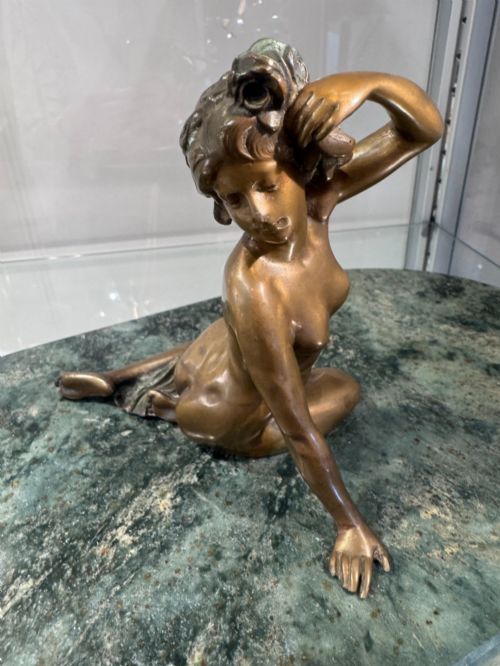
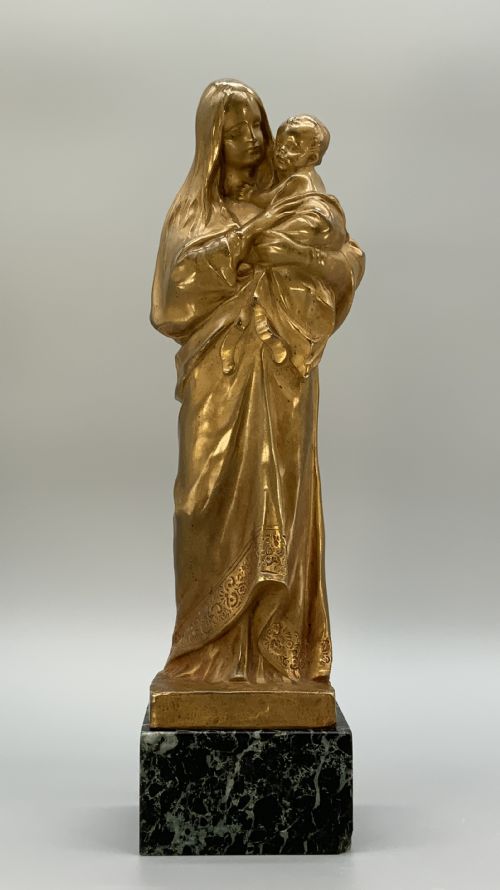
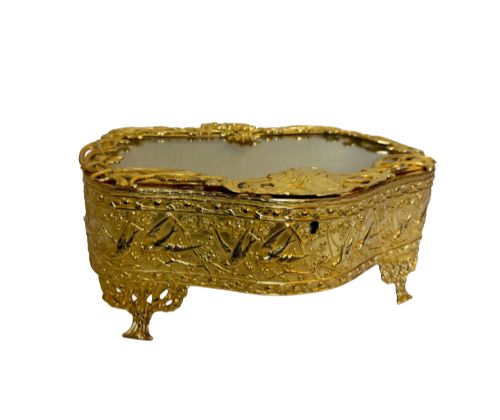
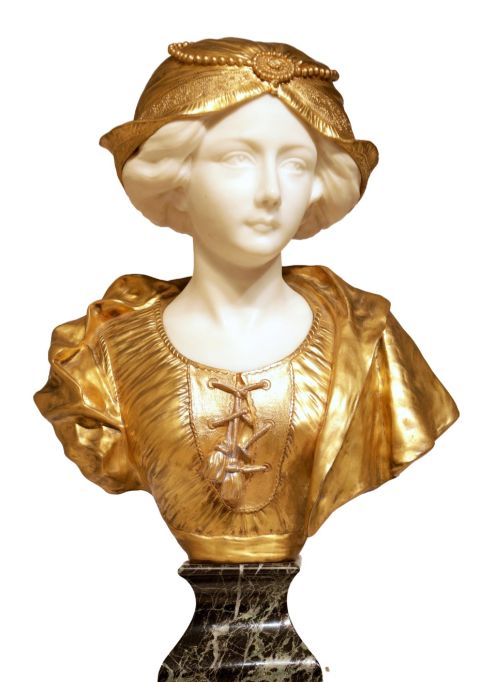
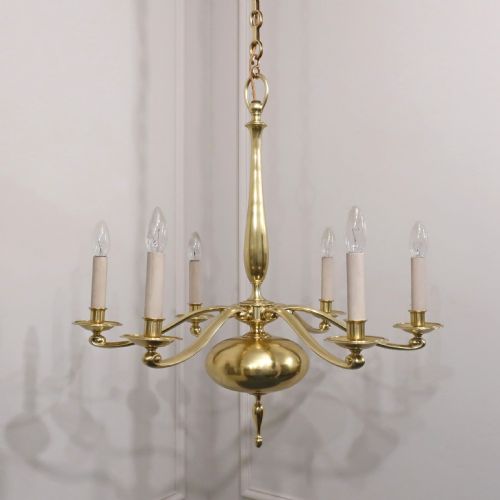
Art nouveau gilt bronze encompasses domestic decorative objects and sculptures shaped by the flowing naturalism of the turn of the twentieth century. When exploring art nouveau gilt bronze, expect to encounter figures of women, table lamps, inkwells, chandeliers and jewellery boxes.
The selections span various forms produced across the late nineteenth and early twentieth centuries, frequently combining metallic finishes with marble, glass or alabaster bases.
How they were made
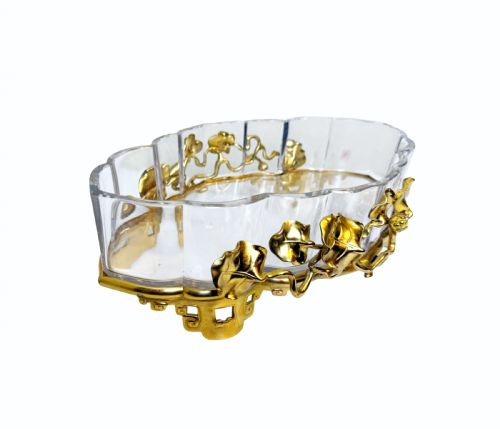
Items rely upon cast bronze treated with gilding or ormolu to achieve a bright golden surface finish. Makers often combined this gilded metal with carved Italian or portoro marble, frosted glass and alabaster.
Many works incorporate cold-painted detailing or etched glass shades to complement the organic metallic contours of the period style.
Listings feature items spanning the late nineteenth century through the nineteen-twenties, incorporating marble, alabaster and frosted glass.
What varies in quality
The standard of modelling in the cast figure and the crispness of surface chasing determine the distinction between ordinary production and masterworks. Pieces featuring signed foundry stamps or attributed to notable sculptors carry greater artistic weight.
The integration of secondary materials, such as finely polished marble bases or hand-etched glass shades, elevates the overall execution of the object.
Hans Müller·Affortunato Gory·Henri Godet·Abel Landry·Ernst Barrias·Jennings Brothers·Albert Marionnet·Charlotte Monginot·Henri Honore Ple·Charles Korschann·Henry Dasson·Antonin Carles·Paul Louchet·Paul Francois Berthoud·Carl Binder·Jean Garnier
The Art Nouveau Gilt Bronze Glossary
- Gilt bronze
- Metal cast in bronze and treated with a gold wash or leaf to impart a brilliant golden sheen. This finish defines much of the decorative output of the period.
- Ormolu
- Finely ground high-purity gold amalgamated with mercury and applied to bronze through heat gilding. The technique produces a durable, rich metallic lustre.
- Cold-painted bronze
- Metal sculpture decorated with oil or synthetic paints applied after casting without subsequent firing. This method allows for subtle polychrome effects on figures and animals.
- Jugendstil
- The continental European manifestation of the art nouveau movement, particularly prominent in German-speaking regions. It shares the characteristic emphasis on organic, plant-inspired motifs.
- Portoro
- A distinctive black marble featuring prominent golden veins, frequently utilised as a contrasting base for sculptural bronzes.
Art Nouveau Gilt Bronze: Frequently Asked Questions
How do I clean gilt bronze objects?
Dust surfaces gently with a soft, dry brush to prevent accumulation. Avoid abrasive cloths, water or chemical cleaning agents that might strip the delicate golden finish.
Regular careful maintenance preserves the original patination and protects the integrity of the underlying metal.
Where were these pieces made?
Production centred primarily in European workshops and foundries, with France and Austria acting as major hubs for artistic metalwork. American makers also contributed notable cold-painted pieces during the early twentieth century.
Designers frequently collaborated with Parisian foundries to cast intricate figural sculptures and lamps.
How do I identify a signature?
Signatures typically appear cast directly into the bronze base or incised near the lower edge of the sculpture. Look closely around the feet of figures or along the margins of bases for artist names and foundry marks.
Magnification often helps reveal faint signatures or stamped serial numbers on older metalwork.
Can I use these lamps daily?
Many period lamps accommodate modern low-heat LED bulbs safely, though older wiring requires professional inspection before regular use. Historic fixtures benefit from careful rewiring to meet contemporary electrical safety standards.
Preserving original sockets and switches where possible maintains the historical integrity of the piece.