
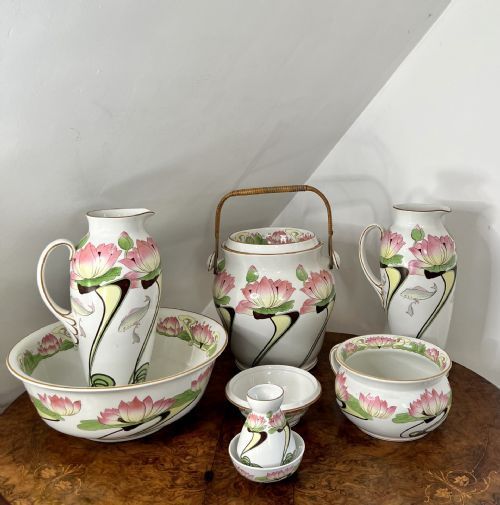


Art Nouveau Earthenware
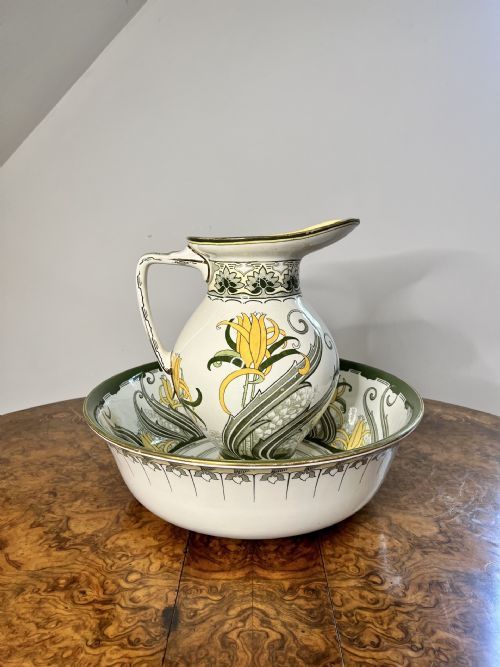
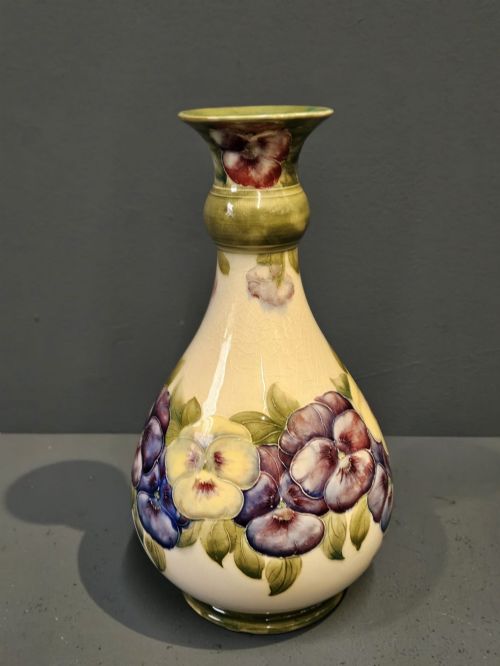
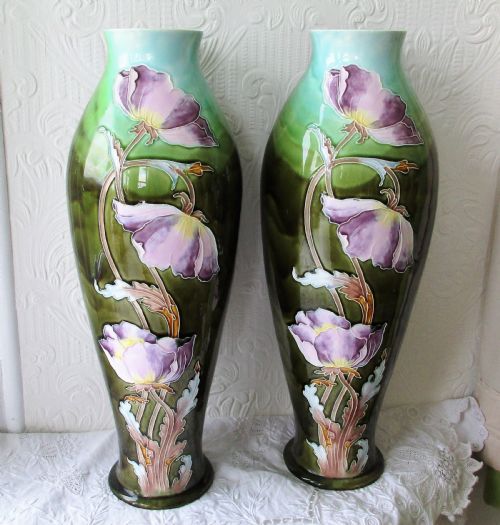
When you search for art nouveau earthenware, you are looking at organic forms and flowing lines shaped in clay during the late nineteenth and early twentieth centuries.
Art Nouveau Earthenware
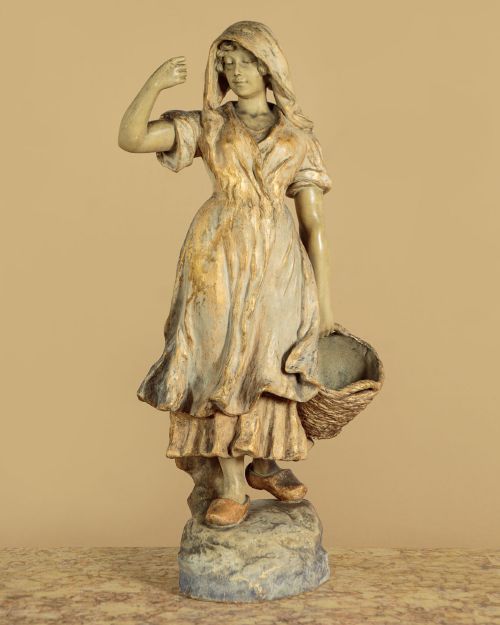
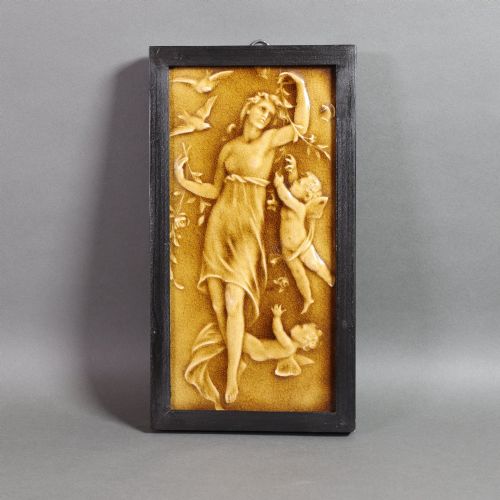
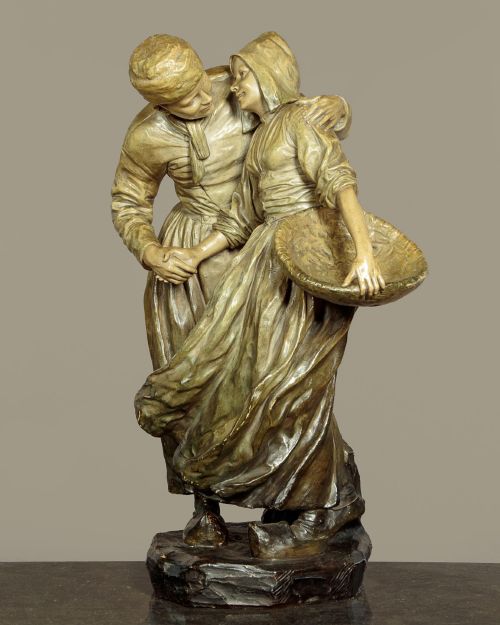
Art nouveau earthenware encompasses domestic vessels, decorative wall plaques, and figurative sculptures produced predominantly between 1890 and 1930. The pieces reflect a widespread shift from industrial revivalism toward stylised natural motifs, floral patterns, and female silhouettes.
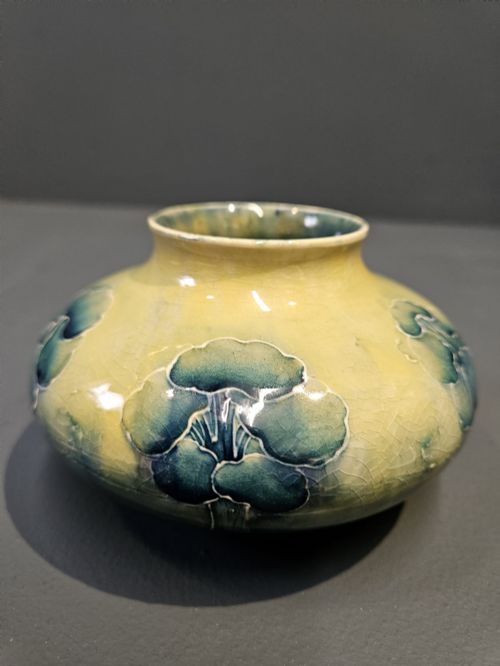
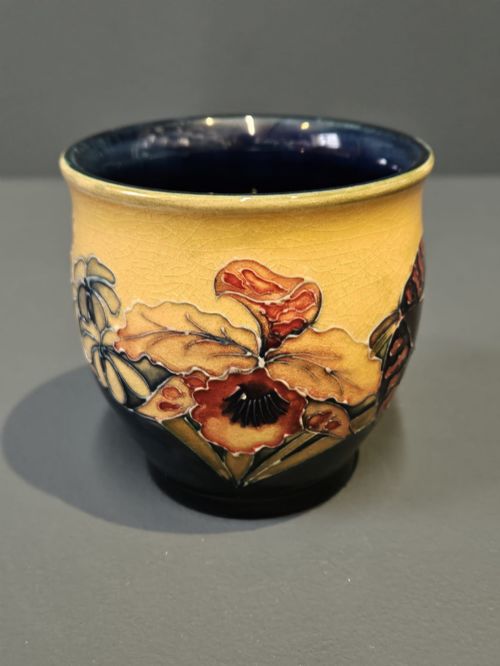
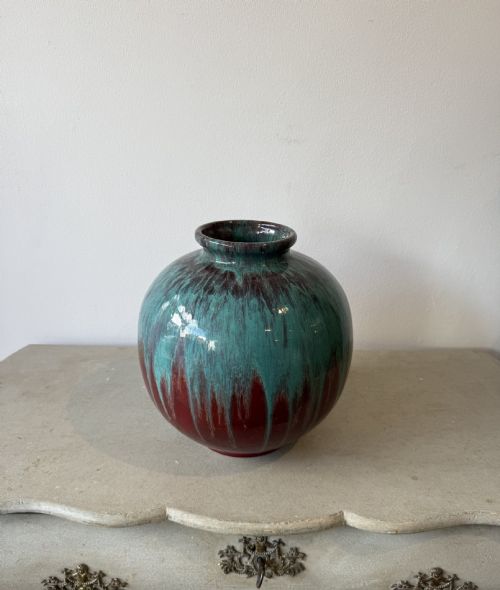
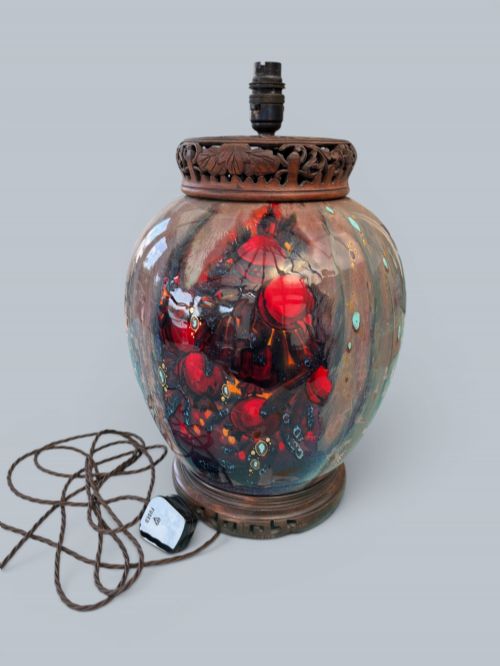
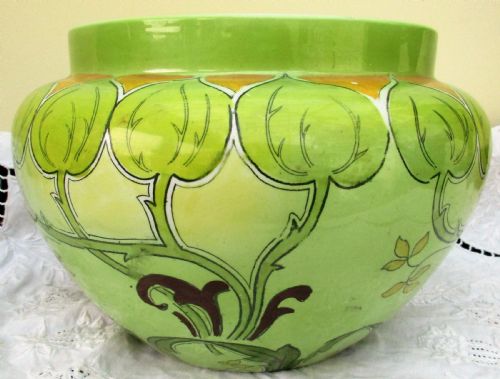
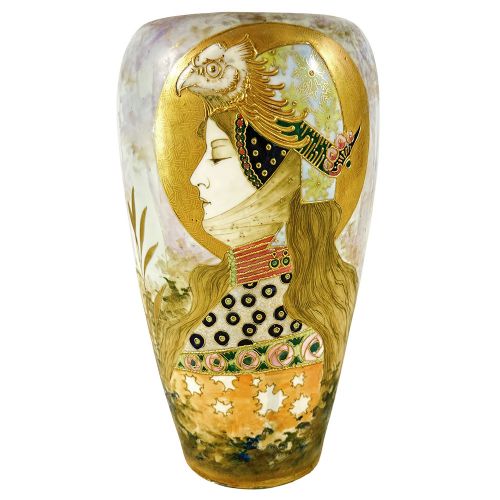
The objects on this page span British, French, and Austrian workshops, ranging from large jardinières and monumental floor vases to miniature pots. Forms lean heavily on fluid curves, bulbous bodies, and integrated handles that mimic plant stems and unfolding petals.
Materials and technique
Makers utilised porous earthenware and terracotta bodies, shaped through slip casting or hand throwing before receiving coats of coloured glaze or majolica enamel. Many factories incorporated wood or gold leaf accents to complement the ceramic surfaces.
Techniques varied from tube-lining, which raised clay outlines to contain pooling coloured glazes, to lustring methods that produced iridescent metallic sheens across the finished piece.
Materials documented across the inventory include glazed earthenware, terracotta, wood, and gold leaf.
What separates the grades
Quality rests upon the crispness of the modelled detail and the depth of the glaze palette. Superior pieces display controlled colour blending and precise registration of raised lines without pooling or running.
The reputation of the designer and the prestige of the producing pottery significantly elevate an object's standing, particularly when combined with signed artist ciphers or factory registry marks.
Goldscheider·Moorcroft·Doulton Burslem·Clement Massier·William Moorcroft
The Art Nouveau Earthenware Glossary
- Earthenware
- Porous pottery fired at lower temperatures than stoneware or porcelain, requiring a vitreous glaze to hold liquids.
- Majolica
- A type of earthenware coated with an opaque tin-lead glaze and painted with metallic oxide colours.
- Jardiniere
- An ornamental ceramic pot or stand designed to hold a large indoor plant or floral display.
- Lustre glaze
- A metallic film applied to fired ceramic surfaces to create an iridescent, shimmering optical effect.
- Slip cast
- A manufacturing process where liquid clay slip is poured into a plaster mould to form hollow shapes.
Art Nouveau Earthenware: Frequently Asked Questions
How do I clean antique earthenware?
Dust surfaces gently with a soft, dry brush to prevent dirt accumulation within recessed glaze crevices. Avoid immersion in water, especially if the piece exhibits hairline fractures or exposed porous clay.
Harsh chemical detergents strip delicate overglaze decoration and metallic lustre finishes. Wipe sparingly with a damp cloth only when necessary and dry thoroughly afterwards.
Were these vases used for flowers?
Many larger vessels and jardinières served primarily as interior architectural ornaments rather than functional containers for cut stems. Smaller bud vases and spill vases were routinely utilised for holding fresh flora in domestic parlours.
Porosity in older earthenware means unglazed interiors can seep moisture over time. Placing a small glass liner inside helps protect the historic fabric of the ceramic.
How do I spot a reproduction?
Examine the underside for authentic ageing signs, such as kiln støt marks, crazing patterns in the glaze, and period-correct factory stamps or handwritten ciphers. Modern copies often display uniform surfaces lacking the subtle hand-finishing of early twentieth-century production.
Weight and clay density also provide clues, as contemporary casting methods differ from historical slip recipes. Compare known registry numbers against established workshop records to confirm production eras.
Where should I display my pieces?
Position earthenware away from direct sunlight to prevent fading in hand-painted enamel and lustre glazes. Stable shelving with adequate support is essential for heavy figures and monumental vases.
Allow sufficient clearance around sculptural pieces so their flowing contours remain visible from multiple angles. Avoid high-traffic hallways where accidental knocks might damage delicate handles or raised slip lines.