


Art Nouveau Decorative Statue
An art nouveau decorative statue brings fluid lines and naturalistic grace straight into a room, offering sculpted figures that capture organic movement.
Art Nouveau Decorative Statue
An art nouveau decorative statue presents flowing organic shapes and female figures inspired by nature, spanning periods from the late nineteenth century through to the nineteen-twenties. These pieces arrive in forms such as portrait busts, figural groups, and tall porcelain figures.
Most examples found here reflect French and Austrian workmanship, often taking the shape of a water nymph, maiden, or classical figure. Sculptures integrate functional elements like lamps or mantle clocks alongside purely decorative sculptural works.
Makers and modellers use distinct styles ranging from strict Edwardian interpretations to elaborate French art nouveau designs. The common thread remains the portrayal of figures intertwined with floral motifs or cascading drapery.
Materials and methods
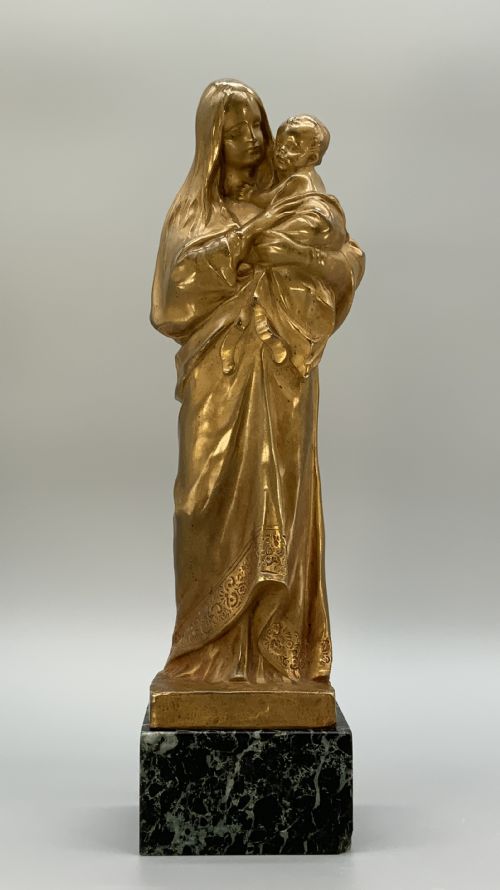
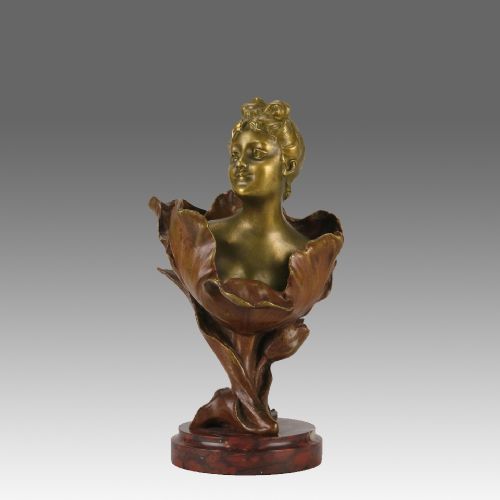
Foundry cast metals dominate the heavier sculptural works, utilising bronze, gilt bronze, and spelter. These metal casts capture fine details in hair, drapery, and facial expressions.
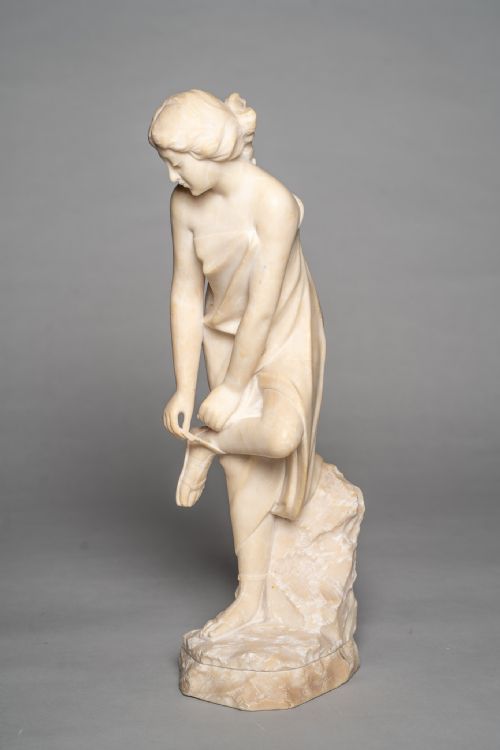
Carved stone pieces utilise white materials such as marble, Carrara marble, and translucent alabaster. Artisans shaped these stones by hand to produce smooth surfaces on female busts and large figurative sculptures.
Ceramic works rely on porcelain, biscuit porcelain, terracotta, and specialised ceramic bodies. Factories such as Royal Dux and Ernst Wahliss shaped these clays into glazed or painted figural centrepieces and statues.
Materials span hard stones, cast metals, and ceramics, including alabaster, Carrara marble, gilt bronze, spelter, biscuit porcelain, and terracotta.
What distinguishes finer pieces
The choice of medium elevates a piece, with heavy cast bronze or carved Carrara marble sitting at the upper end of the scale compared to painted spelter or standard ceramic bodies.
Signatures by listed sculptors or marks from notable potteries distinguish studio output from anonymous commercial production. Signed works display a higher level of artistic intent and individual execution.
Hans Müller·Henri Godet·Royal Dux·Ernst Wahliss·Henri Honore Ple·Auguste Moreau
The Art Nouveau Decorative Statue Glossary
- Spelter
- A zinc alloy commonly used as a cost-effective alternative to bronze in nineteenth-century figures. It takes patination well to simulate heavier metals.
- Alabaster
- A soft, fine-grained stone used for carved busts and statues. Its translucency allows light to penetrate the surface gently.
- Biscuit porcelain
- Unglazed porcelain with a matte, white texture resembling marble. It became popular for delicate figural modelling.
- Gilt bronze
- Bronze coated with a layer of gold or gold leaf to give a rich metallic finish. It highlights decorative elements on luxury French and Austrian objects.
- Figural group
- A sculpture depicting two or more figures interacting within a single composition. These pieces often tell a narrative story from mythology or nature.
Art Nouveau Decorative Statue: Frequently Asked Questions
What materials are these statues made from?
The selection includes cast metals like bronze and spelter alongside carved stones such as marble and alabaster. Ceramic options feature porcelain, biscuit porcelain, and terracotta.
Finer examples use gilt bronze or translucent alabaster, while everyday decorative pieces rely on ceramic bodies or zinc-based alloys.
How do I identify an art nouveau piece?
Look for asymmetrical designs, whiplash curves, and themes drawn directly from the natural world. Figures often feature long flowing hair, floral garlands, and drapery that mimics botanical growth.
Dates generally centre around the turn of the twentieth century, spanning from the eighteen-eighties to the nineteen-twenties.
Where were these sculptures produced?
Many pieces originate from France and Austria, reflecting the continental centres of art nouveau design. Factories and individual studios in these regions produced both cast metal and ceramic figures.
Bohemian potteries also contributed significant porcelain figures and centrepieces during this period.
How do I care for marble and alabaster?
Dust these stone surfaces gently with a soft, dry cloth to prevent scratching the polished finish. Avoid using water, household cleaners, or chemical solvents on porous alabaster.
Keep stone sculptures away from direct sunlight and dramatic shifts in temperature to preserve their condition.