
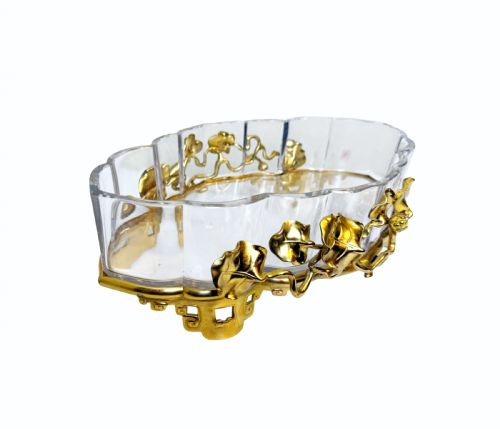


Art Nouveau Centrepiece Bowl
An art nouveau centrepiece bowl brings sweeping botanical lines and organic forms to a table, combining glass, metal and porcelain from the turn of the twentieth century.
Art Nouveau Centrepiece Bowl
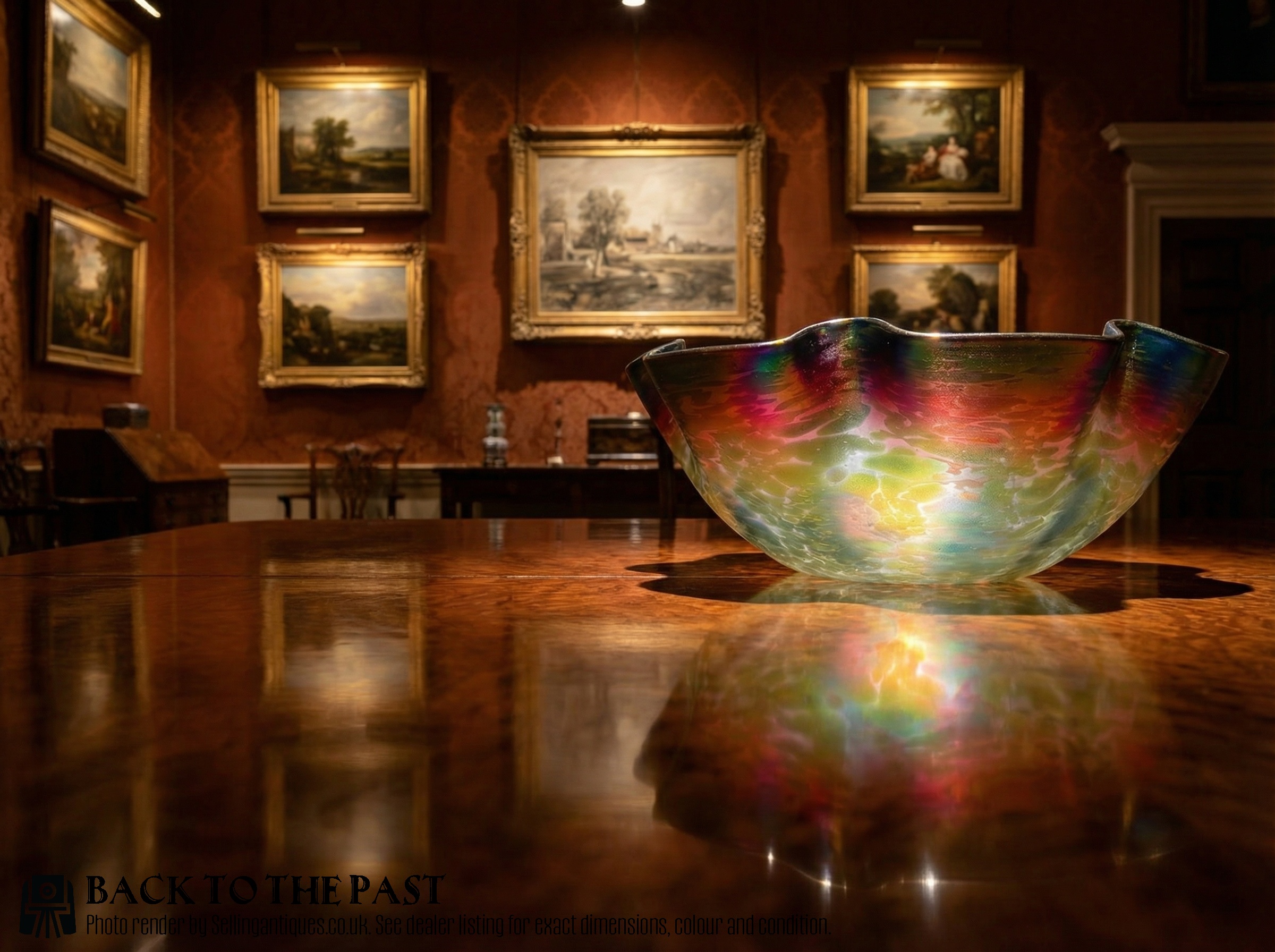
An art nouveau centrepiece bowl is a decorative vessel designed to sit on a dining table or sideboard, frequently holding fruit, flowers or bonbons. The examples gathered here span the late nineteenth century through to the Edwardian period and the decades following, drawing on Arts and Crafts and French Belle Epoque aesthetics.
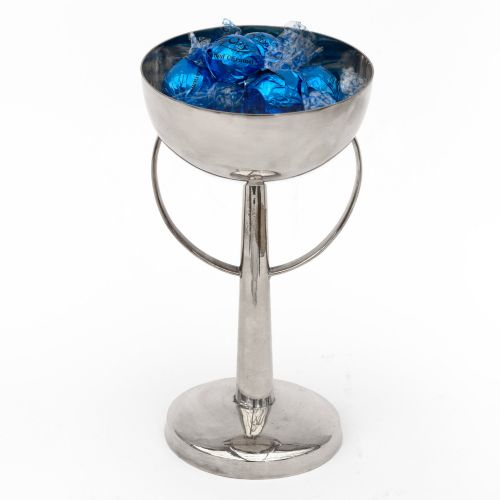
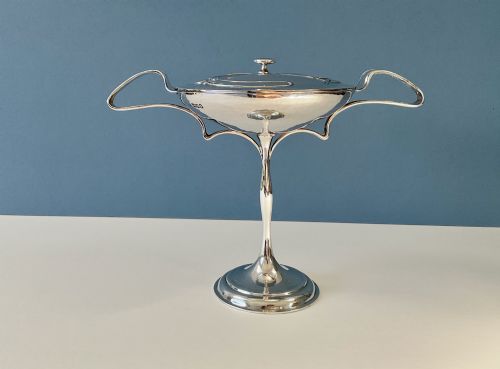
Most pieces you encounter combine a metal stand or mount with a glass or ceramic insert. Metal frames in pewter, silver plate and sterling silver often take the form of scrolling foliage, tendrils and stylised female figures, cradling liners made from iridescent glass, crystal or glazed porcelain.
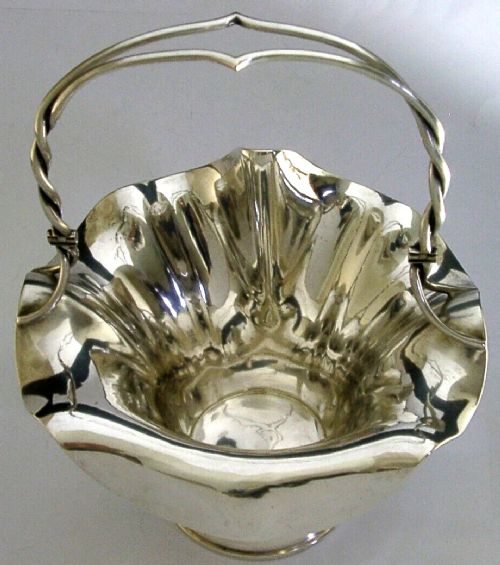
Forms range from swing-handled baskets and footed dishes to large figural centrepieces and epergnes. Makers such as WMF, Liberty & Co and Royal Dux dominate the output, working in Germany, Britain, Bohemia and France around nineteen hundred.
How they were made
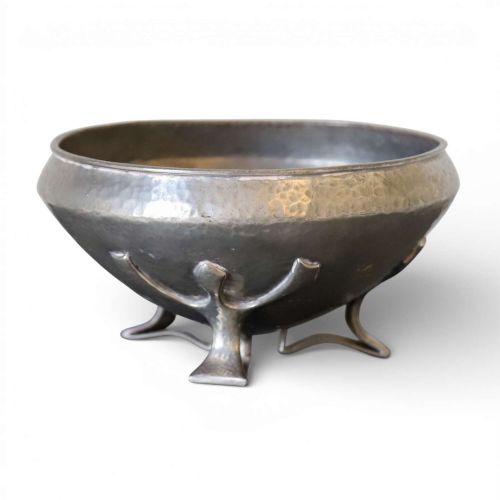
Makers utilised casting, hammering and electroplating to shape metals like pewter, silver plate and gilt bronze into organic, fluid silhouettes. Pewter objects frequently show hand-hammered surfaces and applied floral motifs, while silver-plated and solid silver frames employ intricate openwork casting to mimic natural growth.
Glass liners and bowls were blown, pressed or moulded, often incorporating chemical treatments to achieve iridescence, green vaseline tints or cameo and enamel decoration. Factories such as Loetz and St Louis produced glass with shimmering optical effects designed to catch candlelight.
Porcelain elements from potteries like Royal Dux and Eichwald involved slip casting and hand-painting, frequently pairing sculptural human figures or shells with glazed and gilt finishes.
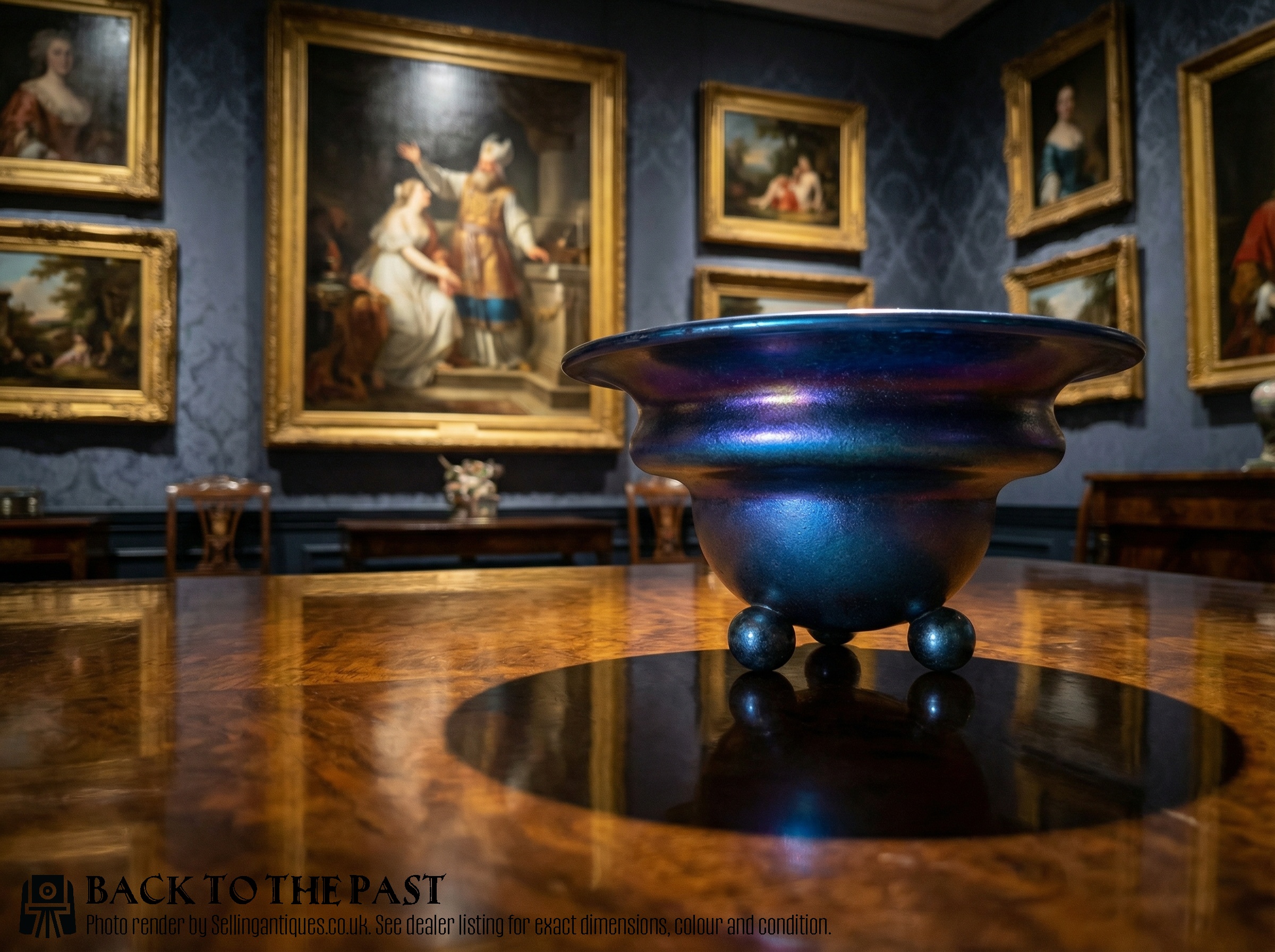
Some glass bowls rest on tiny ball feet, allowing the vessel to wobble just enough to make guests smile.
What varies in quality
The distinction between standard production items and exceptional works lies in the crispness of the casting and the artistic ambition of the design. Workshops like WMF and Orivit produced everything from mass-market stamped metal frames to heavily articulated figural centrepieces modelled by named designers.
Material integration dictates the visual success of the piece, particularly where glass meets metal. Superior examples feature custom-blown glass liners, such as iridescent Loetz or green vaseline glass, that fit their metal mounts precisely and complement the botanical curves of the frame.
Liberty & Co·Royal Dux·Loetz·WMF·Oliver Baker·Orivit·St Louis glassworks·Christofle et Cie·Eichwald·Rene Lalique
The Art Nouveau Centrepiece Bowl Glossary
- Vaseline glass
- A type of glass containing uranium dioxide that produces a distinctive yellow-green colour and glows under ultraviolet light. It appears frequently in Edwardian tablewares.
- Tudric
- The trade name used by Liberty & Co for their range of pewter ware, often associated with designers like Archibald Knox and Oliver Baker. The metal alloy contains a high proportion of tin.
- Epergne
- A large table centrepiece featuring a central bowl with multiple arms or attachments for holding fruit, flowers or sweetmeats. They are often constructed in silver, silver plate or glass.
- Iridescent glass
- Glass treated with metallic salts while hot to create a shimmering, rainbow-like surface effect. Loetz and other Bohemian makers specialised in this finish.
- Bonbon dish
- A small, shallow vessel intended for holding sweets or confectionery. These often feature swing handles and pierced metalwork.
Art Nouveau Centrepiece Bowl: Frequently Asked Questions
What were art nouveau centrepiece bowls used for?
These vessels served primarily as decorative table centrepieces for formal dining, holding fruit, floating flowers or sweetmeats during meals.
They also functioned as standalone display pieces on sideboards and buffets, showcasing the owner's taste for modern design.
How do I style an art nouveau centrepiece bowl today?
Place the bowl in the centre of a dining table or on a wooden sideboard where natural light can strike the glass and metal surfaces.
Leave the vessel empty to appreciate the craftsmanship of the interior, or fill it simply with seasonal fruit or loose floral stems.
How can I tell if a piece is genuine art nouveau?
Look for characteristic design motifs such as whiplash lines, stylised plant tendrils, insects and female figures with flowing hair. The proportions and asymmetry typical of the period distinguish these items from later revivals.
Check for period maker marks, model numbers and manufacturing stamps on the base of the metal or ceramic elements.
What is the difference between pewter and silver-plated bowls?
Pewter pieces, such as those by WMF or Liberty & Co, have a duller, grey metallic lustre and are often cast with heavy botanical relief or hammered textures.
Silver-plated items feature a bright reflective coating over a base metal, offering a shinier finish that mimics solid silver tablewares.