



Iridescent Art Glass Vessel
An iridescent art glass vessel catches the light with shifting metallic sheens, bringing tactile warmth and organic form to any room.
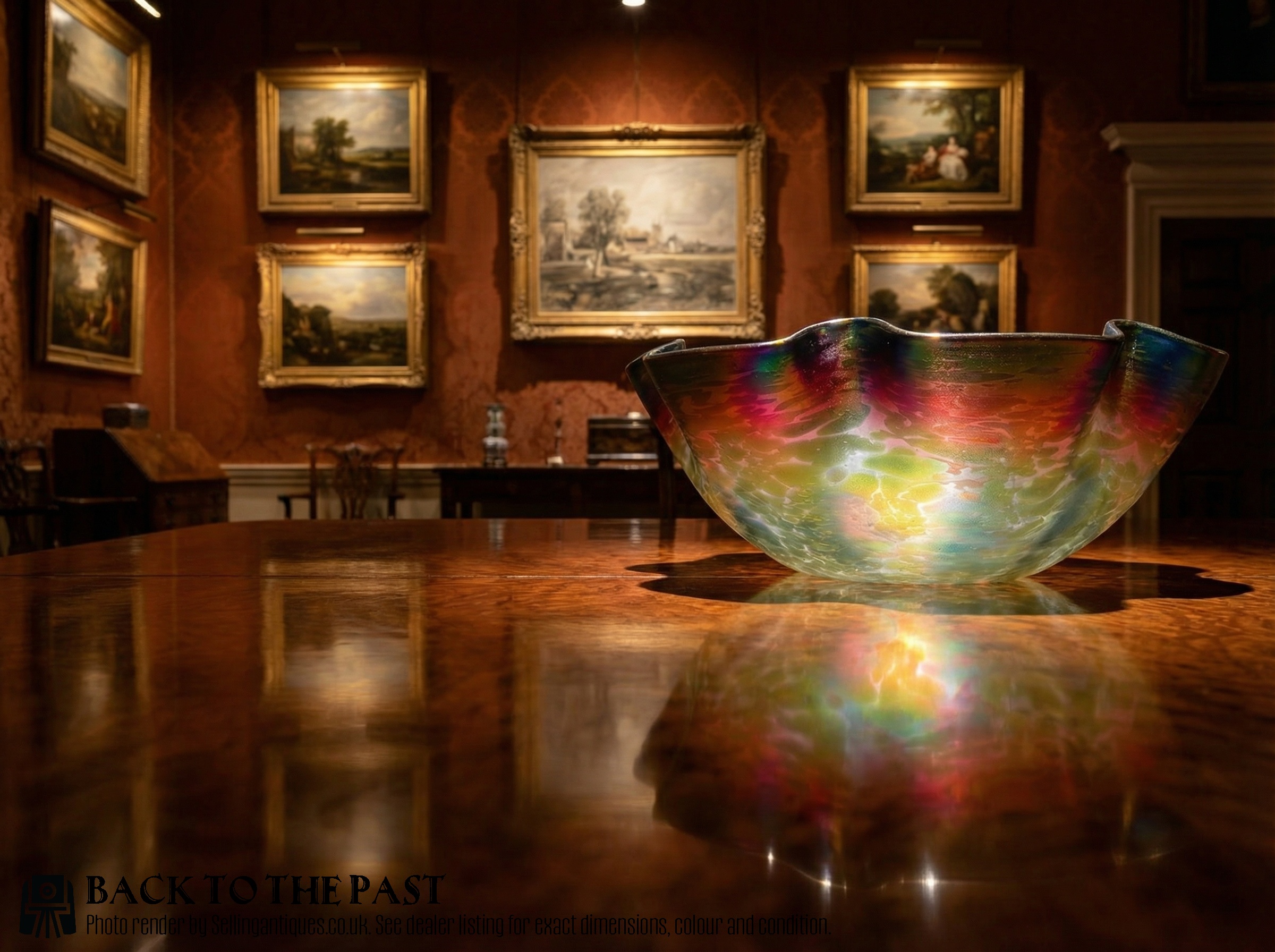
Iridescent Art Glass Vessel
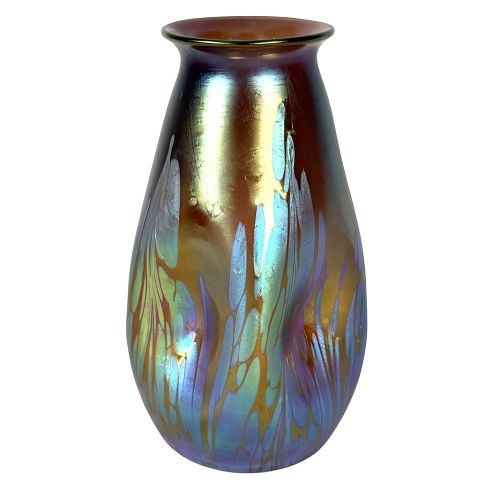
An iridescent art glass vessel unites fluid glassmaking with optical chemistry, creating surfaces that shift in colour under the light. These pieces emerge chiefly from the Art Nouveau and Vienna Secession periods around nineteen hundred, alongside Victorian examples.
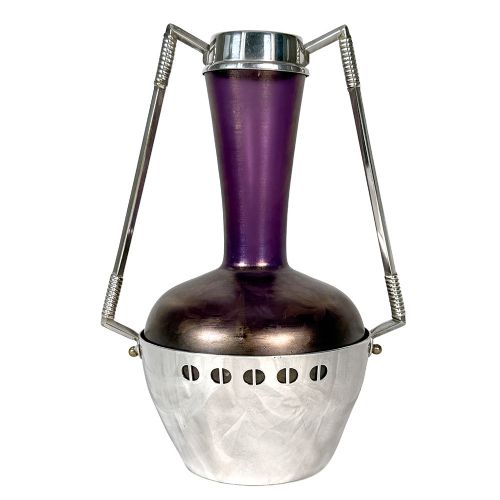
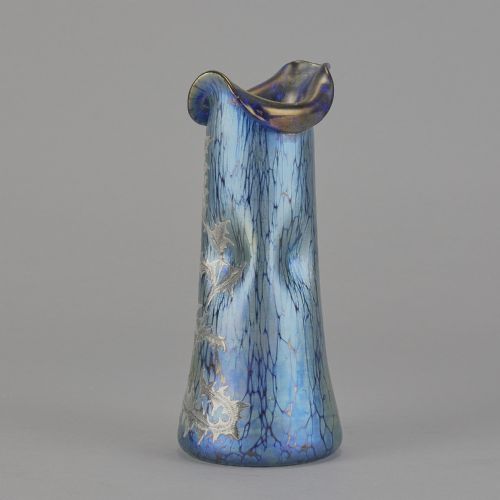
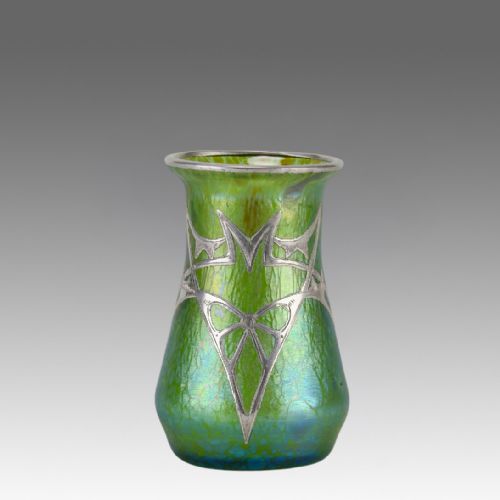
Vases dominate the selection, appearing alongside decorative bowls and mounting pairings in sterling silver, bronze, pewter, and silver overlay. Makers like Loetz and Kralik shape these forms using organic contours that reflect natural motifs.
How they were made
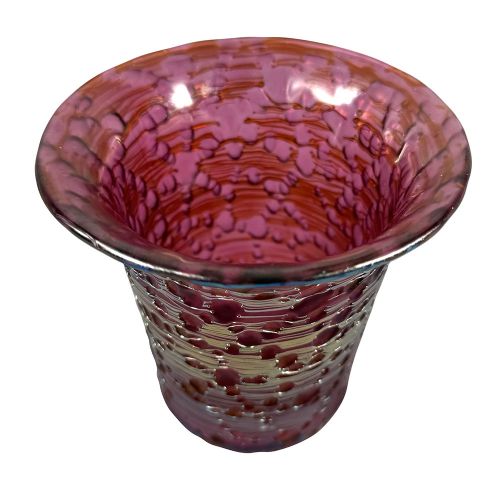
Hot glass is hand-blown and treated with metallic vapour treatments whilst molten to fix shimmering iridescent finishes onto the surface. Artisans apply intricate décors such as Papillon or Orbulin patterns directly into the glowing body.
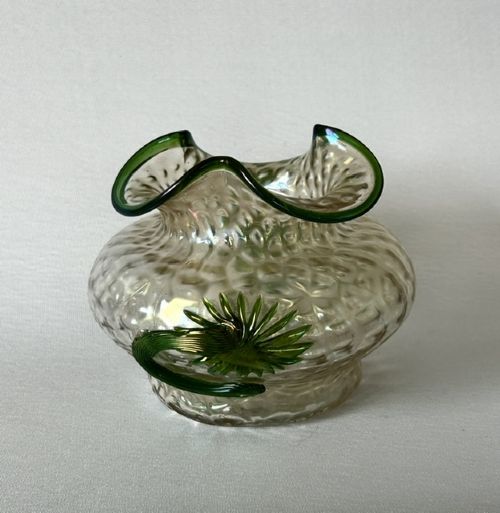
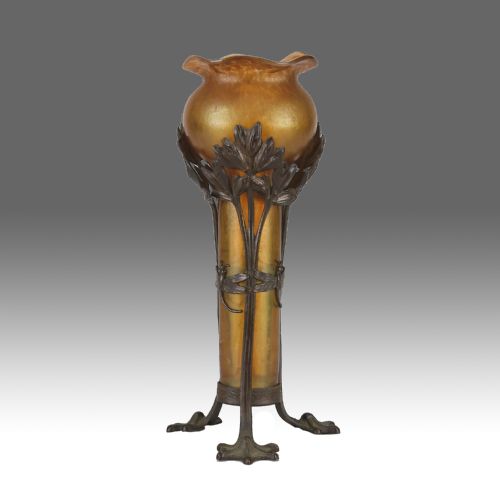
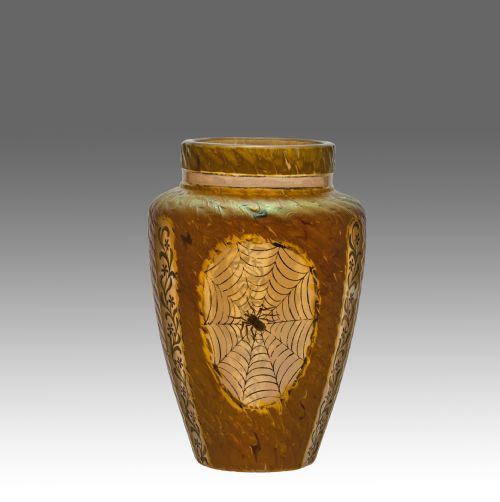
Metal mounts in bronze, pewter, or silver overlay are cast separately and fitted securely around the blown glass body. Enamel details and applied glass snakes or cabochons enhance the tactile decoration of the vessel.
Some vessels feature applied glass snakes winding up the neck, adding a writhing organic touch to the shimmering surface.
What varies in quality
The depth and uniformity of the iridescence across the blown glass body distinguish finer examples from simpler production pieces. A richer display of metallic sheen comes from precise chemical application during the hot stage.
The integration of metal mounts, whether sterling silver overlay or cast bronze stands, dictates the complexity of the piece. Clean joins between the glass and metal components show greater workshop skill.
Loetz Witwey·Johann Loetz·Kralik Glass·Loetz Witwe·Richardson·Ferdinand von Poschinger·Loetz factory·LCT Tiffany
The Iridescent Art Glass Vessel Glossary
- Iridescent glass
- Glass treated with metallic salts to produce a rainbow-like sheen on the surface. This technique creates shimmering optical effects that shift depending on the angle of light.
- Papillon décor
- A specific spotting technique developed by Loetz that resembles butterfly wing patterns. Molten glass receives metallic applications to form these mottled, iridescent patches.
- Silver overlay
- Sterling silver worked into decorative openwork patterns directly on the glass body. Artisans etch the glass surface first so the metal adheres during application.
- Favrile glass
- A term patented by Louis Comfort Tiffany for his iridescent art glass creations. The process involves blending different coloured glass melts while hot.
Iridescent Art Glass Vessel: Frequently Asked Questions
How do I clean an iridescent art glass vessel?
Dust the surface gently with a soft, dry cloth to protect the delicate metallic finish from abrasion.
Avoid using chemical cleaners or soaking the piece, as moisture can damage applied metal mounts and silver overlay.
Where were most of these vessels made?
Many originate from Bohemian glassworks during the late nineteenth and early twentieth centuries, particularly around nineteen hundred.
Key regional centres include workshops operating under the Art Nouveau and Vienna Secession movements.
What is silver overlay?
Silver overlay involves applying liquid silver directly onto the glass surface in intricate botanical or geometric designs.
The metal bonds with the vessel through specialised etching techniques used during the manufacturing process.
How can I identify a Loetz vase?
Loetz pieces often feature distinct organic forms combined with specialised surface treatments like the Papillon or Orbulin décors.
Many examples also incorporate contrasting metal mounts in bronze, pewter, or silver.