




Art Nouveau Brass Frame
An art nouveau brass frame brings organic line and metallic warmth to a room, catching light around a photograph or mirror.
Art Nouveau Brass Frame
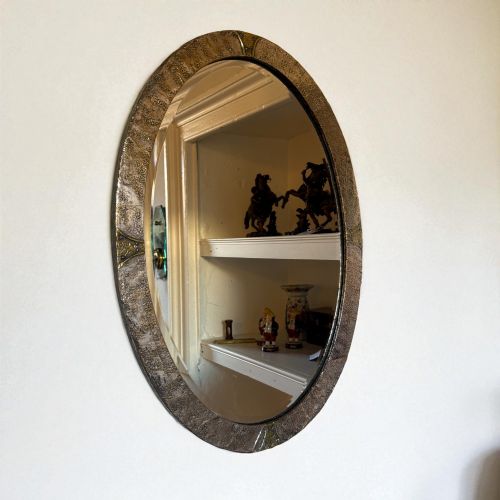
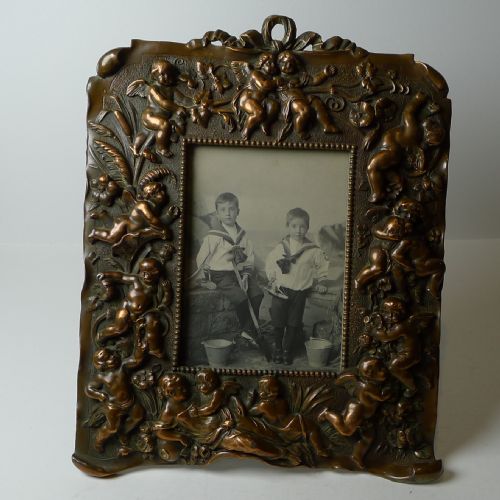
An art nouveau brass frame appears most frequently in domestic interiors as a photograph or picture frame, alongside wall mirrors and fireplace screens. These pieces emerge from periods spanning the late Victorian era through the Edwardian years and into the early twentieth century.
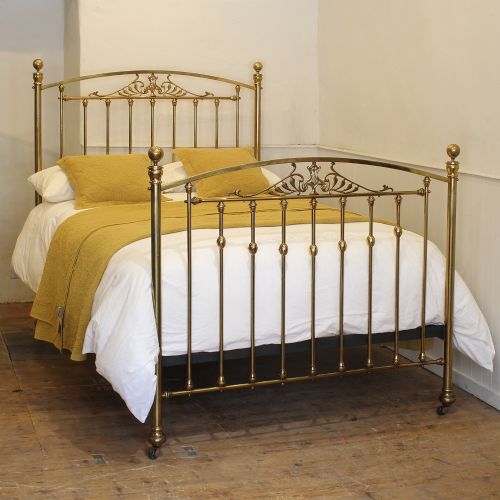
Makers and designers applied fluid plant tendrils, stylized flowers, and figurative motifs directly to the metal surfaces. Beyond desk and wall frames, the broader category encompasses larger furniture items, lighting, and hearth equipment sharing the same stylistic vocabulary.
How they were made
Craftsmen utilised sheet brass and cast elements, often employing repoussé techniques to hammer designs into relief from the reverse side. Copper and iron frequently appear alongside the primary brass structure, while glass, mirror glass, and enamel provide contrasting textures and focal points.
Surface finishes varied from polished golden metal to patinated dark tones, sometimes accented with nickel plating or wooden inserts like rosewood. Construction methods combined mechanical fixings with soldered joints to secure decorative mounts and easel backs.
Listings feature brass, copper, iron, and glass spanning the Victorian, Edwardian, and early twentieth-century periods.
What varies in quality
Quality rests in the crispness of the repoussé work and the depth of the metal relief, where hand-tooled details surpass mass-produced stamped patterns. Superior examples display harmonious proportions and careful integration of secondary materials such as enamel or cut glass.
The integrity of the structural joints and the survival of original glass or backing materials determine the standing of an individual piece. Weight and gauge of the metal further separate robust workshop output from lighter commercial production.
Erhard & Sohne·Eduard Veith
The Art Nouveau Brass Frame Glossary
- Repoussé
- A metalworking technique where the artisan hammers the design from the reverse to form a raised relief on the front. This method gives organic designs their characteristic three-dimensional depth.
- Secessionist
- A design movement associated with Central European modernism that favoured geometric rigour alongside floral motifs. It represents a structured branch of the broader stylistic family.
- Pier glass
- A tall mirror designed to hang on the wall between windows, frequently incorporating brass framing and decorative crests. These items maximise reflected light in Victorian and Edwardian interiors.
- Glasgow School
- A circle of designers working in Scotland who developed a distinct linear style featuring symbolic motifs like peacocks and stylized human figures. Their metalwork is celebrated for restrained elegance.
Art Nouveau Brass Frame: Frequently Asked Questions
How do I clean an old brass frame?
Dust the surface gently with a soft dry cloth to remove accumulated particles without disturbing the historic patina. Avoid harsh chemical polishes that strip away the aged character accumulated over decades.
Test any cleaning method on a hidden area first and consult a specialist if the piece retains delicate enamel or plated surfaces.
Were these frames meant for desks or walls?
Makers produced both tabletop photograph frames with easel backs and larger wall-hanging mirrors or picture frames. Smaller desktop versions allowed owners to display family portraits in domestic sitting rooms.
Wall-mounted variants served to brighten hallways and parlours, often incorporating bevelled glass or copper panels to catch the ambient light.
How can I tell a Victorian frame from a later one?
Pieces originating in the Victorian period or the eighteen-nineties often exhibit heavier cast components and darker patination. Construction methods relied more heavily on pinned joints and substantial backing boards.
Early twentieth-century and Edwardian examples frequently show lighter gauge brass and more stylized, simplified floral motifs reflecting changing aesthetic preferences.
What materials accompany the brass in these pieces?
Copper and iron frequently appear as structural or decorative elements, providing tonal contrast against the golden brass. Glass, mirror glass, and enamel inserts add colour and reflective surfaces to the design.
Some examples incorporate wood components, such as rosewood intarsia, adding warmth and varied texture to the finished object.