






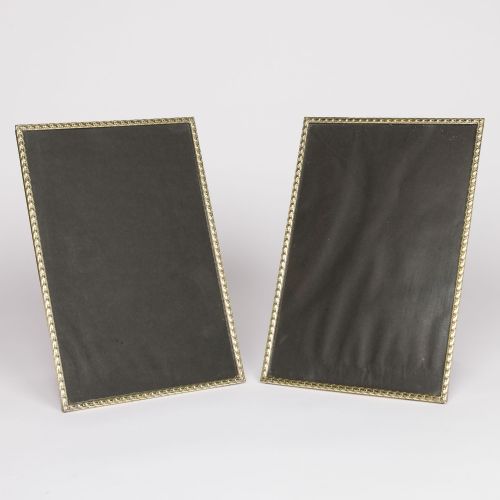
Brass Photo Frame
A brass photo frame holds a treasured likeness while bringing polished metal warmth to a mantel or desk.
Brass Photo Frame
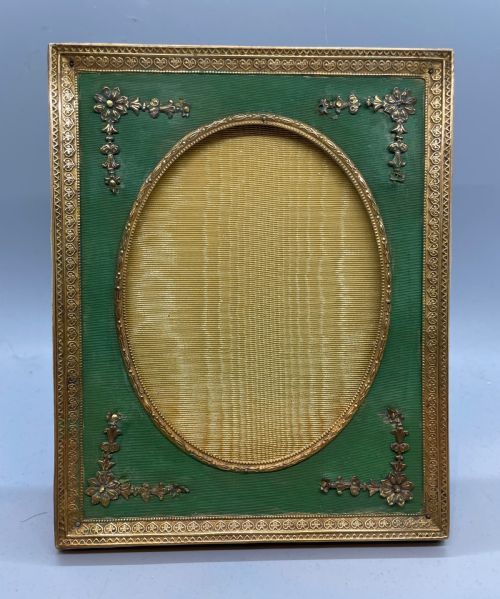
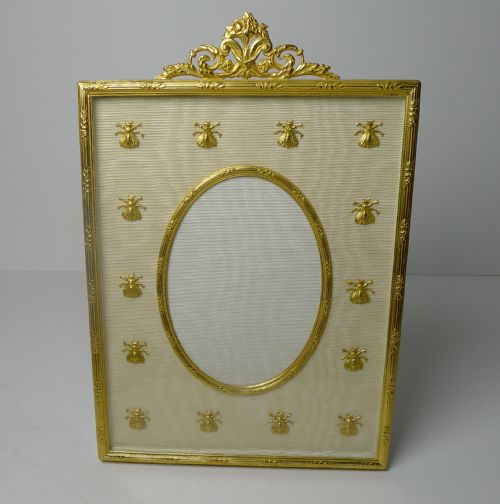
A brass photo frame is a decorative tabletop housing for a portrait, most frequently encountered in Victorian, Edwardian, and late nineteenth-century French designs. These pieces range from simple domestic utilitarian objects to ornate display items styled after French Empire, Louis XVI, and Art Nouveau aesthetics.
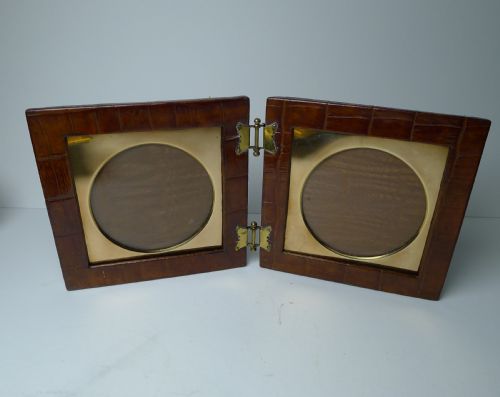
The selection here includes single apertures, double folding travel frames, and triple configurations intended for domestic display. Table mirrors appear alongside picture frames, sharing identical cast metal construction and easel back supports.
How they were made
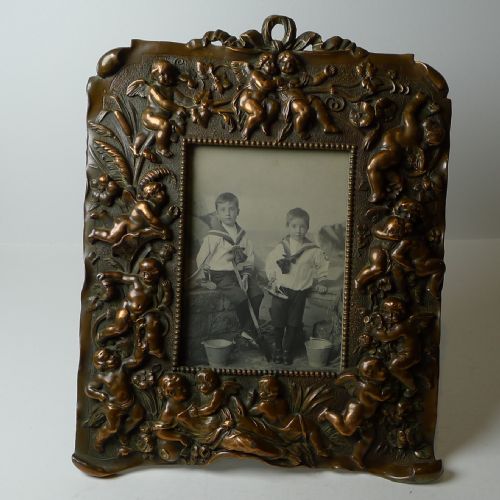
Maker's workshops utilised brass, ormolu, and gilded bronze, often casting the metal into elaborate decorative motifs like cherubs, Napoleonic bees, and scrolling foliage. Glass protected the portrait, backed by silk, fabric, velvet, or leather panels fitted with functional easel struts.
Detailing relied on hand-finishing, sometimes incorporating paste stones, agate mounts, or Limoges enamel plaques into the metal borders. Silk damask and woven textiles lined the interior folding compartments of travel pieces.
Brass Photo Frame Retail Price Guide 2026
Typical asking prices for brass photo frame among the pieces listed under this phrase on Sellingantiques today, from the lower quarter to the upper quarter. They describe what is for sale here now, not the wider market.
Listings feature items from the 1880s, 1890s, 1900s, 1910s, and 1920s, spanning Victorian, Edwardian, and Art Nouveau styles.
What varies in quality
Quality rests in the crispness of the metal casting and the depth of the chased ornamentation rather than sheer weight alone. Superior examples display sharply defined motifs on cherubs, ribbons, and floral scrolls without softened edges from worn production moulds.
The sophistication of the secondary materials also distinguishes the range, separating standard brass pressings from gilt bronze or ormolu mounts set with genuine agate, paste stones, or enamel panels.
Boin Taburet·Moseley·John Joseph Mechi·F. Bienvue
The Brass Photo Frame Glossary
- Ormolu
- Gilded brass or bronze, typically produced by applying a gold amalgam to the base metal surface. This technique creates a rich golden finish found on fine French frames.
- Easel back
- A hinged rear support leg that allows the frame to stand upright on a table or desk. These supports frequently feature matching brass or velvet facings.
- Paste stone
- Faceted lead glass cut and polished to imitate gemstones, often inset into decorative metal borders. These stones add coloured highlights to late nineteenth-century frames.
- Limoges enamel
- Glass fused to a metal substrate through firing, originating from the French city of Limoges. Enamel plaques adorn the crests and corners of select luxury frames.
- Double folding
- Two frames joined by hinges that allow the object to close like a book for travel. These pieces often secure with a clasp mechanism.
Brass Photo Frame: Frequently Asked Questions
How do I date a brass photo frame?
Dating relies on stylistic clues, such as the flowing organic lines characteristic of Art Nouveau design around nineteen hundred, or the rigid symmetry of Victorian Gothic and Renaissance revivals from the nineteenth century.
Backing materials and glass retention methods also offer clues, as early examples often utilise turned wooden backs or heavy brass plates secured by tiny screws rather than modern swivel clips.
What is the difference between brass and ormolu?
Brass is an alloy of copper and zinc, valued for its bright golden metallic appearance when polished and its durability in cast domestic objects.
Ormolu specifically denotes brass or bronze that has been coated with a gold-mercury amalgam, creating a deeper, more enduring lustre typical of high-end French decorative arts.
How were these frames displayed originally?
These frames were designed principally for placement on drawing room mantelpieces, dressing tables, and writing desks, where family portraits could be admired.
Folding travel variations allowed owners to pack pictures securely for journeys, closing the hinged panels to protect the glass and the portrait inside.
Are double frames meant for travel?
Double and triple folding frames served both stationary domestic roles and travel purposes, depending on the sturdiness of their hinges and the inclusion of protective clasps.
Travel versions often featured leather or crocodile outer coverings with folding front doors to safeguard delicate interior photographs while away from home.