


Gilt Metal Picture Frame
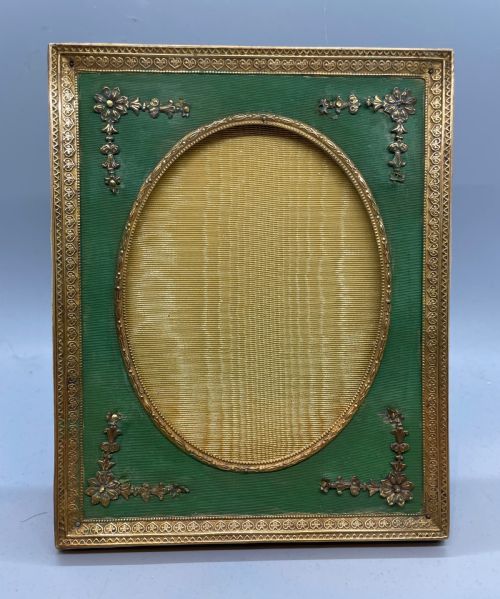
A gilt metal picture frame brings warmth and a sense of historic occasion to a desk, mantel or dressing table.
Gilt Metal Picture Frame
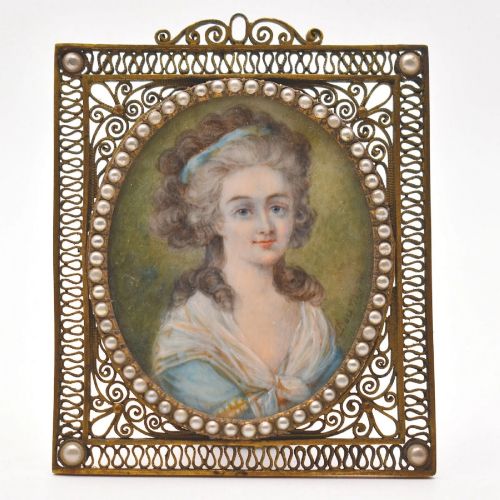
When you search for a gilt metal picture frame, you encounter ornate desk accessories, easel-back frames and portrait miniature mountings dating from the eighteenth century through to the Edwardian period. The selection on this page leans heavily towards French designs, ranging from Louis XVI style work to robust Victorian and Edwardian examples.
The objects take many forms, including single and double photo frames, vanity items, and housings for miniature paintings on porcelain or ivory. Many incorporate glass protection, silk or velvet linings, and stands designed for upright display.
Makers and workshops across Britain and France produced these pieces using cast metals, incorporating enamel, paste stones and micro mosaics to catch the light. They served as personal tokens, family memorials and decorative ornaments in period interiors.
How they were made
The foundation of these frames typically involves cast brass, bronze, or ormolu, shaped into Rococo scrolls, neoclassical ribbons or geometric borders. Metalworkers employed casting and chasing techniques to achieve crisp relief work and gilded surfaces.
Makers integrated decorative elements such as champlevé enamel, seed pearls, paste stones and micro mosaics directly into the metal armature. Interiors often featured silk damask, velvet, or glass panels to protect the portraits and photographs held within.
One sailor makes a departure and a return across a pair of enamel plaques, preserved in metal frames since around eighteen hundred.
What varies in quality
Quality rests in the crispness of the metal chasing and the weight of the casting. Finer pieces display deeply rendered foliage and clean joints, whereas simpler items rely purely on surface gilding.
The integration of secondary materials defines the upper tier of the range. Hand-set paste stones, intact enamel panels, and original glass or silk backs separate standard production items from exceptional workshop pieces.
John Joseph Mechi
The Gilt Metal Picture Frame Glossary
- Ormolu
- Gilded bronze produced through a mercury amalgamation process, yielding a rich golden finish popular on nineteenth-century French frames.
- Champlevé
- An enamelling technique where troughs are dug into the metal surface and filled with vitreous enamel before firing.
- Micro mosaic
- Tiny coloured glass tessellae assembled into intricate pictorial motifs, often set into the metal borders of Victorian frames.
- Easel back
- A hinged rear strut that allows a picture frame to stand upright on a flat surface without wall mounting.
- Paste stone
- Faceted lead glass cut and polished to imitate gemstones, frequently used to add sparkle to decorative metal frames.
Gilt Metal Picture Frame: Frequently Asked Questions
How do I date a gilt metal picture frame?
Dating relies on stylistic clues such as the symmetry of French Rococo scrolls, the neoclassical restraint of Louis XVI revival pieces, or the flowing lines of Art Nouveau.
Construction methods also help; look at the fastening screws, easel mechanisms, and the type of glass or lining material used.
Were these frames meant for desks or walls?
Most pieces recorded here are designed for tabletop display, featuring hinged easel backs for desks, mantelpieces and vanity tables.
Some smaller formats specifically house portrait miniatures, watercolour paintings, or porcelain plaques rather than standard photographs.
What is the difference between brass and ormolu?
Brass is an alloy of copper and zinc with a natural golden hue that can be polished or lacquered to shine.
Ormolu specifically denotes high-status gilt bronze where a layer of gold amalgam is applied to a bronze base and fired.
How should I clean a vintage gilt frame?
Dust gently with a soft, dry brush to avoid disturbing fragile elements like paste stones, enamel work, or original silk and velvet linings.
Avoid chemical polishes and water entirely, as abrasive liquids can strip the thin gilt layer from the underlying metal.